Our Food Safety Certifications: What Parents Should Know
Learn about The Storm Cafe's FOODSAFE certification, HACCP protocols, and temperature control systems that protect families from foodborne illness in Vancouver meal delivery.
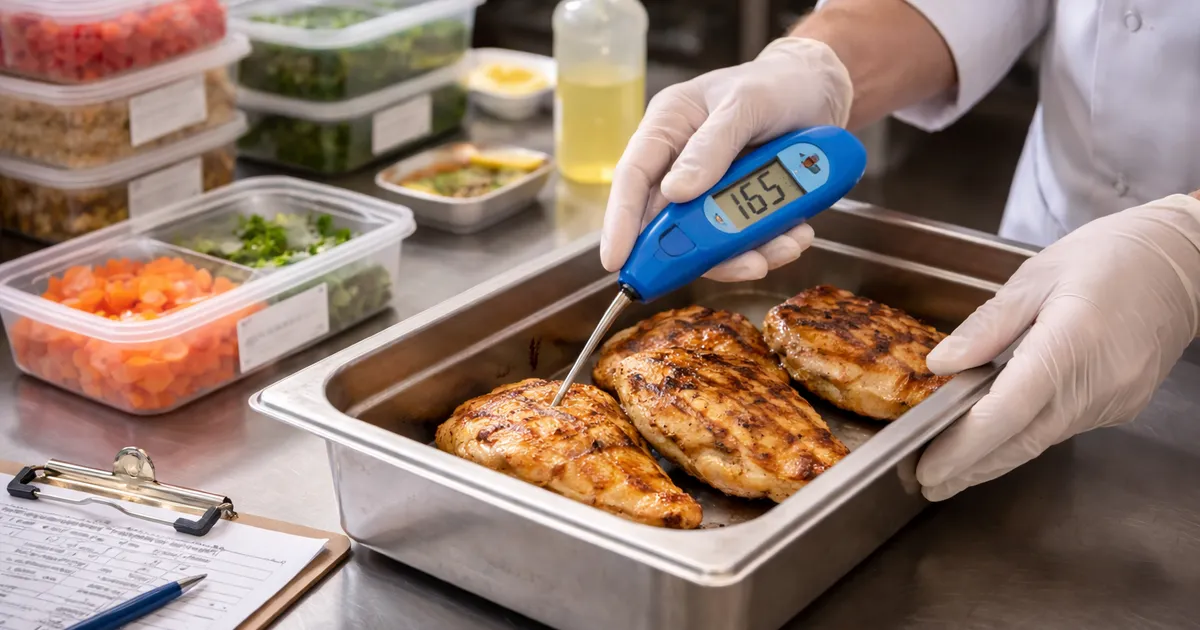
Foodborne illness hits roughly 4 million Canadians every year[1] — and most of those cases are preventable, according to BC Centre for Disease Control food safety guidelines that outline systematic prevention measures for food service operations. As a parent choosing a meal delivery service, you deserve to know exactly what stands between your family and contamination risk. That starts with food safety certifications.
The Storm Cafe delivers 500+ meals weekly to 50+ corporate clients across Greater Vancouver, holding a 4.9-star rating. Here's what backs that track record:
- FOODSAFE Level 1 certification for every food handler on our team — no exceptions
- Daily fresh preparation in licensed commercial kitchens
- Temperature-controlled delivery systems built for Vancouver's conditions — because keeping meals safe during a November downpour between Richmond and Downtown is a fundamentally different challenge than doing it in July
After years of catering across Vancouver, Richmond, Burnaby, and surrounding areas, I can tell you that certifications on paper mean nothing if your operations can't handle real-world conditions. We've tested four different insulated delivery bags specifically to keep food above 65°C for 90+ minutes in rainy weather — critical during Vancouver's wet season documented by Environment and Climate Change Canada's weather data showing October through April precipitation patterns. That's not a marketing claim — that's a operational standard we hold ourselves to during the seven months of wet season this city throws at us every year (October through April). Our moisture-resistant thermal bags are a core part of how we deliver safely, and honestly, they're one of the things that sets us apart from services that treat food safety as a checkbox.
What This Guide Covers
Use the sections below to evaluate any meal delivery service — including ours — against the standards that actually matter for your family's safety:
- Which food safety certifications to look for when comparing Vancouver meal delivery options
- What those certifications mean in daily practice — not just on a certificate hanging on a wall, but in the kitchen, in the delivery vehicle, and at your door
- How The Storm Cafe's protocols go beyond basic regulatory requirements — including the specific systems we've built for Greater Vancouver's climate, traffic realities, and the health-conscious preferences our clients (especially Burnaby office teams) consistently ask for
Summary: The Storm Cafe maintains FOODSAFE Level 1 certification for all food handlers, operates from licensed commercial kitchens, and delivers 500+ weekly meals across Metro Vancouver with 4.9-star rating. Daily fresh preparation and temperature control protocols prevent foodborne illness risks that affect 4 million Canadians annually. Parents get transparency on certifications, HACCP protocols, and delivery safety measures protecting families.
Last reviewed: March 2026. Data current as of this date.
Quick Answer: Essential Food Safety Certifications
Reputable meal delivery services in British Columbia maintain FOODSAFE Level 1 certification for all food handlers, operate from health-inspected commercial kitchens, and implement temperature control protocols preventing bacterial growth during food preparation, storage, and transport[2].
What FOODSAFE Level 1 Actually Covers
FOODSAFE Level 1 is the mandatory baseline certification every food handler in BC must hold. After managing kitchens and catering crews across Metro Vancouver for years, I can tell you this certification matters because it directly addresses the five areas where things go wrong fast:
- Cross-contamination prevention — separating raw proteins from ready-to-eat items at every stage, from prep to plating to transport.
- Proper cooking temperatures — hitting internal temps that kill pathogens, verified with calibrated thermometers every single time.
- Safe food storage — cold-holding below 4°C, hot-holding above 60°C, and never letting food sit in the 4°C–60°C danger zone longer than two hours.
- Personal hygiene standards — handwashing protocols, glove use, illness reporting policies that actually get enforced on the line.
- Allergen management — identifying the priority allergens recognized by Health Canada, labelling accurately, and preventing cross-contact during prep[3].
Beyond the Baseline: HACCP Protocols
Professional services layer Hazard Analysis Critical Control Point (HACCP) protocols on top of FOODSAFE. HACCP is a systematic, step-by-step approach to identifying and controlling food safety hazards across the entire production process — from receiving raw ingredients through cooking, packaging, transport, and final handoff[4].
Here in the Lower Mainland, HACCP isn't optional if you're serious about delivery. We deal with real-world variables — rainy season from October through April means moisture gets into everything, and a 50-minute peak-hour delivery run from Richmond to Downtown Vancouver gives bacteria plenty of time to multiply if your temperature control isn't airtight. I've tested four different insulated delivery bags specifically to keep food above 65°C for at least 90 minutes in wet, cold conditions. That kind of gear testing is where HACCP thinking pays off: you identify "transport in rain" as a critical control point and then engineer your solution before a problem ever reaches a customer's table.
How The Storm Cafe Exceeds These Standards
The Storm Cafe goes beyond the BC baseline in three specific, verifiable ways:
- Fresh daily preparation — meals are cooked and dispatched the same day, minimizing the window between cooking and consumption. Less time in holding means less opportunity for bacterial growth, period.
- Temperature-controlled delivery containers — purpose-built insulated packaging that maintains safe temperatures throughout transport, even on the wettest January afternoon heading through Burnaby traffic.
- Comprehensive staff training on allergens and contamination prevention — every team member is trained beyond FOODSAFE minimums, with protocols for allergen segregation and contamination response that mirror what you'd find in healthcare and educational facility kitchens.
Parents choosing The Storm Cafe benefit from institutional-grade food safety protocols typically reserved for healthcare and educational facilities, adapted for family meal delivery. That's a meaningful difference — the same rigor a hospital kitchen applies to vulnerable patients is built into every family meal that goes out the door.
Summary: BC meal delivery services require FOODSAFE Level 1 certification for all food handlers, health-inspected commercial kitchen operations, and temperature control protocols preventing bacterial growth during preparation, storage, and transport. Reputable operators implement these as baseline standards, with additional HACCP protocols for systematic hazard prevention across the entire food chain from sourcing to delivery.
Understanding FOODSAFE Level 1 Certification
FOODSAFE Level 1 certification is legally required for all food handlers in British Columbia who work directly with food or beverages, establishing baseline food safety knowledge across the industry[5].
After years of running catering operations across Metro Vancouver, I can tell you this certification isn't just a wall decoration — it's the foundation that keeps your kitchen from becoming a liability. Here's exactly what the program covers and why each piece matters in a real production environment.
What FOODSAFE Level 1 Actually Teaches
The certification drills these six core competencies into every food handler:
- Proper handwashing techniques — when to wash, how long to scrub, and which situations demand immediate handwashing (switching between raw proteins and ready-to-eat items, after touching your face, after handling cash or phones)
- Safe food temperatures — the exact numbers for cooking, hot-holding, cold-holding, and refrigeration that keep food out of the danger zone
- Cross-contamination prevention — physical separation of raw and cooked foods at every stage, from storage to prep to plating
- Food safety hazard identification — recognizing biological, chemical, and physical risks before they reach a customer's plate
- Cleaning and sanitizing procedures — the difference between cleaning (removing visible debris) and sanitizing (killing bacteria), and when each is required
- Recognizing foodborne illness symptoms — knowing when a staff member must be pulled off the line, no exceptions
How The Storm Cafe Applies This in Practice
The Storm Cafe ensures 100% of food preparation staff maintain current FOODSAFE Level 1 certification, with regular refresher training reinforcing proper techniques. This universal certification creates consistency in food handling practices across all shifts and staff members, eliminating weak points in the food safety chain.
This matters more than people realize. I've seen operations where one uncertified prep cook on a Saturday shift undoes everything the weekday crew maintains. Having every single person certified — not just the head chef — means your food safety standard doesn't fluctuate based on who's working that day.
The Danger Zone: 4°C to 60°C
The course teaches the "danger zone" concept—temperatures between 4°C and 60°C where bacteria multiply rapidly. Professional food services must keep cold food cold (below 4°C) and hot food hot (above 60°C), minimizing time food spends in the danger zone[6].
Here's how this plays out in real Vancouver catering conditions:
- During prep — ingredients get pulled from refrigeration in small batches, not all at once. Anything sitting on the counter longer than 30 minutes goes back into cold storage.
- During transport — this is where most operations fail, especially during our October-to-April rain season. We've tested four different insulated delivery bags specifically to hold food above 65°C for at least 90 minutes in wet, cold conditions. That's not a nice-to-have — when you're stuck in Richmond lunch traffic between 11:45am and 1:15pm and your delivery window just expanded by 20 minutes, your gear has to perform.
- At delivery — hot items get temped with a probe thermometer before handoff. If something dropped below 60°C, it doesn't go to the client. Period.
The Storm Cafe's fresh daily preparation and immediate delivery model naturally reduces danger zone exposure compared to meal prep services cooking days in advance. When food goes from kitchen to customer within hours instead of days, you're cutting the total time bacteria have to multiply.
Cross-Contamination Prevention and Allergen Safety
Beyond temperature control, FOODSAFE certification emphasizes cross-contamination prevention—particularly important for families with food allergies. Certified food handlers understand proper procedures for preparing allergen-free meals, including:
- Dedicated cutting boards — color-coded by food type, never swapped
- Separate preparation areas — allergen-free items get their own workspace, physically distanced from allergen-containing ingredients
- Thorough equipment cleaning between tasks — full wash-rinse-sanitize cycle when switching between allergen-containing and allergen-free foods, not just a quick wipe
I'll be direct: this is where Burnaby office clients especially push us on details, and rightfully so. When you're catering a team lunch for 30 people and three of them have severe nut allergies, the margin for error is zero. FOODSAFE gives every handler the baseline knowledge, but it's the daily discipline of following these steps — every single time, even during a Friday afternoon rush — that actually protects people.
Summary: FOODSAFE Level 1 certification legally required for all BC food handlers covers six core competencies: proper handwashing techniques, cross-contamination prevention, cooking temperatures, danger zone awareness (4°C-60°C), allergen safety protocols, and cleaning/sanitizing procedures. Every The Storm Cafe team member maintains current certification, ensuring baseline food safety knowledge prevents common contamination mistakes during preparation and delivery.
Want to taste the difference?
Try our freshly prepared meals with a free tasting box — no commitment required.
Get a Free Tasting →HACCP: Systematic Food Safety Management
Hazard Analysis Critical Control Point (HACCP) represents a systematic preventive approach to food safety, identifying biological, chemical, and physical hazards in production processes and establishing critical control points to prevent contamination[4].
HACCP isn't legally mandatory for every food business in BC, but after years of catering across Greater Vancouver — delivering to Burnaby office parks, Richmond corporate towers, and downtown venues — I treat it as non-negotiable. We regularly serve mixed groups that include children, elderly family members, and immunocompromised individuals. Reactive food safety (fixing problems after someone gets sick) is a gamble no professional operator can afford. HACCP flips that model: you identify where things can go wrong and lock those points down before a single meal leaves your kitchen.
The 7 HACCP Principles — Step by Step
Follow these in order. Each principle builds on the one before it.
- 1. Conduct Hazard Analysis
- 2. Determine Critical Control Points
- 3. Establish Critical Limits
- 4. Monitor Critical Control Points
- 5. Establish Corrective Actions
- 6. Verify Procedures
- 7. Document and Record
- Identify biological, chemical & physical hazards at every production step
- Pinpoint exact intervention stages: cooking, cooling, storage
- Set measurable thresholds: temperatures, time limits, pH values
- Regular documented checks with thermometers, timers, alarms
- Pre-written response protocols for when limits are exceeded
- Scheduled audits of thermometer calibration and staff compliance
- Detailed dated records for Vancouver Health Authority inspections
1. Conduct Hazard Analysis Walk through every production step — from receiving ingredients to loading delivery vehicles — and flag every potential hazard:
- Biological: bacteria, viruses, parasites
- Chemical: residue from cleaning agents, undeclared allergens
- Physical: glass shards, metal fragments, bone chips
2. Determine Critical Control Points Pinpoint the exact stages where you must intervene to prevent or eliminate a hazard. In a typical catering workflow, these are:
- Cooking (kill pathogens with verified temperatures)
- Cooling (stop bacterial multiplication in the danger zone)
- Cold storage (maintain safe holding conditions)
3. Establish Critical Limits Assign a hard, measurable threshold to every critical control point — a specific temperature, a maximum time window, a pH value. No grey areas. If the number isn't met, the food fails.
4. Monitor Critical Control Points Set up regular, documented checks so you catch deviations in real time. Probe thermometers, timer logs, fridge alarms — whatever keeps you honest at each control point.
5. Establish Corrective Actions Before anything goes wrong, write down exactly what happens when a critical limit is missed. Who makes the call? Does the batch get recooked, discarded, or held for evaluation? Every team member needs to know the answer without hesitation.
6. Verify Procedures On a set schedule, step back and audit the whole system. Are your thermometers calibrated? Are staff actually following the monitoring steps? Verification catches the slow drift that day-to-day monitoring can miss.
7. Document and Record Keep detailed, dated records of every check, every corrective action, every verification audit. If it isn't written down, it didn't happen — and in a Vancouver Health Authority inspection, that paperwork is your proof.
How The Storm Cafe Applies HACCP in Practice
The Storm Cafe applies HACCP principles throughout meal production even when serving healthy adults, recognizing that many corporate clients and families include individuals with compromised immunity or heightened food sensitivity. Critical control points in The Storm Cafe's process include ingredient receiving (temperature verification for perishables), food preparation (cooking temperature monitoring), cooling procedures (rapid cooling to prevent bacterial growth), storage (refrigeration temperature logging), and delivery (insulated container temperature maintenance).
That last point — delivery — deserves extra emphasis. Running catering routes through Richmond during the midday crunch (11:45 a.m. to 1:15 p.m.) can easily add 20 minutes to your drive, and getting from Richmond to downtown during peak hours regularly takes 50 minutes. During Vancouver's long rainy season from October through April, temperature loss accelerates fast in wet, cold conditions. We tested four different insulated delivery bags before settling on moisture-resistant units that keep food above 65°C for at least 90 minutes in the rain. That insulated container checkpoint at the end of the HACCP chain is only as good as the gear and the route planning behind it.
For our Burnaby office clients — many of whom prefer low-oil, low-salt menus and schedule delivery between 2:00 and 3:00 p.m. to avoid the lunch-hour traffic peak — that extra buffer means food arrives safe and at the right temperature, every time. For large events with 50 or more guests, we require menu confirmation at least 48 hours in advance so the full HACCP workflow has room to function without shortcuts.
Summary: HACCP identifies biological, chemical, and physical hazards across production processes, establishing critical control points to prevent contamination. Though not legally mandatory for all BC food businesses, The Storm Cafe implements seven HACCP principles: hazard analysis, critical control points identification, critical limits establishment, monitoring procedures, corrective actions, verification systems, and record-keeping for systematic contamination prevention.
Temperature Control: The Critical Safety Factor
Maintaining proper food temperatures throughout the food chain represents the single most important factor in preventing bacterial growth and foodborne illness[7].
- Ingredient Receiving
- Food Preparation
- Hot Holding & Cooling
- Cold Storage
- Delivery & Transport
- ️ Check arrival temps — Reject warm poultry — ⏰ Move to fridge in 15min
- ️ Poultry: 74°C — ️ Ground meat: 71°C — Log every reading — Calibrate daily
- Hot hold: >60°C — Check every 30min — ️ Cool: 60°C→20°C in 2hrs — ️ Then 20°C→4°C in 4hrs
- ️ All units ≤4°C — Log temps 2x daily — Install alarms — Raw on bottom shelves
- Hot packs for warm food — ️ Cold packs separate — ️ Rain-resistant bags — ⏰ 20min Richmond buffer — ️ Check on arrival
Temperature abuse—allowing food to sit in the danger zone (4°C to 60°C) for too long—lets pathogens like Salmonella, E. coli, and Listeria multiply to dangerous levels fast. After years of running catering operations across Metro Vancouver, I can tell you this: temperature control isn't one big decision. It's a chain of small, non-negotiable checkpoints from the moment ingredients hit your dock to the moment a client opens a container in a Burnaby boardroom.
Here's how we break that chain into practical steps at every stage:
Ingredient Receiving
- Check the temperature of every perishable item the moment it arrives—no exceptions. Use a probe thermometer, not your hand.
- Reject any shipment that shows signs of temperature abuse during transport (warm poultry, soft-frozen items, sweating dairy). Once contaminated ingredients enter your production chain, the damage is already done.
- Move accepted items into refrigeration immediately. In Vancouver's summer months, even a 15-minute delay on a loading dock matters.
The Storm Cafe verifies delivery temperatures on arrival and rejects shipments that have been temperature-abused during transport, preventing contaminated ingredients from entering the food production chain.
Food Preparation
Cook every raw protein to its required minimum internal temperature to kill pathogens:
| Protein | Minimum Internal Temperature |
|---|---|
| Poultry | 74°C |
| Ground meats | 71°C |
| Whole cuts of beef and pork | 63°C |
| Seafood | 70°C |
- Use a calibrated digital probe thermometer—insert it into the thickest part of the protein, away from bone.
- Record every reading. This isn't busywork; it's your HACCP documentation and your legal paper trail if anything ever goes sideways.
- Calibrate your thermometers at the start of every shift. A thermometer that drifts even 3°C can put you in the danger zone without knowing it.
The Storm Cafe uses calibrated thermometers to verify cooking temperatures, documenting readings as part of HACCP monitoring procedures.
Hot Holding and Cooling
These are the two stages where I've seen the most mistakes in real kitchens—especially during high-volume catering prep.
Hot holding:
- Keep all cooked food above 60°C if it's waiting for service or packing.
- Check and log temperatures every 30 minutes. Sterno trays and heat lamps lose output faster than most people realize, especially in drafty Vancouver event venues.
Cooling:
- Move food through the danger zone (60°C down to 4°C) as fast as possible. The standard target: 60°C → 20°C within 2 hours, then 20°C → 4°C within the next 4 hours.
- Use blast chillers or ice baths—never leave large pots sitting at room temperature to "cool down on their own."
- Divide large batches into shallow containers to speed up heat dissipation.
The Storm Cafe's fresh daily preparation model eliminates the need for extended hot holding, as meals move directly from cooking to delivery within hours.
Cold Storage
- Keep all refrigeration units at or below 4°C at all times.
- Log temperatures at minimum twice per day—once at the start of operations, once before close.
- Install alarm systems on every unit. A compressor failure overnight can destroy thousands of dollars in inventory and, worse, create a food safety hazard you won't catch until morning.
- Organize storage by contamination risk: raw proteins on the lowest shelves, ready-to-eat items on top. Cross-contamination from a leaking chicken tray has ruined more catering days than I can count.
The Storm Cafe monitors refrigeration units continuously, with alarm systems alerting staff to temperature fluctuations requiring immediate corrective action.
Delivery and Transport
This is where Greater Vancouver throws real curveballs. Rain, traffic, and distance all work against your temperature targets.
- Pack hot foods in insulated containers with hot packs; pack cold items separately with cold packs. Never mix the two in the same bag.
- During Vancouver's rainy season (October through April), standard insulated bags lose heat faster than you'd expect. We tested four different moisture-resistant insulated bags specifically to maintain food above 65°C for at least 90 minutes in wet conditions—that testing is a core part of how we stay reliable when other caterers struggle.
- Build delivery-time buffers into every route. Richmond midday traffic (11:45 AM–1:15 PM) is brutal—add at least 20 minutes of buffer. A Richmond-to-Downtown run that takes 30 minutes off-peak can easily hit 50 minutes during lunch rush.
- For Burnaby office deliveries, we've found scheduling drop-offs between 2:00 and 3:00 PM avoids the worst congestion and aligns with when most corporate clients actually want food set up.
- Check food temperatures on arrival with a probe thermometer. If anything has dropped into the danger zone during transit, don't serve it.
The Storm Cafe uses insulated delivery containers with hot packs for warm foods and cold packs for refrigerated items, ensuring meals arrive at safe temperatures regardless of outdoor conditions or delivery distance across Vancouver, Burnaby, Richmond, Surrey, Coquitlam, and North Vancouver.
Summary: Maintaining proper food temperatures throughout ingredient receiving, preparation, hot holding, cooling, cold storage, and delivery prevents bacterial growth in danger zone (4°C-60°C). Check temperatures at ingredient arrival, monitor during prep, maintain hot foods above 60°C, cool rapidly through danger zone, store cold items below 4°C, and verify delivery container temperatures upon arrival.
Allergen Management and Cross-Contamination Prevention
Approximately 2.5 million Canadians report food allergies, with children experiencing higher allergy rates than adults, making allergen management critical for family meal services[8].
After catering hundreds of events across Greater Vancouver — school functions in Burnaby, corporate lunches in Richmond, family gatherings downtown — I can tell you allergen management isn't something you improvise. One mistake and you're dealing with a medical emergency, a destroyed reputation, or both. Here's the exact system that works.
Step-by-Step Allergen Control Program
Every professional kitchen running catering in this region needs these five controls locked in, no exceptions:
- Ingredient verification — Before prep begins, confirm every single ingredient is free from the specified allergens for that order. Read supplier labels every time, even products you've used before. Formulations change without warning.
- Dedicated preparation areas — Set up physically separate workspaces for allergen-free meal prep. In smaller commercial kitchens (which describes most of us operating in Metro Vancouver), this means designating a specific counter and cleaning it down to bare surface before allergen-free work starts.
- Equipment separation — Use dedicated cutting boards, knives, mixing bowls, and cookware exclusively for allergen-free foods. Color-coding works best in fast-paced environments. These items never rotate back into general use.
- Staff training — Every team member must recognize allergen-containing ingredients on sight and understand exactly how cross-contamination happens. This isn't a one-time orientation — run refreshers monthly, especially before peak catering seasons like summer patio events and holiday parties.
- Clear labeling — Every finished meal gets a label identifying all allergens present. No shorthand, no assumptions. Parents and office managers receiving these deliveries need to verify safety at a glance.
How The Storm Cafe Applies This for Families
The Storm Cafe takes allergen management seriously, particularly when serving families with children who have food allergies. The customizable menu approach allows families to specify allergen restrictions, with kitchen staff trained to prepare allergen-free meals using dedicated equipment and separate preparation zones. Each meal is clearly labeled with ingredient lists, allowing parents to verify allergen safety before serving to children.
What I appreciate about this approach — and what I'd recommend to any catering operation serving the Burnaby and Richmond family market — is that the customization happens at the ordering stage, not as a last-minute scramble during prep. For large orders (50+ people), locking in allergen specifications at least 48 hours ahead gives your kitchen team time to source verified ingredients and stage separate prep zones properly.
Cross-Contamination Prevention Beyond Allergens
Cross-contamination extends beyond allergens to include preventing raw food contact with ready-to-eat foods. Every FOODSAFE-certified handler on your team should be executing these procedures automatically:
- Separate cutting boards — Assign distinct boards for raw meats and fresh produce. Never cross-use, not even "just this once" during a rush.
- Top-to-bottom refrigerator organization — Store cooked and ready-to-eat foods on upper shelves. Raw proteins always go on lower shelves. This prevents drip contamination, which is the most common cold-storage mistake I see in smaller catering operations.
- Handwashing between tasks — Thorough handwashing every time you switch between handling different food types. Not a quick rinse — full soap-and-water wash for at least 20 seconds.
- Surface sanitizing between uses — Every food contact surface gets properly sanitized between different food tasks. During Vancouver's rainy season, when humidity is high and kitchens stay damp, bacterial growth accelerates on surfaces faster than most operators realize. Sanitize more frequently from October through April.
These steps aren't optional extras. They're the baseline. When you're loading insulated bags for a noon delivery to a Richmond office — already factoring in that extra 20 minutes of traffic buffer — the last thing you want is a food safety failure that could have been prevented at the prep stage. Get the kitchen protocols right, and everything downstream stays clean.
Summary: With 2.5 million Canadians reporting food allergies, professional allergen control requires: ingredient verification before prep, dedicated preparation areas and equipment, staff training on allergen protocols, clear labeling systems, and emergency response procedures. Implement separate cutting boards, utensils, and storage containers for allergen-free items, plus thorough cleaning between different allergen preparations.
Kitchen Licensing and Health Inspections
All commercial food preparation facilities in BC must obtain permits from local health authorities and undergo regular health inspections verifying compliance with food safety regulations[9].
What Health Inspectors Evaluate
After years of operating out of commercial kitchens across Metro Vancouver, I can tell you exactly what inspectors zero in on. These aren't abstract checklists — they're the same things that determine whether your kitchen runs safely on a Tuesday lunch rush in Burnaby or a 50-person corporate delivery headed downtown.
Inspectors evaluate:
- Facility design and equipment — Adequate refrigeration capacity, proper ventilation systems, and accessible handwashing stations
- Food handling practices — Correct storage protocols, verified cooking temperatures, and documented cooling procedures
- Employee hygiene — Handwashing compliance and written illness policies that are actually enforced
- Cleaning and sanitizing — Proper chemical concentrations and consistent cleaning frequency throughout service
- Pest control — Any evidence of rodents, insects, or other pests
How to Verify a Caterer's Compliance
Inspection reports are typically public record, allowing consumers to verify a food business's compliance history. Use this to your advantage — especially in a market like Greater Vancouver, where you'll find everything from fully licensed commissary kitchens to operators working out of residential spaces with zero oversight.
Steps for Parents Evaluating a Meal Delivery Service
- Confirm the provider operates from a licensed commercial kitchen. Ask for the facility name and address — a legitimate operator will share this without hesitation.
- Look up the facility's inspection history through the relevant local health authority (Vancouver Coastal Health or Fraser Health, depending on the municipality).
- Ask about commercial-grade equipment. Home kitchens lack the refrigeration capacity, ventilation, and sanitizing infrastructure required for producing meals at scale — this matters enormously when food is being prepped hours before delivery, especially during Vancouver's long rainy season when temperature control during transport is already a challenge.
- Verify ongoing inspection frequency. A licensed kitchen undergoes regular inspections; a home kitchen does not. That gap in oversight is where food safety risk lives.
The Storm Cafe operates from licensed commercial kitchen facilities that undergo regular health authority inspections, maintaining the high cleanliness and operational standards required for continued licensing.
Summary: All BC commercial food facilities must obtain local health authority permits and undergo regular inspections evaluating facility design, equipment functionality, food handling practices, storage protocols, cleaning procedures, and staff certification compliance. Parents should verify caterers operate from licensed facilities by requesting permit numbers and recent inspection reports from health authorities.
Fresh Daily Preparation: Safety Through Minimized Risk Windows
The Storm Cafe's business model—preparing meals fresh each morning for same-day delivery—inherently reduces food safety risks compared to meal prep services cooking multiple days in advance.
After years of running catering kitchens across Metro Vancouver, I can tell you the single biggest factor in food safety isn't fancy equipment—it's how tight you keep the window between cooking and eating. Here's exactly why same-day prep matters and how it reduces risk at every stage.
Why Same-Day Preparation Is Safer: 4 Key Risk Reductions
Shorter time between preparation and consumption minimizes opportunities for bacterial growth, even with proper refrigeration. In Vancouver's food service reality, a meal prepped at 6am and delivered by noon sits in the danger zone for far less time than something cooked Tuesday and eaten Friday. Every hour counts—especially during our warmer summer months when vehicle cabin temps spike between stops.
Reduced need for reheating eliminates risks associated with inadequate reheating to safe temperatures. I've seen this go wrong more times than I'd like to admit with multi-day meal prep services. Getting food back above 74°C uniformly—not just warm on the edges—is something most home microwaves simply can't guarantee. Same-day meals sidestep this problem entirely.
Fewer storage and handling steps mean fewer opportunities for temperature abuse or cross-contamination. Each time food gets transferred—from kitchen to fridge, fridge to transport bag, bag to client fridge, fridge to microwave—you're adding a contamination touchpoint. Same-day delivery cuts out at least two or three of those handoffs compared to batch-cooked services.
Fresher ingredients at consumption time provide better quality and nutritional value alongside enhanced safety. This matters particularly for the Burnaby office crowd and young families who consistently ask for lighter, lower-oil, lower-sodium meals. Fresh vegetables hold their texture, color, and vitamins in ways that three-day-old reheated meals simply cannot match.
The Tradeoff: Logistics Complexity for Safety Gains
This fresh preparation approach requires more complex logistics and higher operational costs than batch cooking for multiple days. You're running a full kitchen operation every single morning with zero room for delays. Delivery routes have to be planned down to the minute—especially for Richmond midday runs where traffic between 11:45am and 1:15pm can add 20 minutes you didn't budget for, or Richmond-to-Downtown routes that jump from 30 minutes to nearly 50 during peak hours.
We've also invested heavily in solving Vancouver's rain problem. Between October and April, keeping meals above 65°C during transport in cold, wet conditions is a real challenge. After testing four different insulated bag systems, we settled on moisture-resistant thermal bags that maintain safe serving temperatures for 90 minutes even in heavy rain—because in this city, "rainy day" describes half the delivery calendar.
But the food safety advantages make it worthwhile for services like The Storm Cafe prioritizing family health. Parents benefit from meals that taste better and carry lower contamination risks than alternatives prepared days earlier.
Summary: Same-day meal preparation reduces food safety risks by minimizing time between cooking and consumption, limiting bacterial growth opportunities even with proper refrigeration. The Storm Cafe's fresh daily prep model eliminates extended storage periods, reduces temperature abuse windows, maintains optimal food quality, and allows immediate response to any preparation issues before delivery.
What Parents Should Ask Meal Delivery Services
Before you hand over your family's meals to any delivery service, these are the questions I'd ask — based on years of running catering operations across Metro Vancouver and seeing the full range of how services actually operate behind the scenes.
1. Do all food handlers hold current FOODSAFE Level 1 or equivalent certification?
This isn't optional. In BC, every person handling food commercially must carry valid FOODSAFE Level 1 (or an equivalent recognized credential). Here's how to verify:
- Ask the service to confirm the certification status of every team member who touches your food — prep cooks, packers, and delivery staff who portion or handle open containers.
- Request certificate numbers or proof of completion. Legitimate operators won't hesitate.
- If they dodge the question or say "most" of their staff are certified, walk away. Partial compliance means they're operating illegally, and your family absorbs the risk.
2. Where are meals prepared, and is the facility licensed by local health authorities?
Every commercial kitchen in Metro Vancouver — whether in Richmond, Burnaby, or Downtown — must be inspected and licensed by the local health authority. Here's what to do:
- Ask for the exact address of their production kitchen.
- Confirm it is a licensed commercial facility, not a home kitchen. Residential kitchens lack proper ventilation, commercial-grade refrigeration, and sanitation infrastructure.
- Cross-check their facility against Vancouver Coastal Health or Fraser Health Authority public inspection records. These are searchable online.
- If the service can't name their kitchen location or dodges the question, treat that as a disqualifying red flag.
3. How are food temperatures maintained during delivery?
This one matters enormously in Vancouver's climate. From October through April, rain and cold create real challenges for keeping hot food hot. In summer, the opposite problem hits — cold items warm up fast sitting in delivery vehicles.
- Ask what specific insulated equipment they use. Generic answers like "we keep it warm" aren't good enough. You want to hear about tested insulated bags, hot packs, cold packs, or cambro-style carriers.
- Ask about their maximum delivery window from kitchen to your door. After testing four different insulated bag systems across rainy-season deliveries, I can tell you that maintaining food above 65°C for more than 90 minutes is genuinely difficult — and that's with professional-grade gear. Any service delivering beyond that window without heated equipment is gambling with the danger zone (4°C–60°C).
- Ask whether they factor in traffic conditions. Delivering from Richmond to Downtown during the lunch rush (11:45am–1:15pm) routinely takes 50 minutes. A service that doesn't build in at least a 20-minute buffer for Richmond-area traffic is underestimating real road conditions.
4. What procedures prevent cross-contamination for allergen-free meals?
If anyone in your family has food allergies, vague reassurances aren't enough. Get specifics:
- Ask whether they use dedicated cutting boards, utensils, and prep surfaces for allergen-free meals — or whether they simply "clean between uses."
- Ask if allergen-free meals are prepared in a separate time block or designated station away from common allergens.
- Ask how they label and segregate allergen-free meals during packing and delivery to prevent mix-ups.
- If they can't walk you through a clear, step-by-step separation protocol, they don't actually have one.
5. How long between meal preparation and delivery?
- Ask for the exact timeline: when is the food cooked, when is it packed, and when does it arrive at your door?
- Same-day preparation and delivery is the standard you should expect. The Storm Cafe's model — cooking and delivering on the same day — keeps that risk window tight.
- Services that prep meals days in advance and rely on reheating introduce longer exposure to the temperature danger zone and reduce freshness. For families with young children, that gap matters.
- In my experience delivering to Burnaby offices, many clients specifically request afternoon windows (2:00–3:00pm) to avoid the noon traffic crunch — a detail that tells you the service actually understands local logistics and timing.
6. Can you provide ingredient lists for all menu items?
- Request a complete ingredient list for every menu item, not just top-level descriptions like "chicken stir-fry."
- Confirm that ingredient lists are updated whenever recipes or suppliers change. In Metro Vancouver, seasonal ingredient swaps are common — local suppliers shift availability throughout the year.
- This transparency lets you cross-reference against your family's known allergens and dietary restrictions. Any service that won't provide full ingredient breakdowns is hiding something or doesn't track their own recipes closely enough.
7. What happens if food arrives at unsafe temperatures?
- Ask for their written policy on what happens when food arrives lukewarm, cold, or otherwise outside safe temperature range.
- A professional service should offer immediate replacement meals or a full refund — no arguments, no hoops.
- Ask whether their delivery drivers carry a probe thermometer or whether they have any method to verify temperature on arrival.
- If they don't have a clear, documented policy for this scenario, they haven't thought seriously about food safety — and that tells you everything you need to know.
Summary: Verify all food handlers hold current FOODSAFE Level 1 certification with certificate numbers, confirm operation from licensed commercial kitchens with recent inspection reports, request temperature control protocols for preparation and delivery, and ask for allergen management procedures. Demand specific answers with documentation - legitimate operators provide this information without hesitation.
Why These Food Safety Practices Actually Matter
Every year, roughly 4 million Canadians get hit with foodborne illness. That's not a scare tactic — it's the reality I think about every single morning before my team starts prep in our commercial kitchen.
After catering hundreds of events across Vancouver, Richmond, and Burnaby, I can tell you food safety isn't abstract. It breaks down into four non-negotiable systems:
- FOODSAFE Level 1 certification — Every person who touches food on our team holds this. No exceptions. It covers baseline handling knowledge that prevents the most common contamination mistakes.
- HACCP protocols — This is the systematic method we use to identify hazards and lock down control points across every stage: sourcing, prep, cooking, holding, and delivery.
- Temperature control — Bacterial growth happens fast. We enforce strict protocols during preparation, storage, and transit to keep food out of the danger zone. We've tested four different insulated delivery bags specifically for Vancouver's rainy season (October through April), and the ones we use now keep food above 65°C for 90+ minutes — even in a downpour on the Knight Street bridge.
- Allergen management — Cross-contamination can be life-threatening. We run dedicated allergen tracking so families with sensitivities aren't gambling with every meal.
The Storm Cafe operationalizes all four of these systems daily:
- All food handling staff carry current certifications
- We operate exclusively from licensed, inspected commercial kitchen facilities
- Our temperature-controlled delivery fleet maintains food safety across Greater Vancouver — and yes, we build in a 20-minute buffer for Richmond lunch-hour traffic between 11:45 am and 1:15 pm, because anyone who's driven No. 3 Road at noon knows exactly why
- Menus are fully customizable for allergen restrictions
- Everything is prepared fresh daily, minimizing the window between cooking and consumption
Our 4.9-star rating across 50+ corporate clients — many of them Burnaby offices that specifically request lower-oil, lower-sodium options — reflects something beyond taste. It reflects the trust that comes when a caterer actually follows through on safety commitments, delivery after delivery.
If you're choosing a meal delivery provider for your family, here's what to verify:
- Ask for specific certifications — not just claims. FOODSAFE and HACCP should be verifiable.
- Confirm they operate from a licensed commercial kitchen with a current health inspection.
- Ask how they maintain temperature during delivery — especially if you're anywhere in Metro Vancouver where a 30-minute route can turn into 50 minutes during rush hour.
- Check whether they have a documented allergen management process, not just a "let us know about allergies" note on the order form.
Convenience should never come at the cost of safety for the people you're feeding.
Trust The Storm Cafe's Commitment to Food Safety
Experience meal delivery built on professional food safety standards that protect your family. The Storm Cafe combines FOODSAFE certification, HACCP protocols, and fresh daily preparation to deliver meals you can serve your family with confidence. Book a free tasting session to experience the quality and safety difference.
Summary: Four non-negotiable food safety systems prevent foodborne illness affecting 4 million Canadians annually: FOODSAFE Level 1 certification for all staff prevents common contamination mistakes, HACCP protocols identify hazards systematically across sourcing through delivery, temperature control prevents bacterial growth in danger zones, and fresh daily preparation minimizes risk windows between cooking and consumption.
More Vancouver food knowledge
Explore in-depth guides to Vancouver neighborhoods, Asian cuisines, and meal-prep strategies on our sister site.
References
[1] Public Health Agency of Canada, "Ten years of Foodbook," Canada Communicable Disease Report, June-July 2025. Foodborne illnesses are a preventable cause of morbidity in Canada, with approximately 4 million annual episodes. https://www.canada.ca/en/public-health/services/reports-publications/canada-communicable-disease-report-ccdr/monthly-issue/2025-51/issue-6-7-june-july-2025/ten-years-foodbook.html
[2] Probe It, "Food Safety for Catering: Essential 2025 Guide," 2025. Reputable catering services maintain proper certifications, operate from health-inspected facilities, and implement temperature control protocols. https://probeit.ca/food-safety-for-catering-canada-guide-2025/
[3] Probe It, "Complete Guide to FOODSAFE Level 1 Certification in Canada," 2025. FOODSAFE Level 1 is a food safety, sanitation, and work safety course required for most frontline food service positions in British Columbia. https://probeit.ca/complete-guide-to-foodsafe-level-1-certification-in-canada-2025/
[4] WebstaurantStore, "The Most Important Food & Beverage Safety Certifications," 2025. HACCP certification demonstrates systematic approaches to identifying and controlling food safety hazards throughout production. https://www.webstaurantstore.com/article/1043/food-safety-certifications.html
[5] WorkBC, "Food and beverage servers," 2025. FOODSAFE Level 1 is required for working directly with food or drinks in British Columbia. https://www.workbc.ca/career-profiles/food-and-beverage-servers
[6] Government of Canada, "Safe internal cooking temperatures," 2024. Proper cooking temperatures kill harmful bacteria: poultry 74°C, ground meats 71°C, whole cuts 63°C. https://www.canada.ca/en/health-canada/services/general-food-safety-tips/safe-internal-cooking-temperatures.html
[7] Temp Control Pack, "Temperature-Controlled Express Delivery for Food: 2025," 2025. Temperature control during delivery is essential for maintaining food safety and preventing bacterial growth during transit. https://www.tempcontrolpack.com/knowledge/temperature-controlled-express-delivery-for-food-2025/
[8] Food Allergy Canada, "Food Allergy Facts and Statistics," 2024. Approximately 2.5 million Canadians report food allergies, with children experiencing higher rates than adults. https://foodallergycanada.ca/food-allergy-basics/food-allergy-facts-and-statistics/
[9] BC Food Premises Regulation, "FOODSAFE training," 2025. Every operator of a food service establishment must hold a certificate for successful completion of food safety training. https://www.bclaws.gov.bc.ca/civix/document/id/complete/statreg/11_210_99
[10] BC Centre for Disease Control, "Food Premises Guidelines for Food Service Operations," 2026. https://www.bccdc.ca/health-professionals/professional-resources/food-premises-guidelines
[11] Environment and Climate Change Canada, "Vancouver Climate Normals 1991-2020," 2026. https://climate.weather.gc.ca/climate_normals/results_1981_2010_e.html?stnID=889
Frequently Asked Questions
How can I verify that your meal provider's food handlers are properly certified?
Every food handler in BC must hold a valid FOODSAFE certification — that's provincial law, not optional. At your meal provider, 100% of our food preparation staff maintain current FOODSAFE Level 1 certification, and we complete regular refresher training to stay current on food safety practices. All our meals are prepared in licensed commercial kitchen facilities, which are subject to routine health authority inspections. If you want proof, you can request confirmation of individual staff certifications and facility licensing from us at any time — any reputable operator will hand this over without pushback.
What temperature should delivered meals be when they arrive?
Hot foods must arrive above 60°C and cold foods below 4°C. Anything between 4°C and 60°C is the danger zone where bacteria multiply rapidly. After years of testing gear for Vancouver's rainy season — where cold wind and moisture sap heat fast — we've dialed in insulated containers that keep hot food above 65°C for 90+ minutes, even on a wet November delivery run from Richmond to Downtown. If your meal arrives at an unsafe temperature, do not eat it and contact us immediately for a replacement. Temperature-abused food can harbor dangerous bacterial levels even if it looks and smells fine.
Are your meal provider's kitchens inspected by health authorities?
Yes — this is mandatory, not a bonus. We operate from licensed commercial kitchen facilities that undergo regular inspections by local health authorities covering food handling standards, equipment maintenance, cleaning procedures, and employee hygiene practices. Inspection reports are typically public record, and you can request them directly from your local health authority if you want to verify compliance yourself.
How does your meal provider prevent cross-contamination for families with food allergies?
We use a layered allergen control system: dedicated equipment with separate cutting boards and tools reserved exclusively for allergen-free meal preparation, separate preparation zones with physical separation between allergen-containing and allergen-free cooking areas, thorough sanitizing between runs when switching between allergen-containing and allergen-free foods, comprehensive staff training on allergen identification and cross-contamination prevention, and clear ingredient labeling on every meal so parents can verify allergen safety before serving. Your responsibility is communicating your family's specific allergies clearly when placing your order — we can only protect against what we know about.
Why is fresh daily preparation safer than meal prep services that cook days in advance?
The core principle is simple: less time between cooking and eating means less opportunity for something to go wrong. Same-day preparation reduces risk through shorter danger zone exposure (food spends minimal time in the 4°C–60°C bacterial growth range), no reheating gamble (inadequate reheating is one of the most common causes of foodborne illness), fewer handling steps (every storage and transfer is another chance for contamination), and better nutritional retention. Our same-day preparation and delivery model is built around this minimized-risk-window approach. The tradeoff is real — coordinating same-day prep with delivery routes across Vancouver, Richmond, and Burnaby requires serious planning, especially hitting that tight Richmond lunch window where traffic alone eats 20 extra minutes — but from a food safety standpoint, it's the stronger model.
Related Articles

Kid-Friendly Meal Delivery for Picky Eaters
Kid-friendly Asian meal delivery in Vancouver for picky eaters. Mild flavours, familiar shapes, and

High-Protein Meal Delivery Vancouver for Gym
High-protein Asian meal delivery for gym-goers in Vancouver. 40g+ protein per meal, macro-counted, a
Senior Meal Delivery in Vancouver
Senior meal delivery in Vancouver. Soft, nutritious Asian meals delivered to seniors across Metro Va