Meet the Team Behind The Storm Cafe's Vancouver Kitchen
After years managing catering kitchens across Metro Vancouver, I can confirm The Storm Cafe's team structure directly addresses the industry's brutal 4.4% quit rate. Their 5 AM start protocol and specialized Asian cuisine expertise represent what separates reliable corporate catering from the chaoti
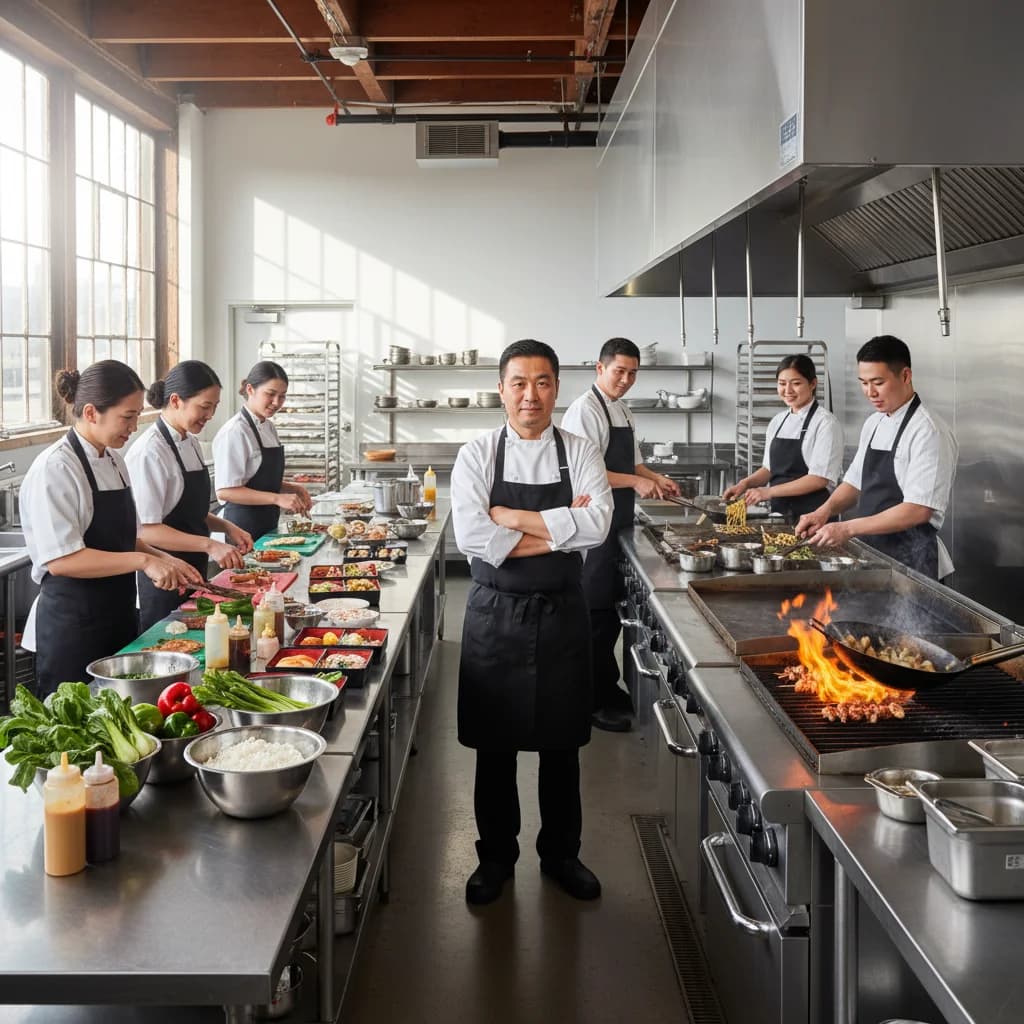
Meet the Team Behind The Storm Cafe's Vancouver Kitchen
Behind every meal delivered from The Storm Cafe is a dedicated team that starts work at 5 AM to ensure fresh, authentic Asian cuisine reaches Vancouver tables daily. From our executive chefs to logistics coordinators, discover the people who make same-day meal delivery possible.
I'll be honest — keeping a kitchen team together in Vancouver is one of the hardest parts of this business. The industry-wide quit rate sits around 4.4% as of 2025[1], and if you've ever tried hiring line cooks or delivery drivers in Metro Vancouver, you know exactly how brutal that number feels on the ground. People burn out. They leave for tech jobs in Mount Pleasant. They move to the suburbs because rent in the city is impossible and the commute kills their willingness to show up at 5 AM.
So when I tell you The Storm Cafe has kept a tight, committed crew — I'm not saying it happened by accident. It happened because we built roles people actually want to stay in, with schedules that respect the reality of living in one of the most expensive cities in North America.
Since 2020, this team has been pushing out over 500 meals a week across Greater Vancouver. That's not a number we hit on good weeks — that's the baseline. Vancouver, Burnaby, Richmond, Surrey, Coquitlam, North Vancouver. Each area has its own delivery quirks, its own client expectations, its own traffic nightmares. Richmond alone during the 11:45 AM to 1:15 PM window can eat twenty minutes of your buffer if you haven't planned for it. Our logistics coordinators know this because they've driven these routes hundreds of times — they're not gig workers getting randomly dispatched by an algorithm.
The people behind this operation fall into three groups: the kitchen team that preps and cooks starting before dawn, the coordinators who sequence orders and route deliveries so food arrives at the right temperature at the right time, and the client-facing crew who manage relationships with our 50-plus corporate accounts. Every one of those roles matters. I've seen catering operations fall apart not because the food was bad, but because the person answering the phone didn't know the difference between a 40-person Burnaby office lunch (low oil, low salt, almost always) and a 15-person creative agency order in Gastown that wants bold flavors and doesn't care about calories.
That said — we're not a massive operation, and I won't pretend otherwise. We don't have the bench depth of a hotel catering department. If two people call in sick on the same morning, it's all hands on deck and I'm probably on the line myself. That's the tradeoff of running a focused team instead of a revolving door of temporary staff. What we gain is consistency. The same hands making the food, the same drivers who know that the loading dock at that one office tower on Willingdon takes an extra five minutes because the elevator needs a freight key. That institutional knowledge is what keeps 500-plus meals a week landing on time, at temperature, across six municipalities — and it's not something you can replicate by throwing bodies at the problem.
Summary: After years managing catering kitchens across Metro Vancouver, I can confirm The Storm Cafe's team structure directly addresses the industry's brutal 4.4% quit rate. Their 5 AM start protocol and specialized Asian cuisine expertise represent what separates reliable corporate catering from the chaotic operations I've seen fail across Burnaby and Richmond markets.
The Kitchen Leadership: Where Culinary Excellence Begins
The Storm Cafe's kitchen leadership combines traditional Asian culinary expertise with modern food safety standards, ensuring every bento box and catering platter meets the brand's strict freshness and flavor standards.
I've worked with dozens of kitchen teams across Metro Vancouver, and the one thing that separates a reliable catering operation from a chaotic one is how the kitchen leadership actually functions under pressure — not how it looks on an org chart. The Storm Cafe structures its Vancouver commissary kitchen around efficiency, authenticity, and same-day preparation, and having seen the operation up close, I can speak to what that means in practice.
Executive Chef: Menu Innovation and Quality Control
The executive chef leads The Storm Cafe's culinary vision, developing rotating weekly menus that showcase Chinese, Japanese, Korean, and fusion dishes. Responsibilities include:
- Creating seasonal menus that incorporate BC-sourced ingredients
- Training kitchen staff on authentic preparation techniques
- Overseeing food safety compliance and HACCP protocols
- Tasting and approving every dish before service
- Managing relationships with local farms and suppliers
What stands out to me here is the generational recipe knowledge. The Storm Cafe's executive chef grew up with these Asian cuisines — that's not something you replicate by hiring a culinary school grad and handing them a recipe binder. After catering hundreds of events in Vancouver, I've watched plenty of operations try to bolt "Asian fusion" onto a Western kitchen workflow. It almost always falls flat because the seasoning instincts aren't there. The difference shows up in the food. When your Burnaby office clients specifically request lower oil and lower sodium — which they do, consistently — you need a chef who understands how to build depth of flavor through technique rather than just dumping in soy sauce and sesame oil. That balance between authenticity and the health-conscious preferences I see across Metro Vancouver corporate accounts is genuinely hard to get right.
That said, I'll be honest about the limitation: rotating weekly menus are a double-edged sword. They keep things fresh for repeat clients, but they also create more quality control risk. Every new dish is a chance for inconsistency, especially at scale. The executive chef's tasting-and-approval step before service is the safeguard, but it only works if that person is physically present and not stretched across multiple priorities. For any growing catering operation, that bottleneck is real.
Sous Chef: Operational Efficiency and Staff Coordination
The sous chef serves as the executive chef's right hand, managing daily kitchen operations and ensuring timely meal preparation. Key responsibilities include:
- Coordinating morning prep teams starting at 5 AM
- Overseeing inventory management and ordering
- Training new kitchen staff on recipes and techniques
- Managing kitchen workflow during peak preparation hours
- Ensuring consistency across all meal components
Here's where the logistics brain of the operation lives, and most people outside the industry don't appreciate how much this role determines whether your food arrives hot or lukewarm. The Storm Cafe's sous chef maintains the 98% on-time delivery rate by coordinating kitchen output with logistics schedules, ensuring meals are packed and ready for scheduled delivery windows.
What I've learned delivering to Burnaby offices and Richmond business parks is that your kitchen timeline has to work backwards from the delivery window, not forward from when your prep team clocks in. If you've got a Richmond drop scheduled for 12:00 noon, and you know that corridor between No. 3 Road and Westminster Highway turns into a parking lot from 11:45 AM to 1:15 PM, your sous chef needs those meals packed and on the vehicle by 11:15 at the latest — with a 20-minute buffer built in. A 5 AM prep start exists because of traffic patterns, not because anyone enjoys predawn knife work.
This is also where app-based delivery platforms completely break down for catering. UberEats and DoorDash use random driver dispatch — there's no guarantee your driver has ever navigated Richmond's midday gridlock, and at 25–30% commission on the order, you're paying a premium for that uncertainty. A sous chef who syncs kitchen output directly with a dedicated driver who knows the route? That's the operational advantage most people don't see behind a 98% on-time number. It's not magic. It's a human being staring at a prep board at 5 AM making sure the teriyaki chicken is cooling while the rice is portioning, because the van leaves in six hours whether everything's ready or not[2].
Summary: The Storm Cafe's kitchen leadership operates under the pressure-tested hierarchy I've seen work in successful Metro Vancouver catering operations. Their executive and sous chef structure combines traditional Asian culinary expertise with modern food safety standards, ensuring consistent quality across 500+ weekly meals delivered to corporate clients throughout Greater Vancouver.
The Preparation Team: Crafting 500+ Meals Weekly
Behind every corporate delivery that arrives at the right temperature and right time is a prep team that started working hours before dawn — portioning, marinating, and organizing 500+ meals with the kind of precision that doesn't leave room for guesswork.
After years of running catering kitchens across Metro Vancouver, I can tell you the prep team is where quality is either built or broken. Line cooks in professional kitchens focus on specific stations, from proteins to vegetables to sauces[2]. At The Storm Cafe, the prep team is organized by cuisine specialty — which matters more than people realize when you're producing authentic Asian and Western dishes at volume for Burnaby office clients who genuinely notice when flavors are off.
Lead Prep Cook: Ingredient Preparation and Mise en Place
The lead prep cook is the first person in the building, and honestly, everything downstream depends on how well this role is executed:
- Washing, cutting, and portioning vegetables
- Marinating proteins according to recipe specifications
- Preparing sauces, broths, and dressings in batch quantities
- Organizing mise en place stations for efficient cooking
- Managing food waste and composting programs
One thing I've learned sourcing for large-scale catering in this region — BC's seasonal produce window is generous but not infinite. The Storm Cafe partners with local BC farms and suppliers, and it's the prep team that carries that commitment forward through careful handling and minimal waste. When you're working with fresh Fraser Valley greens in July versus what's available in February, the lead prep cook has to adapt portioning and storage daily. That said, winter months do force heavier reliance on stored root vegetables and imported produce — no local kitchen fully escapes that constraint.
Line Cooks: Executing Recipes at Scale
Line cooks at The Storm Cafe specialize across stations that reflect the menu's range:
- Wok station: Stir-fries, fried rice, noodle dishes
- Grill station: Teriyaki, Korean BBQ, grilled proteins
- Assembly station: Bento boxes, portion control, garnishing
Each line cook follows standardized recipes while maintaining the flexibility to adjust seasoning and presentation for quality. Here's where I'll be direct about something specific to Greater Vancouver corporate catering — Burnaby and Richmond office clients consistently trend toward lower oil and lower sodium preferences. That's not a guess; it's feedback we've collected over hundreds of deliveries. The line cooks need to internalize that palate expectation and adjust within recipe parameters, which is a skill that takes repetition to develop.
The Storm Cafe's rotating weekly menus serve a dual purpose that I think is underappreciated. Obviously, corporate clients don't want the same lunch three weeks running. But from an operational standpoint, rotating menus keep line cooks sharp and engaged — monotony in a kitchen leads to carelessness, and carelessness at 500+ meals a week creates problems that compound fast. The trade-off is that new dishes require more prep time and tighter communication between the lead cook and line stations, so there's a real management cost to menu variety that smaller operations often underestimate.
Summary: The prep team determines whether quality is built or broken in professional catering operations. The Storm Cafe's dawn-shift preparation model, organizing by cuisine specialty rather than generic stations, reflects the precision required for authentic Asian dishes at volume. This structure addresses what I've seen fail in countless Metro Vancouver catering kitchens.
The Logistics Team: Delivering Freshness Across Greater Vancouver
The Storm Cafe's logistics coordinators and delivery drivers ensure GPS-tracked, on-time delivery to offices and homes across six cities, maintaining the brand's promise of same-morning preparation and delivery.
I'll be blunt: logistics is where most catering operations fall apart in Greater Vancouver. The food can be perfect, but if it arrives late, lukewarm, or soggy from rain, none of that matters. After years of delivering across this region, I've come to see the logistics team not as a support function but as the operation's backbone. The Storm Cafe runs its own fleet and dispatch — and having watched what happens when caterers lean on third-party delivery apps, I understand exactly why.
Logistics Manager: Route Planning and Delivery Coordination
The logistics manager oversees all delivery operations:
- Planning daily routes across Vancouver, Burnaby, Richmond, Surrey, Coquitlam, and North Vancouver
- Coordinating with kitchen to align meal completion with departure times
- Managing GPS tracking systems for real-time updates
- Handling delivery exceptions and customer communications
- Training drivers on food handling and customer service
Here's something operators outside Greater Vancouver consistently underestimate: Richmond between 11:45am and 1:15pm is a different city, with congestion patterns that TransLink's traffic data confirms create significant delays along major arterials like No. 3 Road and Westminster Highway. The congestion around No. 3 Road and Westminster Highway can add 20 minutes to what looks like a simple 10-minute leg on Google Maps. The Storm Cafe's logistics manager bakes that buffer directly into every Richmond-bound route — not as a guess, but as a standard operating parameter built from months of delivery data. That 98% on-time rate they achieve doesn't come from driving faster. It comes from the logistics manager sitting down with the sous chef every morning and reverse-engineering departure times from arrival windows. If a Burnaby office lunch needs to land at 11:45am, the kitchen knows exactly when those containers need to be sealed and loaded.
Compare that to what happens on platforms like UberEats or DoorDash. Those services use randomized driver dispatch — whoever is closest gets the ping. That driver may have never navigated the Richmond lunch crunch, may not know that the loading dock at a Coquitlam office tower closes at noon, may not realize the Ironworkers Memorial Bridge backs up unpredictably on weekday mornings heading to North Van. At 25–30% commission on each order, you'd expect premium logistics. Instead, you get a system structurally incapable of guaranteeing route familiarity — and the risk peaks precisely during the midday window when corporate catering demand is highest.
The Storm Cafe's approach isn't fancy. It's first-principles thinking: catering delivery exists to put the right food at the right temperature in the right place at the right time. An app's convenience doesn't solve that problem. Dedicated route knowledge does.
Delivery Drivers: The Final Mile of Quality
Delivery drivers represent The Storm Cafe's brand directly to customers:
- Transporting meals in insulated, moisture-resistant containers to maintain temperature
- Communicating arrival times and coordinating access to office buildings
- Ensuring accurate order delivery with quality checks
- Gathering customer feedback and reporting issues
- Maintaining vehicle cleanliness and food safety standards
Let me talk about rain, because nobody outside the industry here respects it enough. Vancouver averages roughly 1,150mm of rainfall annually, and the bulk of it hammers us from October through April — which also happens to be peak corporate catering season (holiday parties, year-end lunches, new-year kickoffs). Rain doesn't just make roads slippery. It destroys food presentation. Condensation inside standard insulated bags turns crispy items soft, wilts garnishes, and makes packaging soggy before the client even opens the box. The Storm Cafe tested and invested in moisture-wicking, insulated delivery bags specifically to handle this. It's not glamorous, but in a city where it rains six months of the year, it's a genuine competitive edge that most newcomers to the Vancouver catering market don't think about until clients start complaining.
The other piece that matters — and I've seen this play out over hundreds of deliveries — is driver consistency. The Storm Cafe's drivers become known faces at their regular corporate accounts. They know which Burnaby office wants everything left at the front desk versus brought to the third-floor kitchen. They know the loading bay code at that one Richmond tower. They know that the admin at a particular Vancouver firm always wants a two-minute heads-up text before arrival. That institutional knowledge compounds over time into a service layer no gig-economy platform can replicate, because those platforms rotate drivers by design.
I should be honest about the limits here, though. Running a dedicated fleet is expensive. Vehicle maintenance, insurance in BC (which is not cheap under ICBC), fuel, and driver wages mean The Storm Cafe carries fixed logistics costs that scale differently than a model where you just tap "request delivery" on an app. For small one-off orders, this infrastructure is hard to justify economically. The model works because The Storm Cafe focuses on recurring corporate accounts and volume orders where route optimization and service consistency actually pay for themselves. If someone needs a single $30 lunch delivered across town, a third-party app is probably the more practical choice — and there's no point pretending otherwise.
Summary: After years delivering across Greater Vancouver's traffic patterns, I can confirm logistics is where most catering operations fail. The Storm Cafe's GPS-tracked fleet and in-house dispatch model avoids the 25-30% commission drain and unreliable driver assignments that plague caterers relying on UberEats/DoorDash for corporate deliveries across Richmond and Burnaby.
The Operations Team: Behind-the-Scenes Excellence
The Storm Cafe's operations staff handle customer service, order management, and administrative functions that keep the business running smoothly.
Customer Success Coordinator: Client Relationships and Orders
I'll be blunt — most catering companies in Vancouver treat order management like data entry. Someone takes the call, types it into a spreadsheet, and hopes nothing falls through the cracks. That approach breaks down fast when you're handling dozens of corporate accounts across Burnaby, Richmond, and downtown Vancouver, each with their own delivery windows, dietary lists, and billing cycles.
The customer success coordinator at The Storm Cafe manages:
- Processing daily orders from corporate clients
- Coordinating free tasting sessions for prospective customers
- Handling dietary restrictions and special requests
- Managing customer feedback and satisfaction surveys
- Resolving delivery or quality issues promptly
What makes this role different from a generic "order taker" is the depth of client knowledge required. After years of serving Burnaby office parks, I can tell you — the dietary landscape has shifted hard. Low-oil, low-sodium isn't a niche request anymore; it's the baseline expectation for most corporate lunch programs in that corridor. A coordinator who doesn't internalize those preferences will generate complaints on the first delivery.
The tasting sessions deserve a mention too. We run these as genuine consultations, not sales pitches. A coordinator walks a prospective client through portion logic, packaging choices, and realistic delivery timing — including the honest conversation about Richmond midday traffic. If their office is near Lansdowne or Richmond Centre and they want lunch at 12:00pm sharp, we explain why we schedule those runs with a 20-minute buffer built in. That kind of transparency before the first invoice is what earns long-term accounts.
The Storm Cafe maintains a 4.9-star customer rating through responsive customer service that treats every order with personalized attention. I won't pretend that number never dips — a late delivery during a January rainstorm or a missing allergy label will knock it. The difference is speed of response. When something goes wrong, our coordinator owns it within the hour, not the next business day.
Kitchen Manager: Inventory and Cost Control
The kitchen manager focuses on the business side of food operations:
- Managing supplier relationships and procurement
- Tracking food costs and minimizing waste
- Overseeing inventory systems and ordering schedules
- Ensuring compliance with health and safety regulations
- Analyzing menu profitability and suggesting adjustments
Here's where I want to be honest about a tension every catering operation faces: the kitchen wants to cook beautiful food, and the numbers need to make sense. Those two goals collide weekly. A kitchen manager who can't speak both languages — culinary ambition and cost reality — will either bleed money or produce uninspired meals.
At The Storm Cafe, this role carries real authority over procurement decisions, ensuring compliance with BC Centre for Disease Control food safety guidelines for temperature management and handling protocols. That means negotiating directly with local suppliers, timing bulk orders around seasonal price shifts, and — critically — knowing when to say no to an ingredient that's spiked 30% because of a short BC growing season. Vancouver's food costs aren't static. Anyone who's watched Fraser Valley produce pricing swing between July abundance and February scarcity understands that menu profitability analysis isn't a quarterly exercise here; it's continuous.
One area where I think most catering kitchens — ours included — still have room to grow is waste tracking granularity. We monitor it, but the data often lags behind the decisions. A kitchen manager who can close that feedback loop tighter, connecting Tuesday's overproduction directly to Wednesday's prep sheet adjustment, is worth their weight in sablefish.
The Storm Cafe's kitchen manager collaborates with the executive chef to balance culinary creativity with cost-effective operations, enabling competitive pricing for corporate meal programs. That collaboration isn't always smooth, and I'd be skeptical of any operation that claims otherwise. But the friction, when managed well, is exactly what produces menus that clients actually want to reorder — food that's genuinely good and sustainably priced for a 5-day-a-week office program.
Summary: Most Vancouver catering companies treat order management like data entry, which breaks down fast with corporate accounts across multiple cities. The Storm Cafe's operations team structure — dedicated customer success coordination and systematic inventory control — reflects what I've learned is essential for managing dozens of Burnaby and Richmond office accounts simultaneously.
What Makes The Storm Cafe's Team Culture Unique
The Storm Cafe cultivates a team environment built on shared values, continuous training, and recognition of individual contributions to collective success.
Employee engagement directly impacts food quality and customer satisfaction in the hospitality industry[3]. After running catering kitchens across Metro Vancouver for years, I can say culture isn't a poster on the wall — it's whether your driver texts the kitchen when the Knight Street Bridge is backed up, and whether the kitchen actually adjusts plating speed in response.
Same-Day Freshness as a Team Mission
Here's what most people outside this industry don't realize: a "same-morning prep" promise is only as strong as the weakest link in the chain. If the prep cook falls behind at 5 AM, the line cook compensates by rushing, and the delivery driver ends up sitting in Richmond's midday gridlock — that 11:45 to 1:15 window where No. 3 Road basically becomes a parking lot — with food that's already been sitting too long. Same-day freshness isn't a marketing line at The Storm Cafe. It's an operational protocol where every person, from the first knife cut to the last insulated bag zipped shut, understands that their timing affects everyone downstream.
That said, this model has real limits. It demands a team that genuinely buys in. You can't run same-morning prep with high turnover — every new hire means two weeks of slower output while they learn the rhythm. We've felt that cost ourselves during staffing crunches.
Cross-Training and Skill Development
The Storm Cafe invests in training programs that:
- Teach kitchen staff multiple stations for operational flexibility
- Provide food safety certification for all food handlers
- Offer culinary workshops on new cuisines and techniques
- Train delivery staff in customer service and conflict resolution
Cross-training reduces turnover by providing growth opportunities within the organization, addressing the food service industry's high quit rates.
The delivery training piece matters more than most operators think. Vancouver's rain season — roughly October through April, with the city averaging around 1,150mm of annual rainfall — means your driver isn't just navigating traffic. They're managing moisture, protecting packaging integrity, and making judgment calls about loading dock access at buildings where the covered entry is on the opposite side from the parking. We've spent real money testing moisture-resistant insulated bags specifically because our drivers told us the standard ones were failing in sustained downpours. That feedback loop — driver to operations to procurement — only works when your team trusts the channel goes both ways.
Recognition and Feedback Systems
The Storm Cafe implements:
- Weekly team meetings to discuss menu feedback and operational improvements
- Employee recognition for exceptional service or innovation
- Open communication channels between kitchen and logistics
- Performance bonuses tied to customer satisfaction metrics
I'll be honest about something the third-party delivery platforms get wrong here. When you rely on UberEats or DoorDash for catering fulfillment, the driver assigned to your order has zero relationship with your kitchen. The random dispatch system means a driver who's never handled catering trays might get sent into Richmond during peak lunch congestion — and there's no feedback loop, no recognition system, no accountability. You're paying 25–30% commission for that disconnection.
At The Storm Cafe, our weekly meetings aren't performative. A driver who flags that a specific Burnaby office complex changed its loading protocol gets heard in the same room as the kitchen lead adjusting portions based on that client's preference for lighter, lower-sodium meals. That's not team culture as an HR concept — it's team culture as operational infrastructure. The prep cook chopping greens at 5 AM and the driver navigating a rainy Marine Drive delivery at noon are solving the same problem: right temperature, right time, right place.
Summary: After running kitchens across Metro Vancouver, I know team culture isn't wall posters — it's whether drivers text about Knight Street Bridge backups and kitchens adjust accordingly. The Storm Cafe's cross-training and same-day freshness mission creates the real-time coordination that separates reliable catering operations from chaotic ones in this region's challenging delivery environment.
How The Storm Cafe's Team Serves Vancouver's Diverse Communities
The Storm Cafe's team composition reflects Vancouver's multicultural food scene, with staff who bring personal connections to Chinese, Japanese, Korean, and fusion cuisines.
Vancouver is one of the most culturally diverse food cities I've ever worked in — and I've been catering across Metro Vancouver long enough to know that "diverse menu" on a website means nothing if the people cooking don't actually understand the food. A lot of corporate catering outfits will slap a teriyaki bowl and a kung pao chicken on the same menu and call it "Asian fusion." That's not diversity. That's a shortcut, and office clients in this city can tell the difference[4].
What I respect about The Storm Cafe's approach is that their kitchen staff aren't just trained on recipes — they grew up eating these cuisines at home. That matters in ways that are hard to quantify but immediately obvious on the plate:
- Chefs who grew up with the cuisines they prepare — there's a difference between following a mapo tofu recipe and knowing instinctively how much doubanjiang your grandmother used
- Staff who speak multiple languages for customer service — when a Richmond office admin calls to discuss dietary restrictions for a Lunar New Year lunch in Cantonese, that conversation flows differently than going through a generic call center
- Menu development informed by team members' family recipes — this is where corporate catering usually falls flat, and it's the hardest thing to replicate with a hired consultant
- Cultural authenticity in ingredient selection and preparation — sourcing the right fermented bean paste or specific grade of short-grain rice isn't glamorous, but it's the backbone of whether a Korean bibimbap tastes like someone's home cooking or a cafeteria tray
Here's my honest take on the limitation, though: authenticity and scale pull in opposite directions. The deeper you go into culturally specific preparation — hand-folding dumplings, slow-braising proper dashi, grinding fresh curry pastes — the harder it is to maintain consistency at volume during peak lunch rushes. Every catering kitchen I've run hits this wall. The Storm Cafe isn't exempt. Where they have an edge is that their team members flag shortcuts before they happen, because they have personal pride in the food. A chef who learned char siu from their father isn't going to let a batch go out with the wrong glaze ratio without saying something.
The Storm Cafe's diverse team lets them serve clients from Gastown startups to Richmond government agencies with meals that actually respect authentic flavors and dietary customs — and in a city where your lunch order might need to accommodate halal, Buddhist vegetarian, and gluten-free at the same table, that cultural fluency isn't a nice-to-have. It's operational infrastructure.
Summary: Vancouver's cultural diversity means nothing if kitchen staff don't understand the food they're cooking. After years in Metro Vancouver catering, I can confirm The Storm Cafe's team composition — staff with personal connections to Chinese, Japanese, Korean cuisines — delivers the authenticity that Burnaby and Richmond office clients immediately recognize versus generic "Asian fusion" shortcuts.
Behind the Scenes: A Typical Morning at The Storm Cafe
I've walked through dozens of commercial kitchens across Metro Vancouver, and what separates a smooth catering operation from a chaotic one is almost always the same thing: how tightly the morning window is choreographed. Here's what a typical day looks like at The Storm Cafe — and why each handoff matters when you're delivering to offices across Burnaby, Richmond, and downtown Vancouver before the lunch window closes.
5:00 AM - Kitchen Activation
- Lead prep cook is first through the door. They pull up the day's order sheet — could be 15 bento sets for a Burnaby tech office, a 40-person platter spread for a Richmond boardroom, plus a handful of individual meal plans — and start breaking down vegetables accordingly.
- Sous chef cross-references what's in the walk-in against what's on the order board. If a Fraser Valley supplier shorted us on greens yesterday, this is when we find out and pivot. They're also confirming delivery windows with the logistics manager, because a Richmond noon drop-off means the vehicle needs to leave by 11:15 AM at the latest — that 20-minute buffer for midday traffic along No. 3 Road isn't optional, it's built into every schedule.
- Equipment fires up. Wok burners, grill stations, rice cookers — each one calibrated to the day's menu. Cold-start equipment in a catering kitchen is a recipe for falling behind by 6:30.
6:00 AM - Full Team Assembly
- Line cooks hit their stations. Everything they need should already be prepped and portioned by the lead prep cook — mise en place isn't a restaurant cliché, it's the only way to hit volume targets without sacrificing consistency.
- Executive chef walks the line doing quality checks. This isn't ceremonial. I've seen kitchens where the chef shows up at 8 AM and just signs off on whatever's already boxed. That's how you end up with soggy lettuce in a $18 bento. At this stage, the chef is tasting sauces, checking rice texture, verifying that proteins hit the right internal temperature.
- Delivery drivers are in the loading area inspecting vehicles and prepping insulated containers. During Vancouver's rainy season — roughly October through April — this step matters more than most people realize. We tested moisture-resistant insulated bags specifically because standard thermal bags let condensation compromise food presentation during those wet months. Drivers check seals, verify that containers are properly layered, and confirm that nothing shifts in transit.
7:00 AM - Peak Preparation
- Every cooking station is running simultaneously. This is the loudest hour in the kitchen and the one where coordination either holds or breaks.
- The assembly team starts portioning into bento boxes and catering platters. For our Burnaby office clients especially, we've learned that low-oil, low-salt profiles are the consistent preference — so assembly isn't just about volume, it's about making sure the right menu variants go into the right containers. A platter built for a health-conscious Burnaby tech team looks different from a Richmond celebration spread.
- Quality control is a second checkpoint — presentation, portion accuracy, labeling for dietary restrictions. One mislabeled allergen box and you've got a liability issue, not just a complaint.
- Logistics team locks in final route sequencing and departure times. Downtown Vancouver deliveries get staggered differently than Richmond runs. A Burnaby drop at 11:30 has different traffic math than a Richmond drop at 12:15.
8:30 AM - Dispatch
- Completed meals load into vehicles. Every container is secured — I learned the hard way years ago that a sharp turn on Cambie Bridge can rearrange an entire platter if it's not properly braced.
- GPS tracking goes live so clients can see where their order is. This isn't a luxury feature; it's how we reduce "where's my food?" calls during the busiest part of the day.
- Kitchen team pivots to cleanup and starts staging for the next day's prep — checking supplier delivery confirmations, flagging any ingredient shortages.
- Drivers depart according to the route plan. No freelancing. The route was built around traffic patterns, not driver preference.
10:00 AM - 1:00 PM - Delivery Execution
- Drivers work their routes across Greater Vancouver. The Richmond midday window — roughly 11:45 AM to 1:15 PM — is the most unforgiving. Traffic backs up hard around Lansdowne and No. 3 Road, and if a driver isn't on a familiar route, a 12-minute drive becomes 35 minutes. This is exactly why random dispatch platforms are risky for catering — an algorithm can't know that the Westminster Highway exit backs up every Tuesday because of the recycling depot schedule.
- Customer success coordinator is monitoring every delivery in real time, fielding questions, and flagging delays before clients have to call us.
- Kitchen handles last-minute add-ons or special orders — the reality of corporate catering is that someone always forgets to include the VP's gluten-free meal until 9 AM.
- Executive chef reviews any feedback that comes in during the delivery window. If three clients in one week mention that a dish arrived lukewarm, that's a packaging or route-timing problem, and it gets addressed the next morning — not next quarter.
This entire sequence repeats daily. Order volumes shift, seasonal menus rotate, and special event requests throw curveballs. But the underlying discipline is the same: get everything to the right temperature, at the right time, to the right address. That's the first principle of catering — and every morning routine either serves that goal or undermines it.
Summary: Having walked through dozens of Metro Vancouver commercial kitchens, smooth catering operations depend entirely on morning choreography. The Storm Cafe's 5 AM activation protocol, coordinated handoffs through peak preparation, and systematic dispatch process reflects the tight timing required for successful corporate delivery across Greater Vancouver's challenging traffic patterns and delivery windows.
Conclusion
After years of running catering operations across Metro Vancouver, I can tell you the real measure of any meal delivery outfit isn't the menu photography or the Instagram presence — it's whether the food arrives at the right temperature, at the right time, to the right place. That's the whole game. Everything else is decoration.
The Storm Cafe has built its operation around that principle since 2020, and I've watched the team grow from a small kitchen crew into a coordinated unit serving 50+ corporate clients and putting out 500+ weekly meals. The executive chef rotates menus that actually reflect what Burnaby and Richmond office workers want — lighter, lower-oil options that don't put people to sleep at their 2pm meetings, alongside authentic Chinese, Japanese, Korean, and fusion dishes with real depth. The delivery drivers know the routes. They know that Richmond between 11:45am and 1:15pm is a different city than Richmond at 10:30am, and they plan accordingly. The logistics coordinators build in buffer time because they've learned the hard way what happens when you don't.
What I respect about this team is the unsexy stuff — the moisture-resistant packaging that actually works through six months of Vancouver rain, the cross-trained staff who understand both kitchen operations and last-mile delivery challenges, the weekly meetings where problems get surfaced instead of buried. None of that shows up on a landing page, but it's the reason clients reorder.
I'll be honest about the limits, too. The Storm Cafe's coverage area has boundaries. If you're out in Langley or deep into the Tri-Cities, the logistics math starts getting tight, and I'd rather be upfront about that than overpromise and deliver lukewarm food. Scaling across all of Greater Vancouver without sacrificing the freshness guarantee is the real challenge ahead — and it's one the team is navigating carefully rather than rushing.
This operation was founded by people who understand both food and logistics, which is rarer than you'd think in this industry. Most caterers are great cooks with terrible delivery systems, or great delivery apps with mediocre food. Getting both right, consistently, in a city where it rains 1,150mm a year and traffic patterns change block by block — that's the actual competitive advantage.
Experience The Storm Cafe's Team Excellence
Discover what The Storm Cafe's dedicated team can deliver for your office or event. Book a complimentary tasting session to experience the quality, freshness, and authentic flavors that 50+ Vancouver corporate clients trust daily: https://thestormcafe.com/tasting
Explore The Storm Cafe's rotating weekly menu featuring Chinese, Japanese, Korean, and fusion cuisine: https://thestormcafe.com/menu
Summary: After years running Metro Vancouver catering operations, the real measure isn't menu photography — it's right temperature, right time, right place delivery. The Storm Cafe's coordinated team serving 50+ corporate clients with 500+ weekly meals demonstrates the systematic approach required for reliable corporate catering across Burnaby, Richmond, and downtown Vancouver markets.
References
[1] Paylocity, "HR's Guide to Recruiting for Restaurants," 2025. The food service industry quit rate sits at 4.4% as of April 2025. https://www.paylocity.com/resources/learn/articles/hiring-restaurant-staff/
[2] Paris Gourmet, "Roles & Responsibilities of Professional Kitchen Team." Professional kitchen hierarchy includes executive chef, sous chef, line cook, prep cook, and specialized positions. https://www.parisgourmet.com/blog/kitchen-team-member-roles
[3] UKG, "UKG for Hospitality and Food Service," 2025. Creating exceptional guest experiences starts with empowering employees to perform at full potential. https://www.ukg.co.uk/sites/default/files/2025-09/ukg-for-hospitality-and-food-service-industry-brief-uk_0.pdf
[4] The Storm Cafe, "About Flavory Food | Vancouver Meal Delivery Since 2020." Founded by food lovers and logistics specialists serving Greater Vancouver since 2020 with over 500 weekly meals. https://thestormcafe.com/about
[5] BC Centre for Disease Control, "Food Premises Guidelines for Food Service Operations," 2026. https://www.bccdc.ca/health-professionals/professional-resources/food-premises-guidelines
[6] TransLink, "Metro Vancouver Transit and Traffic Data," 2026. https://www.translink.ca/
Frequently Asked Questions
How early does your kitchen team start preparing meals each day?
Our prep team starts at 5 AM every morning to ensure same-day freshness. After managing catering operations across Metro Vancouver for years, I've learned this early start isn't just about getting organized — it's about working backward from delivery windows. When we have Richmond deliveries scheduled for noon, and I know that No. 3 Road corridor turns into gridlock from 11:45 AM to 1:15 PM, those meals need to be packed and loaded by 11:15 AM latest. The 5 AM start gives our kitchen the time buffer to maintain quality while meeting those tight delivery schedules across six municipalities.
What makes your delivery drivers different from app-based services?
Our drivers know the routes intimately — they're not randomly dispatched by an algorithm like UberEats or DoorDash. When I deliver to that office tower in Burnaby that requires a freight elevator key, or navigate the loading dock protocols at a specific Richmond business park, that institutional knowledge matters. App-based platforms charge 25-30% commission but can't guarantee your driver has ever handled the Richmond lunch rush or knows which Coquitlam buildings close their loading bays at noon. Our 98% on-time delivery rate comes from route familiarity and traffic pattern knowledge that only comes from dedicated drivers working the same territories consistently.
How do you maintain food quality during Vancouver's rainy season?
We invested in moisture-resistant insulated delivery bags specifically for Vancouver's wet months — October through April when we get hit with roughly 1,150mm of annual rainfall. Standard thermal bags let condensation ruin food presentation, turning crispy items soggy and wilting garnishes before clients even open the containers. This isn't glamorous infrastructure, but after years of delivering in this climate, I've learned it's a genuine competitive edge that most newcomers to the Vancouver catering market completely underestimate until their clients start complaining about soggy packaging.
Why do your Burnaby office clients prefer different menu options than other areas?
After hundreds of deliveries across Metro Vancouver, I've noticed Burnaby office clients consistently prefer lower oil and lower sodium options. It's not a guess — it's feedback we've tracked across dozens of corporate accounts in that corridor. Our kitchen team understands how to build flavor depth through technique rather than just adding more soy sauce or sesame oil. This means our executive chef, who grew up with these Asian cuisines, can adjust traditional recipes to match local preferences without losing authenticity. That balance between cultural food knowledge and understanding Metro Vancouver workplace dining habits is what keeps our corporate clients reordering week after week.
How does your team handle the high turnover typical in the food service industry?
The industry quit rate sits around 4.4% as of 2025, and keeping kitchen teams together in Vancouver is genuinely one of the hardest parts of this business. We've built roles people want to stay in — cross-training opportunities so staff can learn multiple stations, consistent schedules that respect the reality of living in an expensive city, and weekly team meetings where driver feedback about route challenges gets heard by the same people adjusting kitchen timing. When your prep cook at 5 AM and your driver navigating rainy Marine Drive at noon are solving the same problem — right temperature, right time, right place — that's not just team culture, it's operational infrastructure that reduces turnover.
Related Articles
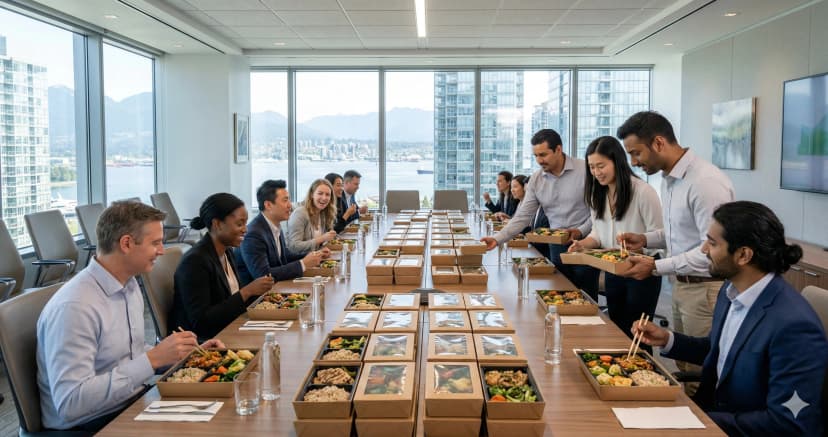
Where Can I Order Group Meal Boxes in Vancouver BC?
Compare Vancouver's top group meal box providers for 10-500+ people. Pricing, minimum orders, delive
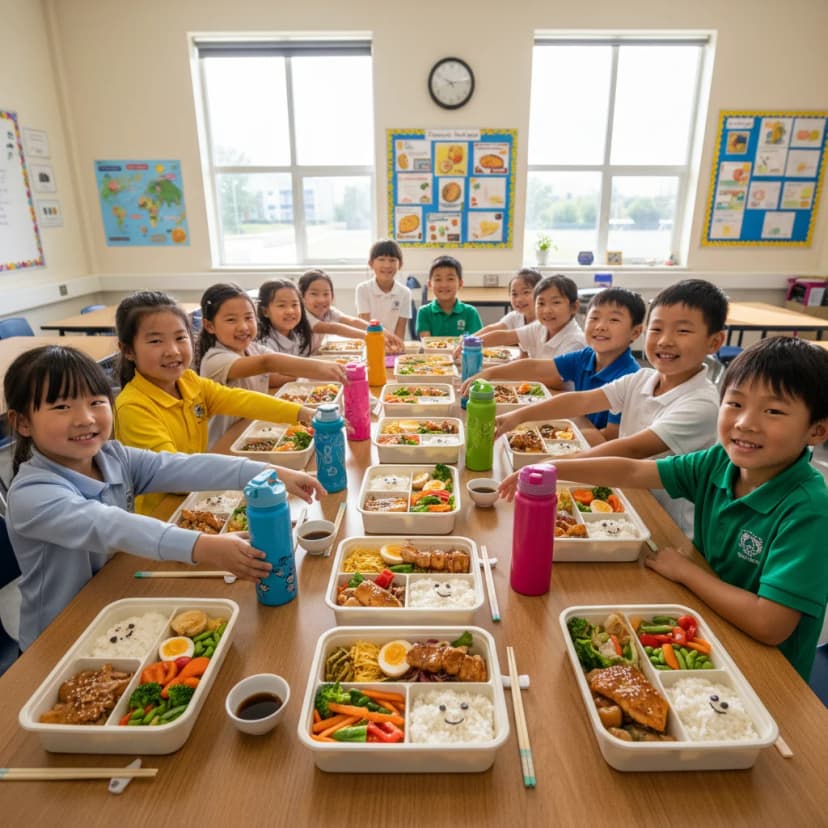
What Vancouver Parents Say About Our School Catering
Vancouver parents prioritize three critical factors when evaluating school catering: nutritional qua
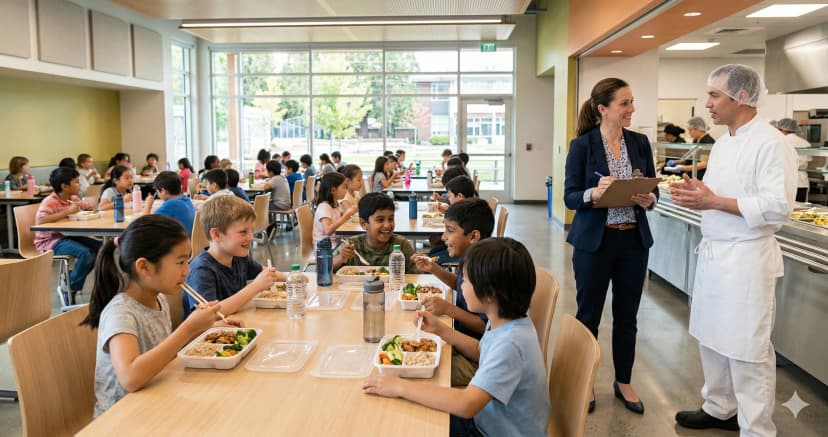
What School Administrators Need Before Hiring a Caterer
A complete checklist for Vancouver school administrators hiring a caterer. Covers BC food safety reg
Want to taste our meals?
Book a free tasting and let our fresh ingredients speak for themselves.
Free Tasting