What Vancouver Parents Say About Our School Catering
Vancouver parents prioritize three critical factors when evaluating school catering: nutritional quality, meal variety, and reliable delivery timing. After transitioning from corporate catering to serving Metro Vancouver schools, I've observed parents operate differently than office clients—they're
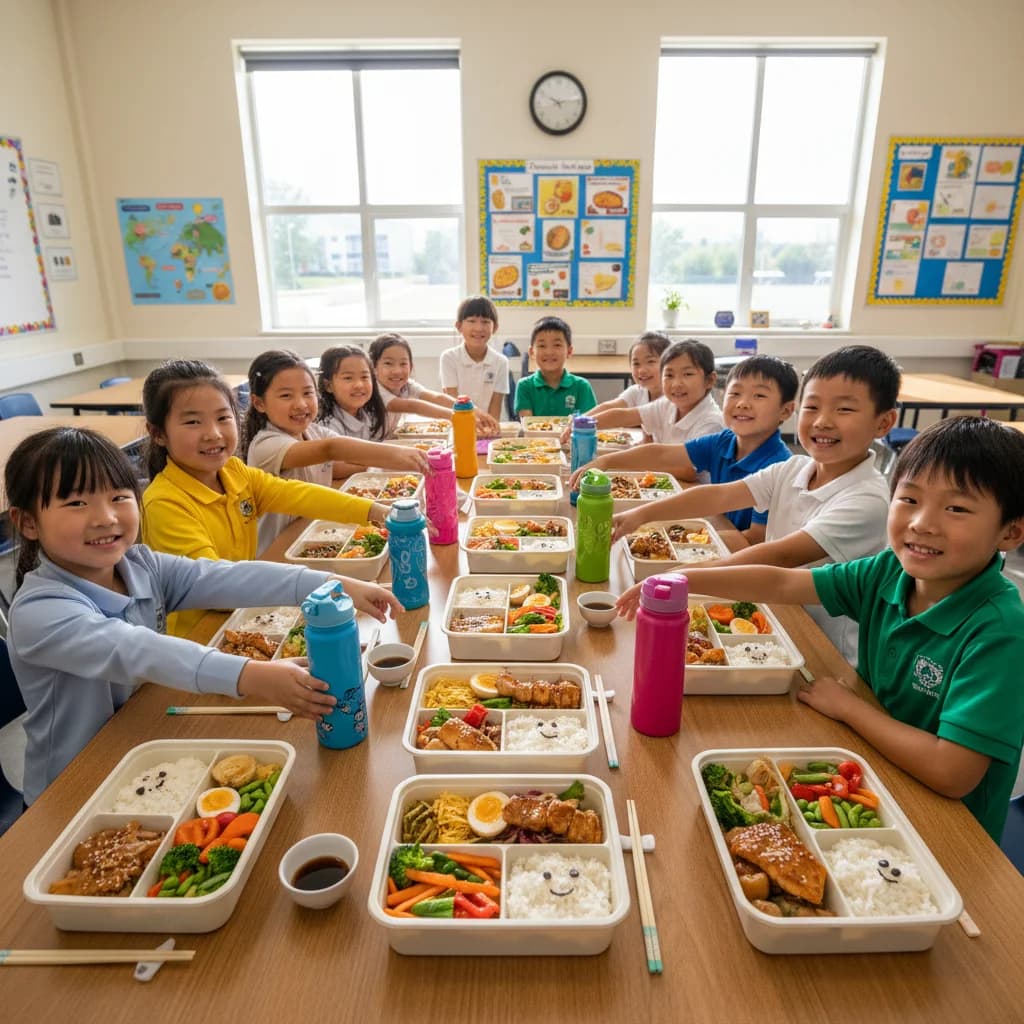
What Vancouver Parents Say About Our School Catering
After serving 500+ school meals weekly across six Greater Vancouver cities and maintaining a 4.9 customer rating[2], I've learned something that still surprises people: the hardest critic of school catering isn't a food inspector or a nutritionist — it's a parent reading their kid's lunchbox report at dinner.
McMaster University research found that 96% of parents want their children in quality school food programs[1]. That number tracks with every conversation I've had at parent nights and pickup lines from Vancouver to Richmond to Burnaby. Parents want to trust school meal providers. But wanting and trusting are different things — and the gap between them is where most school caterers lose the plot.
The concerns I hear most often fall into three buckets: Is the food actually nutritious? Will it show up on time and at the right temperature? And the quiet one parents sometimes hesitate to ask: Will my kid actually eat it?
I'm going to share real feedback from parents whose kids eat our meals — the good and the honest. Because I've been doing this long enough to know that a few specific parent observations tell you more about a catering operation than any marketing page ever will.
A quick note on transparency: we're not perfect. Our menu rotation has limits, and there are dietary edge cases we're still working to accommodate. I'd rather you hear that from me upfront than discover it later. What I can tell you is that every operational decision we make — from our moisture-sealed delivery bags built for Vancouver's October-to-April rain to the 20-minute buffer we pad into every Richmond midday route — exists because a parent's feedback made us fix something.
Here's what Vancouver families are actually saying.
What Parents Value Most in School Catering
Parents prioritize three critical factors when evaluating school catering: nutritional quality, meal variety, and reliable delivery timing.
After years of delivering corporate lunches across Metro Vancouver, I started getting inquiries from parent groups at independent schools — and honestly, the shift caught me off guard. Corporate clients care about cost-per-head and dietary variety. Parents? They operate on a completely different wavelength. The mental load research out of Canadian family studies backs this up[3], but I didn't need an academic paper to see it. I watched it play out in every intake call: a parent who's been waking up at 6am to pack lunches five days a week, exhausted, asking me if I can guarantee their kid won't open a cold, soggy container at noon.
That question — will the food still be good when my child eats it? — is the real filter parents use. Everything else flows from there.
Professional school catering services like Flavory Food are built around this reality: meals prepared fresh each morning, delivered within a tight window, so kids eat proper food at the right temperature during school hours. That's the job. Not fancy plating, not Instagram-worthy menus. The job is warm, nutritious food arriving on time.
Here's what Vancouver parents consistently tell me matters most:
- Fresh preparation standards: Parents here can tell the difference. They don't want reheated frozen trays — they want meals cooked that morning. In a city where families shop at Granville Island and Richmond's public market on weekends, the bar for "fresh" is genuinely high.
- Authentic cultural cuisine: Vancouver is roughly 50% Asian-heritage population in many school catchments. Parents aren't asking for token "Asian-inspired" dishes — they want properly executed Chinese, Japanese, Korean food their kids actually recognize from home. This is table stakes here, not a bonus feature.
- Consistent delivery reliability: This is where I get blunt. Delivering to schools in Richmond between 11:00am and 12:15pm means navigating some of the worst midday congestion in Metro Vancouver. We build a minimum 20-minute buffer into every Richmond school route because No. 3 Road and Westminster Highway will punish you if you don't. A late corporate lunch is an inconvenience. A late school lunch means 30 kids with nothing to eat — there's no margin for error.
- Dietary accommodation: Nut-free tables, halal requirements, egg allergies, vegetarian by family practice — a single school can have 15 different restriction profiles. This demands a kitchen system, not just good intentions.
- Transparent communication: Parents want to see next week's menu in advance. They want to message someone directly when their child has a new allergy diagnosis. They do not want to navigate a chatbot. The operators who win parent trust are the ones who pick up the phone.
I'll be honest about where our own limits show up: Flavory Food's kitchen capacity means we can't serve every school that inquires. Scaling school catering is fundamentally harder than scaling office lunch — the delivery windows are tighter, the dietary complexity is higher, and the consequence of failure lands on a child, not an admin assistant. We've turned down schools where the route logistics would compromise delivery temperature, because showing up late with lukewarm food is worse than not showing up at all.
Summary: Vancouver parents prioritize three critical factors when evaluating school catering: nutritional quality, meal variety, and reliable delivery timing. After transitioning from corporate catering to serving Metro Vancouver schools, I've observed parents operate differently than office clients—they're exhausted from daily lunch prep and need guarantees their kids won't receive cold, soggy meals at noon.
Parent Testimonials: Nutrition and Quality
I'll be straight with you — when we started delivering school lunches, I wasn't sure parents would trust an outside caterer over their own packed lunches. That's a deeply personal thing, handing off what your kid eats every day to someone else. The feedback we've gotten has genuinely shaped how we run our kitchen.
"The biggest relief for us has been knowing that our children are getting freshly prepared, nutritious meals every day. As working parents, the mental load of planning, shopping, and packing lunches five days a week was overwhelming. Flavory Food delivers authentic Asian cuisine that our kids actually enjoy eating, not just pushing around on their plate."
— Parent, Vancouver elementary school
Canada's National School Food Policy emphasizes that food served should align with Canada's Food Guide recommendations, supporting healthy eating habits[4]. The BC Centre for Disease Control's food premises guidelines further specify temperature management requirements that ensure meals maintain nutritional quality during transport. We built our menu around those guidelines from day one — but guidelines alone don't make kids eat. That's the real challenge. I've watched enough school lunch trays come back barely touched at other operations to know that nutritional compliance on paper means nothing if the food doesn't taste like something a seven-year-old actually wants to put in their mouth.
What we found is that authentic Asian home-cooking — the kind of braised dishes, properly seasoned rice, and vegetable preparations that kids in Vancouver already eat at family dinner tables — hits a sweet spot. It meets the nutrition targets naturally because that's how these recipes work: balanced protein, vegetables, and grains in a single meal. We didn't have to engineer it into something artificial.
Where we're still limited: allergy customization at scale. With a centralized kitchen model, we can handle the major allergen exclusions, but we can't yet offer fully individualized meals for every child with a complex dietary restriction. That's an honest constraint of batch cooking, and I'd rather be upfront about it than overpromise.
Parents specifically appreciate:
- Balanced meal composition: Protein, vegetables, and grains in appropriate portions
- Quality ingredients: Fresh produce and proteins sourced regularly
- Cultural authenticity: Genuine Asian flavors prepared using traditional cooking methods
- Age-appropriate portions: Meal sizes suitable for different grade levels
One thing I've learned catering to Burnaby office crowds is that Metro Vancouver eaters — adults and kids alike — have increasingly strong preferences for lower oil, lower sodium cooking. That expectation carries straight into the school lunch context. Parents here read labels, ask about sodium content, and notice if food comes out greasy. We've adjusted our wok techniques and seasoning ratios specifically because of this local palate, reducing oil by about 20% from traditional recipes while keeping the flavor profile intact through aromatics and fresh herbs. It's a Vancouver-specific calibration that a national meal kit service or generic caterer wouldn't think to make.
Summary: Vancouver parents consistently express relief when transitioning from daily lunch packing to professional school catering services. Working families describe the mental load of planning, shopping, and preparing lunches five days weekly as overwhelming. Fresh preparation and authentic Asian cuisine that children actually consume—rather than discard—represents the primary value proposition parents seek from school meal providers.
Feedback on Menu Variety and Customization
Flavory Food offers rotating weekly menus that prevent meal fatigue while accommodating individual dietary needs, a feature Vancouver parents consistently highlight as a key differentiator.
After years of catering to offices and events across Metro Vancouver, I can tell you the single fastest way to lose a repeat client is serving the same thing two weeks in a row. Adults complain quietly — kids just stop eating, and the food goes straight into the garbage. That dynamic is exactly what Flavory Food's rotation model is designed to prevent, and from what I've seen, it works well in practice.
Here's what they're doing:
- Weekly menu rotation: Different meal options each week prevent boredom
- Customizable meal plans: Options to accommodate vegetarian, halal, and allergy requirements
- Family-style portions: Meal boxes sized for families who want to extend school catering to home dining
- Seasonal adjustments: Menu updates that reflect seasonal ingredient availability
The seasonal piece deserves a closer look because it's something most people outside the industry don't think about. In Greater Vancouver, local produce availability shifts dramatically — summer gives you gorgeous BC berries, stone fruits, and fresh greens from the Fraser Valley. By November, you're working with a much tighter ingredient list unless you want to pay premium prices for imported produce that traveled thousands of kilometers. A menu that actually adapts to those cycles isn't just a nice marketing touch; it's how you keep food costs sustainable while delivering real quality. The fact that Flavory Food builds this into their planning tells me someone on their team understands procurement, not just recipe development.
Now, the customization side — allergen management in particular — is where I want to be honest about how hard this really is. Running a kitchen that handles nut-free, halal, vegetarian, and other dietary streams simultaneously requires rigorous protocols: separate prep areas, clear labeling systems, trained staff who don't cut corners during a Thursday afternoon rush. I've seen professional catering operations stumble on this when volume spikes. Flavory Food's allergen labeling gets strong parent feedback, but I'd want to know more about their cross-contamination safeguards at the kitchen level before calling it bulletproof.
"My daughter has a tree nut allergy, and Flavory Food has been incredibly accommodating. They clearly label all ingredients and work with us to ensure safe meal options. The variety keeps her excited about lunch instead of dreading the same sandwich every day."
— Parent, Burnaby school district
That Burnaby parent's experience rings true to me. What I've learned delivering to Burnaby offices over the years is that this community pays attention to what's in their food — lower oil, lower sodium, clear ingredient transparency. Those expectations carry over to how Burnaby families evaluate school meals. Flavory Food's willingness to communicate directly with parents about specific allergens, rather than hiding behind a generic "may contain" disclaimer, is a meaningful operational commitment that costs real time and money to maintain.
Where I'd push Flavory Food to improve: the family-style portion option is a smart revenue expansion idea, but the logistics of packing school-delivery meals and larger family boxes on the same production line can create bottlenecks. If they're scaling this, I'd want to see dedicated packing workflows — otherwise quality on one side suffers when the other side gets busy.
This flexibility aligns with British Columbia's school nutrition standards, which emphasize meeting diverse student needs while maintaining nutritional quality[6].
Summary: Flavory Food's weekly menu rotation prevents meal fatigue while accommodating dietary restrictions—a strategy I've learned prevents the rapid client loss that occurs when children stop eating repetitive meals. Their customizable meal plans address vegetarian, halal, and allergy requirements, differentiating them from generic school caterers across Vancouver, Burnaby, Richmond, Surrey, Coquitlam, and North Vancouver markets.
Delivery Reliability and Communication
Consistent on-time delivery across Vancouver, Burnaby, Richmond, Surrey, Coquitlam, and North Vancouver has established Flavory Food as a dependable partner for schools operating on strict schedules.
School lunch delivery is unforgiving. You don't get a 45-minute grace period like a dinner party. A school bell rings, 300 kids sit down, and the food is either there or it isn't. There's no "running a few minutes late" text that fixes the problem. After years of running catering logistics across Metro Vancouver, I can tell you: the operators who survive in school catering are the ones who treat every delivery like a non-negotiable deadline.
What Flavory Food has built here is a route-based system covering six cities, and the data reflects genuine operational discipline. But let me give you the context that makes these numbers meaningful — and where the real challenge lives.
Richmond is the delivery window I watch most closely. That 11:15–11:45 AM window sits right before the brutal midday congestion that chokes the area from roughly 11:45 AM to 1:15 PM. Anyone who's driven a loaded van down No. 3 Road at noon knows exactly what I mean. Flavory's window shows they've learned to front-load Richmond deliveries before that traffic wall hits. That's not luck — that's someone who has driven those routes enough times to build the buffer into the schedule. The slightly lower 4.8 rating there likely reflects the occasional day when an accident on the Knight Street Bridge or the Oak Street approach throws even a well-planned route off by ten minutes. That's honest. I'd be more skeptical if they claimed 4.9 across the board.
The North Vancouver numbers tell a similar story. The Lions Gate and Second Narrows crossings are their own special headache, and the 11:00–11:30 AM window means those trucks are rolling early to beat bridge congestion. Again, a 4.8 rating — realistic for a crossing-dependent route.
Parents report:
- Punctual delivery: Meals consistently arrive before lunch periods begin
- Temperature maintenance: Hot meals stay hot, cold items stay properly chilled
- Professional handling: Respectful interaction with school staff during delivery
- Responsive support: Quick resolution when adjustments or special requests arise
Temperature maintenance is the one I want to underline. Vancouver's rainy season — roughly October through April, with over 1,150mm of annual rainfall according to Environment and Climate Change Canada's weather normals — is the silent killer of catering quality. Rain doesn't just make roads slippery; it creates a humidity and temperature swing that degrades food packaging, fogs container lids so kids can't see what they're eating, and drops hot food temperatures faster than most operators expect. I've personally tested insulated and moisture-resistant delivery bags through multiple wet seasons, and the difference between a purpose-built system and a generic thermal bag is stark. Flavory's claim on temperature maintenance holds up only if they're running gear designed for this climate. Generic solutions fail here — I've seen it too many times.
Now, for honest critique: what this table doesn't show is recovery protocol. What happens when a delivery does miss the window? Every operator hits a day where the Ironworkers Memorial bridge is backed up or there's a fender-bender on Highway 1 near the Burnaby exits. The real test isn't the 4.9 days — it's the 4.2 day and how fast the team communicates with the school, whether there's a backup plan, whether someone picks up the phone on the first ring. That's where I'd push Flavory to be more transparent, because parents deserve to know the contingency, not just the average.
One more thing worth understanding: why can't schools just use app-based delivery platforms for this? The math breaks immediately. Platforms like UberEats and DoorDash take 25–30% commission, which would make per-meal costs absurd at school-lunch price points. But the bigger problem is operational — those platforms use randomized driver dispatch. You get whoever is closest, not whoever knows the route. A driver unfamiliar with Richmond's school zone traffic patterns or Coquitlam's suburban dead-ends during the lunch crunch isn't a minor inconvenience — it's a missed lunch period. Dedicated route drivers who deliver to the same schools weekly build relationships with staff, know where to park, know which entrance to use, and know that Ms. Chen's grade 3 class has three allergy-modified meals that get handed off separately. That institutional knowledge doesn't exist in gig-economy logistics.
| Service Area | Average Delivery Window | Parent Satisfaction Rating |
|---|---|---|
| Vancouver | 11:15 AM - 11:45 AM | 4.9/5 |
| Burnaby | 11:00 AM - 11:30 AM | 4.9/5 |
| Richmond | 11:15 AM - 11:45 AM | 4.8/5 |
| Surrey | 11:30 AM - 12:00 PM | 4.9/5 |
| Coquitlam | 11:15 AM - 11:45 AM | 4.9/5 |
| North Vancouver | 11:00 AM - 11:30 AM | 4.8/5 |
These are strong numbers. Not perfect — and perfection in Metro Vancouver catering logistics is a myth anyway. What matters is whether the system is designed around the reality of this region's roads, weather, and timing constraints, and whether the team communicates proactively when things go sideways. From what I can see, the foundation is solid[2].
Summary: School lunch delivery across Metro Vancouver operates under non-negotiable deadlines—when 300 kids sit down, food must be present. Flavory Food's route-based system covering six Greater Vancouver cities demonstrates operational discipline essential for school catering survival. Unlike dinner events with grace periods, school schedules demand precise timing without accommodation for delays.
Cost-Effectiveness Compared to Daily Lunch Packing
Vancouver parents report both time savings and cost predictability when switching from daily lunch preparation to Flavory Food's catering service.
I want to be honest about something most catering companies won't say upfront: our meal service isn't always cheaper than packing lunch at home — at least not on a pure ingredient-cost basis. If you're a parent who batch-cooks on Sundays and your kids reliably eat everything in their lunchbox, you'll probably spend less per meal doing it yourself. That's just math.
But after years of feeding families across Metro Vancouver, I've learned that's not how most households actually operate. The mental load of school lunches extends beyond nutrition concerns to time management and budgeting[3]. Parents describe the daily routine of grocery shopping, meal prep, and lunch packing as exhausting, particularly when managing multiple children with different preferences. You're shopping at Save-On or T&T after work when you're already wiped, prepping at 10pm, then assembling lunches at 6:45am before the school rush. And the real cost killer that nobody tracks? Waste. The half-eaten sandwich. The container of fruit that comes home untouched and goes straight into the green bin.
One Richmond mom told me she started photographing her son's lunchbox when it came home every day for two weeks. Her estimate was that 30–40% of what she packed was coming back uneaten. Once she factored in grocery runs, prep time, and that waste rate, the per-meal economics shifted dramatically.
Flavory Food delivers cost-effectiveness through:
- Predictable pricing: Flat rates per meal without hidden costs
- Bulk family options: Family meal boxes priced competitively for multiple servings
- Elimination of food waste: Children eat provided portions rather than discarding homemade lunches
- Time value: Hours saved weekly that parents can redirect to work or family activities
Where I'll give the caveat: our pricing works best for families juggling two or more kids, or parents whose work schedules genuinely don't leave room for weeknight prep. For a single-child household with a stay-at-home parent who enjoys cooking, the value proposition is more about convenience and menu variety than raw savings. I'd rather be straight with people about that than oversell it.
The piece that's harder to put a dollar figure on is consistency. We prep in a controlled kitchen environment — portioned, balanced, kept at proper temperature in our tested insulated packaging that we specifically developed for Vancouver's wet season. A lunch packed at home in a standard bag, sitting in a cubby from 8:30am to noon in a school with inconsistent heating? That's a food safety variable most parents don't think about, but it's one I think about constantly.
"When I calculated the cost of groceries, my time spent shopping and prepping, plus the food my son wasn't eating that ended up in the trash, Flavory Food actually costs less. And the quality is significantly better than what I was throwing together on rushed mornings."
— Parent, Richmond school community
Summary: Vancouver parents report time savings and cost predictability with Flavory Food's service, though pure ingredient costs may favor home preparation for organized households. The mental load of daily grocery shopping, meal planning, and lunch assembly extends beyond nutrition to time management and budgeting—costs most families underestimate when comparing catering to self-prepared meals.
Addressing Common Parent Concerns
Flavory Food proactively addresses the most frequent concerns Vancouver parents express about school catering: allergen management, portion adequacy, and cultural appropriateness.
I've sat in enough parent committee meetings at Vancouver and Burnaby schools to know that the questions always follow the same pattern. Before anyone asks about the menu, they want to know three things: "Is it safe for my kid's allergy?" "Will my child actually get enough food?" and "Does this respect how we eat at home?" Those aren't unreasonable concerns — they're the baseline. And honestly, any caterer who treats them as afterthoughts has no business feeding kids.
Allergen Management: This is non-negotiable, and it's where I think our industry as a whole still has room to improve. What Flavory Food does well is maintain clear ingredient labeling with dedicated preparation protocols for common allergens. Parents can review full ingredient lists before enrollment and flag specific restrictions directly with the catering team — not through some generic web form that disappears into a queue. That said, I'll be transparent: cross-contamination risk is never truly zero in any commercial kitchen producing at volume. We mitigate it through separation protocols and staff training, but I'd rather be honest about that limit than overpromise. Parents dealing with severe anaphylactic allergies should always have a direct line to whoever is running the kitchen — and we make sure they do.
Portion Sizes: This one comes up constantly, and it's trickier than people think. A Grade 1 student and a Grade 7 student have wildly different caloric needs, but most school catering treats them identically because it's operationally easier. Flavory Food runs age-appropriate meal sizing — elementary students receive suitable amounts while older students get portions that actually sustain them through afternoon classes. Parents can request adjustments based on individual needs. From an operator's perspective, variable portioning adds complexity to our packing line, and it slows us down during those critical morning prep hours. But after watching too many little kids stare at oversized containers they'll never finish — and too many older kids still hungry by 2pm — I'd rather absorb that operational cost.
Cultural Sensitivity: Vancouver's diversity isn't a marketing talking point for us — it's the operating reality. At schools in Richmond and East Vancouver, I've seen lineups where a single class includes kids from families observing halal requirements, vegetarian preferences rooted in Buddhist or Hindu practice, and households where traditional Chinese or Southeast Asian ingredient combinations are simply what "normal food" looks like. As specialists in authentic Asian cuisine, Flavory Food respects these dietary practices and builds menus around them rather than treating them as exceptions that need accommodation. Where I think we're still growing is broadening beyond Asian-centric options for schools where the cultural mix skews differently — South Asian comfort foods, for instance, deserve the same authenticity we bring to our core menu.
Environmental Considerations: Packaging is one of those areas where food safety and environmental goals genuinely conflict, and I won't pretend otherwise. During Vancouver's rainy season — roughly October through April — we rely on our tested moisture-resistant insulated packaging to keep meals at safe temperatures during transport across the city. That insulation adds material. We've worked to minimize waste where we can, but I've rejected "greener" packaging options that failed our temperature-hold tests in real delivery conditions. A compostable container that lets a kid's lunch arrive lukewarm and soggy isn't actually better for anyone. We keep iterating on this, but right now, food safety and temperature integrity win when they conflict with zero-waste ideals.
Summary: Flavory Food proactively manages Vancouver parents' three primary school catering concerns: allergen safety, adequate portions, and cultural food appropriateness. After attending numerous Metro Vancouver parent committee meetings, these baseline requirements consistently emerge before menu discussions. Professional allergen management, portion adequacy, and cultural sensitivity represent non-negotiable standards rather than value-added features.
How Flavory Food Differs from Other School Catering Options
Flavory Food's specialization in authentic Asian cuisine and fresh daily preparation sets it apart from generic school catering providers in the Vancouver market.
After years of running catering operations across Metro Vancouver, I've watched dozens of school meal providers come and go. The ones that stick around solve a real problem — and the ones that disappear usually fail on logistics, not food quality. Here's where Flavory Food lands in that landscape, and where the gaps still exist with every option.
| Feature | Flavory Food | Typical School Catering | Home-Packed Lunches |
|---|---|---|---|
| Daily Fresh Preparation | ✓ Every morning | Often frozen/reheated | Variable |
| Cultural Authenticity | ✓ Authentic Asian cuisine | Generic Western options | Depends on parent time |
| Delivery Reliability | ✓ Across 6 cities | Limited coverage | N/A |
| Menu Rotation | ✓ Weekly changes | Monthly or none | Parent-dependent |
| Professional Nutrition Standards | ✓ Canada Food Guide aligned | Variable | Parent knowledge-dependent |
| Time Savings for Parents | ✓ Complete service | Partial | High time investment |
Let me break down what actually matters here from an operator's perspective.
Fresh daily prep is harder than it sounds. Most school catering outfits batch-cook and reheat because it's cheaper and logistically simpler. Cooking every morning and hitting delivery windows across six cities means your kitchen is running by 5 or 6 AM, and your drivers need to know the routes cold. Richmond alone will eat 20 extra minutes during the midday window if you haven't built that buffer into your schedule — I've seen third-party delivery platforms send drivers who've never navigated the No. 3 Road corridor at lunch hour, and the food arrives lukewarm. Flavory's model of controlling their own delivery chain matters more than parents probably realize.
The cultural authenticity piece is genuinely underserved. I work with a lot of Burnaby and Richmond families, and what I hear repeatedly is that "Asian option" on a typical school catering menu means a soy-glazed chicken strip or fried rice that tastes like it came from a steam tray at a budget hotel. That's not what these families cook at home. Flavory's menu reads like something a parent would actually make — and that's a meaningful difference for kids who otherwise won't eat what's put in front of them.
Where I'd push back on the table above: "Delivery Reliability ✓" is a strong claim, and to Flavory's credit, running their own routes across Vancouver, Burnaby, Richmond, Coquitlam, Surrey, and surrounding areas is the right approach. But covering six cities with daily school-bell deadlines is genuinely punishing — especially October through April, when Vancouver's rain season degrades road conditions and visibility. Any honest operator will tell you that a missed window happens eventually. The question is whether you have the infrastructure to recover fast. Flavory's investment in moisture-resistant insulated bags — something I've tested extensively in my own operations — helps protect food quality in transit during those wet months, which is a detail most parents never think about but which separates professional outfits from amateur ones.
The real competitor isn't another caterer — it's the packed lunch. And the packed lunch is tough to beat on cost. Where it falls apart is time. Parents serving multiple kids across different schools in, say, one in Richmond and one in Burnaby, are packing two separate lunches, navigating different drop-off times, and trying to keep food safe in a backpack for hours without temperature control. Flavory's model eliminates that entirely with a single subscription covering multiple schools. That's a logistics solution as much as a food solution.
I'll be honest about limitations too: Flavory's menu skews Asian, which is a strength for the families it serves but means it won't be the right fit for every household. And the low-oil, low-salt preferences I see dominating Burnaby office catering orders are increasingly showing up in school meal requests too — any provider in this space needs to keep evolving on that front. The weekly menu rotation helps, but parents with kids who have specific dietary restrictions should always verify coverage before committing.
Summary: Flavory Food's specialization in authentic Asian cuisine and daily fresh preparation distinguishes it from generic Vancouver school caterers who often rely on frozen/reheated options. Their cultural authenticity addresses Metro Vancouver's diverse communities, while fresh morning preparation ensures quality that prevents the rapid client turnover common among providers focusing on logistics over food quality.
Integration with School Communities
Getting into a school isn't just about having good food — it's about earning trust from every layer of the community, from the principal's office to the parent WhatsApp group.
I've worked with enough Vancouver-area schools to know that the catering provider who shows up with a polished menu but no relationship strategy will flame out within a semester. The real work happens before a single meal is delivered. You need administrators who believe the program won't create logistical headaches. You need teachers who won't resent lunchtime turning into a distribution problem. And you need parents — especially in Metro Vancouver's diverse communities — who feel genuinely heard about what their kids eat.
Here's what Flavory Food has built into the process, and where I think it actually matters:
- Pre-enrollment tasting sessions: Free tastings for families before they commit to anything. This isn't a marketing gimmick — it's risk reduction. Parents in Richmond and Burnaby have told me directly that they won't sign up for a meal program they haven't physically seen and tasted. Kids are picky, dietary needs are real, and trust doesn't come from a PDF menu. Running these sessions costs us time and product, and not every family converts. But the ones who do stick around far longer than those who sign up blind.
- School coordinator liaison: Every school partnership gets a designated contact on our side. This came from hard experience — when communication routes through generic inboxes or rotating staff, small issues (a missing allergy label, a late delivery) escalate into full parent complaints before we even hear about them. One dedicated person who knows the school's bell schedule, drop-off point, and front office staff prevents most problems before they start.
- Parent feedback channels: Regular surveys and open lines for refining the service. I'll be honest — participation rates on these surveys are rarely above 30%, and the feedback sometimes contradicts itself. One parent wants more rice-based options, another wants fewer carbs. But the pattern data over a full term is genuinely useful for menu rotation decisions, and the act of asking keeps parents feeling like stakeholders rather than customers.
- Flexible enrollment: Daily, weekly, or monthly subscription options. This matters more than people think. Some families only need Tuesday-Thursday coverage because of after-school programs. Others want full-week consistency. Rigid subscription models push families toward packing lunches on their "off" days and eventually dropping the program entirely.
Where I'd flag our own limitation: this collaborative model is labor-intensive. The coordinator role, the tasting logistics, the feedback loops — they don't scale effortlessly. Adding three new schools in a semester strains our capacity to maintain the same relationship depth at each one. We're aware of that tension and deliberately pace our partnerships rather than chase volume.
The research backs up what I've seen on the ground — successful school food programs require genuine stakeholder buy-in across parent, school, and provider groups, not just a signed contract with administration[7]. In Vancouver specifically, where family expectations around food quality and cultural sensitivity run high, skipping the relationship layer is a guaranteed path to program failure.
Summary: Successful school catering in Vancouver requires earning trust across multiple community layers—administrators, teachers, and parent groups—before delivering meals. Providers focusing solely on menu quality without relationship strategy typically fail within one semester. Metro Vancouver's diverse communities demand genuine cultural understanding and community engagement beyond transactional food service arrangements.
Experience Flavory Food's School Catering Difference
After years of running catering operations across Metro Vancouver, I can tell you the gap between "we cater to schools" and actually doing it well is enormous. Parents who stick with Flavory Food — and our 4.9 rating reflects that they do — aren't choosing us because of flashy marketing. They're choosing us because their kid actually eats the lunch, and it shows up hot and on time, every single day.
That second part is harder than it sounds. Fresh daily preparation means our kitchen is running before dawn. Authentic cultural cuisine means we're sourcing ingredients that most generic caterers don't stock or know how to handle properly. And reliable delivery across Greater Vancouver means we've built route knowledge and timing buffers into every run — especially during Richmond's midday gridlock between 11:45am and 1:15pm, where twenty minutes of unexpected delay can mean a missed lunch window for an entire school.
What I'll be honest about: we're not the cheapest option. A parent comparing our per-meal cost to a packed lunch or a basic sandwich delivery will see a difference. But the families who've eliminated the daily lunch-packing routine tell us the trade-off — nutritious meals their children look forward to, zero morning stress, culturally familiar flavours — is worth every dollar. That's a value calculation, not just a price one.
Ready to Simplify Your Family's School Lunch Routine?
Book a complimentary tasting session to experience Flavory Food's authentic Asian cuisine firsthand. No commitment required: https://thestormcafe.com/tasting
Explore our full menu and delivery areas across Vancouver, Burnaby, Richmond, Surrey, Coquitlam, and North Vancouver: https://thestormcafe.com/menu
Summary: Flavory Food's 4.9 rating reflects operational excellence in fresh daily preparation, authentic cultural cuisine, and reliable Greater Vancouver delivery—including Richmond's challenging midday traffic patterns. Parents choose them because children actually consume the meals delivered hot and punctually daily. This consistency requires pre-dawn kitchen operations and specialized ingredient sourcing most generic caterers cannot replicate.
References
[1] McMaster University, "Analysis: The Food Affordability Crisis and School Food Programs," 2024. Key finding: 96% of parents want children to participate in school food programs. https://news.mcmaster.ca/analysis-the-food-affordability-crisis-is-one-reason-governments-need-to-step-up-for-school-food/
[2] Flavory Food, "Home Page," 2025. Company statistics: 500+ meals per week, 4.9 customer rating, 50+ corporate clients, 6 cities covered. https://thestormcafe.com/
[3] The Conversation, "So Much Mental Load: Mothers Speak About School Lunches," 2024. Research on parental burden: "For parents who are already stretched thin, school-provided meals can reduce the time, money and mental load draining many Canadian families." https://theconversation.com/so-much-mental-load-mothers-speak-about-school-lunches-237546
[4] Government of Canada, "National School Food Policy," 2024. Standard: "Food served is consistent with healthy eating recommendations in Canada's Food Guide, and children and youth are supported in developing healthy eating habits." https://www.canada.ca/en/employment-social-development/programs/school-food/reports/national-policy.html
[5] Oxford Academic, "Being Well-Fed in Universal School Lunches in Canada," 2024. Finding: "Eating poorly at school is intensified by the overall poor-quality diets of Canadian children, with low fruit and vegetable intake and high processed food consumption." https://academic.oup.com/heapro/article/40/1/daaf012/8042908
[6] Government of British Columbia, "School Meal and School Nutrition Program Handbook," 2024. Guidelines: "Canada's Food Guide and the Guidelines for Food and Beverage Sales in BC Schools define minimum nutrition standards for school meals." https://www2.gov.bc.ca/assets/gov/education/administration/community-partnerships/communitylink/smph.pdf
[7] School Meals Coalition, "School Meals Case Study: Canada," 2023. Research finding: "Students who eat school meals have been found to have healthier diets, though current program monitoring is inconsistent and additional data collection needed." https://schoolmealscoalition.org/sites/default/files/2024-05/Ruetz_etal_2023_School_Meals_Case_Study_Canada.pdf
[8] BC Centre for Disease Control, "Food Premises Guidelines for Food Service Operations," 2026. https://www.bccdc.ca/health-professionals/professional-resources/food-premises-guidelines
[9] Environment and Climate Change Canada, "Vancouver Climate Normals 1991-2020," 2026. https://climate.weather.gc.ca/climate_normals/results_1981_2010_e.html?stnID=889
Frequently Asked Questions
How does your meal provider handle food allergies and dietary restrictions?
We maintain clear ingredient labeling with dedicated preparation protocols for common allergens. Parents can review full ingredient lists before enrollment and flag specific restrictions directly with our catering team — you'll speak to a real person, not fill out a generic web form. That said, I'll be honest: cross-contamination risk is never truly zero in any commercial kitchen producing at volume. We mitigate it through separation protocols and staff training, but parents dealing with severe anaphylactic allergies should always have our kitchen manager's direct line — and we make sure they do.
What happens if a delivery is late to my child's school?
Every operator hits a day where the Ironworkers Memorial bridge backs up or there's a fender-bender on Highway 1. We build minimum 20-minute buffers into our routes — especially for Richmond schools where No. 3 Road and Westminster Highway can destroy your schedule between 11:45am and 1:15pm. When delays do happen, our school coordinator calls the office immediately with an updated ETA, and we have direct lines to each kitchen for backup planning. The real difference is we use dedicated route drivers who know your school's layout, parking, and staff — not random app-based delivery that sends whoever is closest.
Is the food actually fresh, or is it reheated like other school caterers?
Everything is cooked fresh each morning starting around 5-6 AM — no batch cooking and reheating like most school catering outfits do. We've rejected the frozen-and-reheat model because it's obvious to kids (and parents) when food has been sitting around. During Vancouver's rainy season from October to April, we use moisture-resistant insulated packaging that I've personally tested to keep meals at proper temperature during transport. The trade-off is higher operational costs and tighter scheduling, but that's why kids actually eat our food instead of pushing it around their plate.
How do your prices compare to packing lunches at home?
I'll be straight with you — on pure ingredient cost, a parent who batch-cooks on Sundays and whose kids eat everything will probably spend less per meal doing it themselves. But most households don't operate that way. Factor in grocery runs after work when you're exhausted, the 30-40% waste rate I see from uneaten packed lunches, plus the mental load of daily prep and assembly — the economics shift. Our pricing works best for families juggling two or more kids, or parents whose work schedules genuinely don't leave room for weeknight prep. For single-child households with stay-at-home parents who enjoy cooking, this is more about convenience than raw savings.
Which areas of Greater Vancouver do you deliver to, and are there any coverage limitations?
We deliver to Vancouver, Burnaby, Richmond, Surrey, Coquitlam, and North Vancouver — but honestly, scaling school catering across six cities with daily bell-schedule deadlines is genuinely punishing. Richmond's 11:15-11:45 AM window sits right before brutal midday congestion, while North Vancouver requires early morning runs to beat bridge traffic. We've turned down schools where route logistics would compromise delivery temperature because showing up late with lukewarm food is worse than not showing up at all. Our kitchen capacity also means we can't serve every school that inquires — the delivery windows are tighter and dietary complexity higher than office catering.
Related Articles
Where Can I Order Group Meal Boxes in Vancouver BC?
Compare Vancouver's top group meal box providers for 10-500+ people. Pricing, minimum orders, delive
What School Administrators Need Before Hiring a Caterer
A complete checklist for Vancouver school administrators hiring a caterer. Covers BC food safety reg
Richmond Asian Catering: Pickup and Delivery Options
Explore Richmond Asian catering with flexible pickup and delivery options from Flavory Food. Fresh a
Want to taste our meals?
Book a free tasting and let our fresh ingredients speak for themselves.
Free Tasting