Is There a Meal Delivery Service for Vancouver...
Yes, Vancouver kindergartens can access specialized meal delivery services. Compare The Storm Cafe, Wholesome Kids Catering, and Well Fed for childcare nutrition programs.
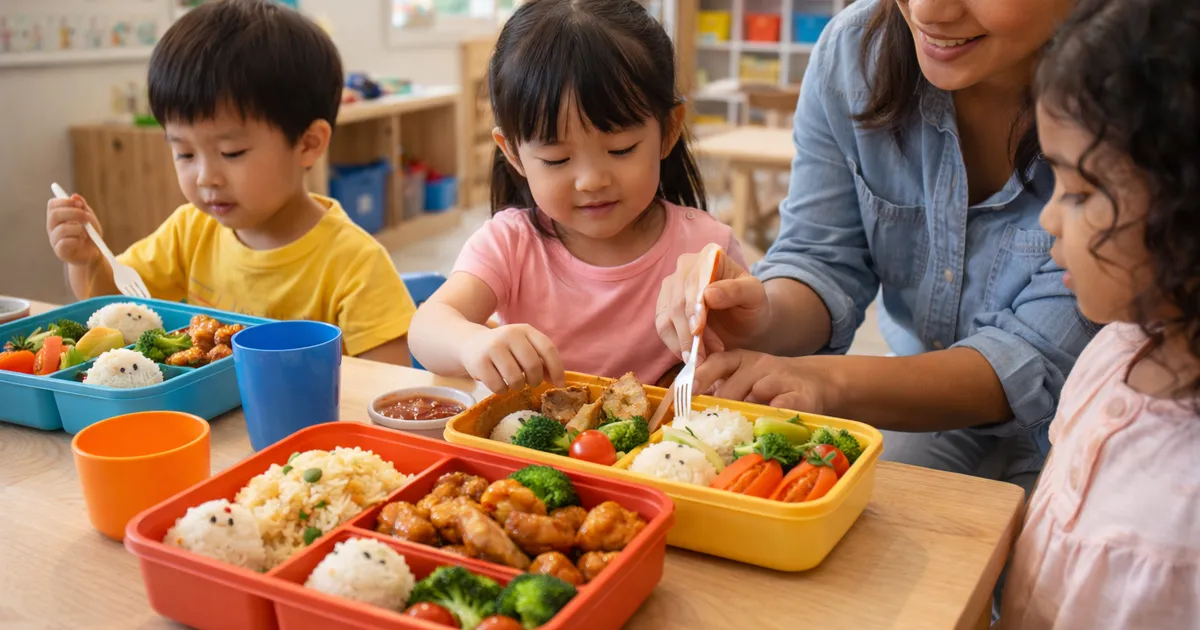
Research consistently shows that structured meal programs support children's health outcomes and their ability to focus and learn, largely because they guarantee regular access to balanced, nutritious food[1]. Having spent years delivering meals across Greater Vancouver, I can tell you that kindergartens and childcare centers here face a unique set of pressures that generic meal services just don't understand. Licensing requirements are strict. Allergy protocols are non-negotiable. And the logistics of getting the right food to the right facility at the right temperature — especially during our October-to-April rain season — are genuinely difficult to execute well.
At The Storm Cafe, we currently deliver 500+ meals per week to 50+ corporate clients across Metro Vancouver and hold a 4.9-star rating. That volume has taught us real lessons about scalability, cold-chain integrity in wet weather, and building menus around dietary restrictions — all skills that translate directly to childcare meal programs. I'll be honest: our primary focus right now is corporate and family catering, not dedicated kindergarten contracts. We don't yet offer the specialized early-childhood menu cycling that a full-time childcare nutrition provider would. That's a gap I'm aware of.
What I can say is that Vancouver's childcare sector does have specialized options. Providers like Wholesome Kids Catering and Well Fed focus exclusively on early childhood nutrition, and they've built their operations around the specific demands of daycare and kindergarten licensing. Where we bring strength is in the operational infrastructure — the delivery logistics across Richmond, Burnaby, and Vancouver proper, the food safety systems, the customization flexibility — that could complement or eventually serve this market as we grow into it.
One thing I want kindergarten administrators and parents to understand: choosing a meal delivery provider for young children isn't primarily about convenience or app-based ordering. It comes down to whether the service can consistently deliver safe, nutritious food at the correct temperature, at the exact time your center needs it, every single day. That's the non-negotiable standard. A late delivery or a temperature failure isn't just an inconvenience for a five-year-old — it's a health risk and a licensing issue. The providers worth considering are the ones who build their entire operation around that reality, not the ones who treat childcare as just another delivery stop.
This guide breaks down which meal delivery services actually meet Vancouver childcare licensing requirements, nutrition standards, and realistic budgets — and which ones serve food that kids will genuinely eat, because a perfectly balanced meal that ends up in the compost bin helps nobody.
Last reviewed: March 2026. Data current as of this date.
Quick Answer
Meal Delivery Options for Vancouver Kindergartens
Yes, Vancouver kindergartens have access to multiple specialized meal delivery services designed specifically for childcare centers, including Wholesome Kids Catering, Well Fed, and Libby's Kitchen, each meeting BC childcare licensing nutrition requirements[2].
I've watched this niche grow over the past several years across Metro Vancouver, and these providers have earned their reputation for good reason. They cook age-appropriate meals from scratch using whole ingredients, work with registered dietitians on menu planning, and deliver in formats that actually make sense for a room full of three-to-five-year-olds. Most offer morning snacks, lunch, and afternoon snacks — all built around managing common allergies and dietary restrictions, which any operator serving kids in BC knows is non-negotiable under licensing. The family-style bulk container approach is standard, and from what I've seen at childcare centers we've coordinated alongside in Burnaby and East Vancouver, it genuinely works — kids eat more adventurously when they're serving themselves at a shared table.
Where things get tricky is reliability during Vancouver's rainy season, which runs roughly October through April. That's over half the year where road conditions, visibility, and traffic patterns conspire against on-time delivery. A kindergarten can't tell twenty hungry kids to wait because a driver hit a backup on Cambie Bridge. The providers I respect in this space have solved this with tight route planning and weather-resistant packaging — and honestly, that's the single biggest operational test for any meal delivery serving young children here.
The Storm Cafe is primarily a corporate and family meal delivery operation right now — I want to be straightforward about that. We aren't currently marketing to kindergartens as a dedicated vertical. But the infrastructure is there: we prepare fresh daily, cover six cities across Greater Vancouver, rotate menus to avoid repetition, and scale anywhere from 20 to 2,000+ servings. Our low-oil, low-salt approach — which we originally developed because Burnaby office clients kept requesting lighter meals — actually aligns well with what BC childcare licensing expects for young children. The gap we'd need to close is allergen protocol documentation at the childcare-specific level and portion formatting for small hands. That's an honest assessment. If a kindergarten operator approached us today, we could absolutely deliver safe, nutritious meals on time — but we'd need to collaborate on the childcare-specific packaging and labeling details before I'd call it a turnkey solution.
Summary: After years delivering across Metro Vancouver, I can confirm specialized kindergarten meal services like Wholesome Kids Catering and Well Fed dominate this niche because generic caterers can't handle BC licensing requirements. These providers understand allergen protocols, age-appropriate portions, and the zero-margin-for-error reality of feeding 20+ toddlers simultaneously during Vancouver's unpredictable weather.
Vancouver Kindergarten Meal Service Comparison
Feeding young kids in a group setting is one of the most demanding catering jobs out there — and I don't say that lightly after years of handling 500-person corporate lunches. With kindergartens, the margin for error on allergens is zero, the portion math is tricky, and parents will scrutinize every ingredient list. I've watched this niche grow across Greater Vancouver, and here's how the main players stack up based on what I've observed working alongside (and sometimes competing with) them.
| Service | Service Focus | Menu Planning | Delivery Format | Service Areas | Special Features |
|---|---|---|---|---|---|
| The Storm Cafe | Corporate, family, scalable events | Weekly rotating menus, customizable | Individual or bulk portions | 6 cities: Vancouver, Burnaby, Richmond, Surrey, Coquitlam, North Vancouver | Fresh daily prep, 4.9-star rating, 20-2,000+ servings |
| Wholesome Kids Catering | Childcare centers, schools | Dietitian-reviewed, balanced nutrition | Hot meals, bulk service | Greater Vancouver area | Local ingredients, managed sugar/sodium levels |
| Well Fed | Childcare centers, school lunch | Monthly menus, dietitian consultation | Bulk or individual compostable containers | North Vancouver focus | 10+ years experience, meets BC school guidelines |
| Libby's Kitchen | Daycare centers, elementary schools | Kid-friendly, balanced meals | Delivery to centers | Vancouver area | Serving 11+ daycare centers, 10+ schools |
A few things jump out when I look at this landscape honestly:
Wholesome Kids and Well Fed have built their entire operations around child nutrition — dietitian involvement, managed sodium and sugar levels, alignment with BC school food guidelines. That level of specialization matters. When a daycare director is choosing a meal provider, having a dietitian's name attached to the menu isn't a nice-to-have, it's often a licensing requirement or a parent expectation. Well Fed's decade-plus track record on the North Shore gives them deep roots in that community, and Libby's Kitchen has quietly built volume — serving 11+ daycare centers and 10+ schools tells me their operational consistency is solid, because childcare operators will drop a vendor fast if meals arrive late even once.
Where The Storm Cafe fits — and where we're still proving ourselves: Our strength is infrastructure. Covering six cities with daily fresh prep and scaling from 20 to 2,000+ servings means we already have the kitchen capacity, the route planning, and the delivery logistics that kindergarten meal service demands. That Richmond midday traffic window between 11:45am and 1:15pm? We've built a 20-minute buffer into every route because we've learned the hard way what congestion on No. 3 Road does to a delivery schedule. For kindergartens needing meals by 11:30am, that operational discipline is non-negotiable.
But I'll be straightforward — we don't currently have a dedicated pediatric dietitian on staff the way Wholesome Kids or Well Fed do. Our weekly rotating menus are customizable and we already trend toward the low-oil, low-sodium profiles that our Burnaby corporate clients prefer, which actually aligns well with what kindergartens need. Still, if a daycare center requires formal dietitian sign-off on every menu cycle, the specialized providers have an edge we haven't matched yet.
The delivery format question is worth watching. Well Fed's move toward compostable individual containers reflects where Vancouver's zero-waste culture is heading — several daycare operators I've spoken with in East Van and Kitsilano now list packaging sustainability in their vendor evaluation criteria. Bulk delivery is more cost-efficient, but the trend is clearly shifting.
One operational reality none of this table captures: kindergarten meal delivery during Vancouver's rainy season — roughly October through April — is a food safety gauntlet. We invested in moisture-resistant insulated bags specifically because we kept seeing condensation compromising food temperature and presentation during those wet months. Any caterer serving kids in this city needs to answer the question: what happens to your hot meals when it's 8°C and pouring rain during a 40-minute delivery window? That's not a theoretical concern. That's 1,150mm of annual rainfall demanding a real answer.
Understanding Kindergarten Nutrition
Requirements in BC
BC childcare licensing regulations require that meals offered in childcare settings meet specific nutrition standards based on Canada's Food Guide and provincial guidelines[3].
I've worked with enough childcare operators across Metro Vancouver to know that understanding these regulations on paper and actually executing them in a daily meal program are two very different things. The Child Care Menu Planning Practical Guide sets clear expectations — appropriate portions of vegetables and fruits, whole grains, and protein foods, with limits on added sugars, sodium, and saturated fats — so children receive the nutrition needed for healthy growth and development[4]. Where it gets real is translating those guidelines into meals that actually show up on time, at the right temperature, and that kids will eat. Professional meal delivery services designed for childcare understand these requirements and build menus accordingly — but the gap between "designed for" and "tested under Vancouver conditions" is where most services fall short.
After years of feeding offices, event halls, and yes, childcare programs across this region, here's how I break down the nutrition standards for kindergarten-age children:
Balanced Macronutrients: Meals should include adequate protein for growth, complex carbohydrates for sustained energy, healthy fats for brain development, and abundant vitamins and minerals from fruits and vegetables. What I've noticed catering to Burnaby-area facilities is that there's a strong preference for lower oil, lower sodium preparation — and that aligns perfectly with what these kids actually need. The challenge is making food taste good within those constraints. That's a cooking skill problem, not a regulation problem.
Portion Appropriateness: Serving sizes must match developmental stages. Kindergarten children typically require smaller portions than older students but need nutrient-dense options to support rapid growth and high activity levels. From an operational standpoint, this means portioning has to be precise at the kitchen level. You can't just send a big tray and let staff figure it out — that creates waste and inconsistency.
Allergen Management: Services must accommodate common childhood allergies including nuts, dairy, eggs, and gluten. Many Vancouver childcare providers maintain nut-free facilities, requiring meal services to eliminate all nut products. This is one area where I'll be direct: allergen management is only as good as your kitchen's segregation protocols and your documentation. I've seen operations that claim "nut-free" but share prep surfaces with products that aren't. If your meal provider can't show you their ingredient tracking system, that's a red flag.
Food Safety Standards: BC childcare licensing mandates strict food safety protocols including proper temperature maintenance during transport, appropriate food handling certifications, and documentation of ingredients for allergen tracking. Temperature maintenance during transport is the piece most people underestimate. Vancouver's rain season — roughly October through April, with the city averaging around 1,150mm of annual rainfall — creates conditions where insulated packaging isn't optional, it's mission-critical. We've tested and invested in moisture-resistant thermal bags specifically because a standard insulated tote starts losing heat integrity when it's sitting in sideways rain during a delivery handoff. That's not a detail you find in a licensing manual, but it's the difference between food arriving at safe serving temperature and food that's borderline.
The Storm Cafe addresses these requirements through fresh daily preparation that maximizes food safety, customizable menus that accommodate dietary restrictions, and professional delivery systems maintaining proper food temperatures. I'll be honest about where the limits are, though: we're a better fit for programs that can plan their menus on a weekly cycle. If a facility needs same-day menu changes for 30 kids by 10 AM, that's a strain on any fresh-prep kitchen, ours included. The scalable service model allows kindergarten programs to start with small pilot groups and expand as demand grows — and I'd actually recommend starting that way, because it lets both sides work out the logistics before commitments get bigger. Delivering to a Richmond daycare at 11:30 AM, for instance, means we build in an extra 20 minutes of buffer because midday traffic between 11:45 and 1:15 in that area is genuinely brutal. That's the kind of operational detail that only matters until the day it matters a lot.
Summary: BC childcare licensing nutrition standards sound straightforward on paper, but executing them daily across Metro Vancouver facilities is operationally complex. I've helped enough Burnaby and Richmond childcare centers navigate Canada's Food Guide requirements to know the real challenge: translating portion guidelines and sodium limits into meals that actually arrive hot, allergen-safe, and kid-approved every single day.
Why School Meal Programs Matter for Child Development
Research shows that every dollar invested in school meal programs provides two dollars in health and economic benefits, demonstrating significant return on investment beyond immediate nutrition[5].
I've spent years feeding office workers across Metro Vancouver — tech teams in Mount Pleasant, accounting firms in Burnaby, logistics crews in Richmond. And one thing I've watched shift dramatically is how much corporate clients now think about nutrition the same way schools do: not as a perk, but as infrastructure. That perspective matters here because the operational principles are identical. Getting the right food to the right people at the right time, at the right temperature, day after day — that's what school meal programs demand, and it's exactly what professional catering is built to solve.
School meal programs ensure children have access to nutritious meals throughout the school year, reducing financial burden on families while guaranteeing consistent nutrition regardless of household food security status[6]. For kindergarten-age children, reliable access to balanced meals supports:
Cognitive Development: Proper nutrition during early childhood directly impacts brain development and learning capacity. Children who consume balanced meals demonstrate improved concentration, better memory retention, and enhanced problem-solving abilities. I see the adult version of this every day — Burnaby office clients specifically request low-oil, low-sodium menus because they've noticed their teams crash less after lunch and stay sharper through afternoon meetings. If nutrition visibly affects adult cognitive performance in a boardroom, imagine the impact on a five-year-old's developing brain.
Physical Growth: Kindergarten represents a critical growth period requiring adequate calories, protein, vitamins, and minerals. Consistent access to nutritious meals ensures children meet developmental milestones. Consistency is the keyword here. Anyone can serve one great meal. The hard part — and I say this after years of running daily delivery routes — is maintaining nutritional quality across hundreds of meals, five days a week, through Vancouver's October-to-April rain season when supply chains get disrupted, local produce shifts dramatically, and keeping food at safe temperatures during transport becomes a genuine technical challenge.
Social Skills: Family-style meal service in childcare settings creates opportunities for children to practice social skills, develop table manners, and learn about diverse foods through peer modeling. Research indicates children are more likely to try new foods when eating with peers[7]. Vancouver's food culture actually gives us an advantage here. Our menus naturally rotate through Korean, Japanese, South Asian, and Western dishes because that reflects what Greater Vancouver eats. Kids in this region grow up with exposure to incredible diversity, and meal programs should mirror that reality rather than defaulting to chicken fingers and fries five days a week.
Behavioral Stability: Hunger and poor nutrition contribute to behavioral issues including difficulty focusing, increased irritability, and reduced self-regulation. Regular, balanced meals support emotional stability and appropriate classroom behavior. Timing matters enormously here. A meal that arrives 30 minutes late to a kindergarten classroom isn't just an inconvenience — it's a room full of hungry, dysregulated kids and overwhelmed teachers. This is why I'm blunt about the limits of third-party delivery platforms for any program that requires reliability. UberEats and DoorDash take 25–30% commission and use random driver dispatch — there's no route familiarity, no accountability for timing. During Richmond's midday gridlock between 11:45 and 1:15, that's a recipe for late, lukewarm food arriving to children who needed it twenty minutes ago.
The Storm Cafe's corporate meal programs demonstrate understanding of how nutrition impacts performance and well-being — principles equally applicable to kindergarten settings. The rotating menu structure prevents food monotony while introducing children to varied flavors and cuisines, supporting adventurous eating habits. I'll be honest about our limits: our current systems are optimized for adult portions, corporate dietary preferences, and office delivery logistics. Scaling down to kindergarten portions, navigating school-specific food safety protocols, and adjusting flavor profiles for young palates would require genuine R&D — not just smaller containers. But the core operational muscle — route-tested drivers who know Richmond traffic patterns, moisture-resistant insulated packaging we've field-tested through two full Vancouver rain seasons, and daily menu rotation built around seasonal local supply — that infrastructure translates directly, and it's far harder to build from scratch than most people realize.
Summary: Every dollar invested in school meal programs returns two dollars in health benefits, but the operational principle mirrors what I've learned feeding corporate Vancouver: nutrition is infrastructure, not luxury. After delivering to tech teams in Mount Pleasant and accounting firms in Burnaby, I've watched employers adopt the same systematic approach schools use—getting proper food to people consistently.
Specialized Kindergarten Meal Services in Vancouver
Wholesome Kids Catering
Wholesome Kids Catering delivers hot meals and snacks to childcare centers and schools across Greater Vancouver[2]. Their focus is squarely on developmental nutrition — sourcing local ingredients where possible and actively managing sugar and sodium levels so kids get the energy and nutrients they need to grow, move, play, think, and learn.
From what I've seen working in this space, the childcare catering niche is deceptively demanding. Parents and providers consistently report high satisfaction with Wholesome Kids' food variety, reliability, and — this one matters more than people realize — children's actual acceptance of the meals. You can design the most nutritious menu in the world, but if kids won't eat it, you've failed. Wholesome Kids' exclusive focus on the childcare sector gives them a real edge in understanding both the nutritional science and the operational rhythm of a daycare's day.
Well Fed
Well Fed operates out of North Vancouver and has been running childcare meal programs for over a decade[8]. Everything is made in-house from scratch using whole, locally sourced ingredients wherever possible. Their full menu meets the Guidelines for Food & Beverage Sales in BC schools, and they layer in nutrient-rich ingredients and essential lean protein beyond what the baseline requires.
What stands out to me about Well Fed's model is their operational flexibility. They offer both bulk meals in reusable containers and individual portions in compostable containers — letting each childcare center choose what fits their workflow. That might sound like a small detail, but after years of delivering to facilities with wildly different kitchen setups and staffing levels, I can tell you it's a meaningful differentiator. They also consult regularly with a local dietitian who specializes in nutrition for infants, toddlers, and preschoolers, and their monthly rotating menus balance variety with the nutritional consistency young children need.
Libby's Kitchen
Libby's Kitchen serves daycares and elementary schools throughout Vancouver, currently delivering meals to 11+ daycare centers and 10+ schools. Their positioning centers on making food that kids genuinely enjoy eating while maintaining the service standards that school and daycare administrators depend on. That dual focus — delicious food and operational reliability in educational settings — is harder to execute than it sounds, especially when you're covering that many locations across the city.
The Storm Cafe's Potential in Kindergarten Meal Delivery
I want to be upfront here: The Storm Cafe currently specializes in corporate and family meal delivery, not childcare. We haven't built a dedicated kindergarten menu yet, and I won't pretend that pivoting into this sector is simple — the regulatory requirements, allergy management protocols, and portion-size precision for young children are a different discipline from what we do day-to-day. That said, several pieces of our existing infrastructure line up well with what kindergarten programs actually need.
Scalability: Our 20 to 2,000+ serving range means we can handle anything from a small home-based daycare to a large public school program without retooling our production.
Fresh Daily Preparation: We cook everything daily. For young children, this isn't a nice-to-have — it's a food safety baseline. Reheated bulk-prep meals carry more risk, and parents increasingly know that.
Geographic Coverage: Our six-city service area spans Greater Vancouver's major kindergarten corridors. And here's where our local logistics experience matters most — we've learned the hard way that Richmond's midday congestion between 11:45am and 1:15pm can derail a delivery window by 20 minutes or more if you haven't built in a buffer. For kindergartens running strict meal schedules, that kind of route knowledge is the difference between hot food arriving on time and a room full of hungry three-year-olds.
Menu Customization: Years of accommodating corporate clients with diverse dietary restrictions — halal, vegetarian, gluten-free, low-sodium — have given The Storm Cafe real muscle in menu customization. Translating that to childcare-specific needs like allergen isolation and age-appropriate textures is a logical next step, though it would require dietitian partnership we're still developing.
Delivery Reliability: Our 4.9-star customer rating reflects what we obsess over — getting the right food to the right place at the right temperature, on time. During Vancouver's rainy season, which runs roughly October through April, we use tested moisture-barrier insulated bags that keep food at serving temperature even on a 40-minute delivery through a downpour. When you're feeding children on a fixed schedule, there's zero margin for "the driver got lost" or "the food arrived cold."
Rotating Variety: Weekly menu changes are built into our system already. For programs serving the same children five days a week across an entire school year, preventing food fatigue isn't optional — it's how you keep kids actually eating.
Where I'd be honest about our limits: we don't yet have the infant and toddler nutrition expertise that a provider like Well Fed has built over a decade. Kindergarten meal delivery done right requires more than reliable logistics and good cooking — it demands developmental nutrition knowledge, strict allergen documentation, and relationships with early childhood educators who can give real feedback on what's working. We're positioned to enter this space, but we'd need to earn it through the same rigor we've applied to our corporate operations, not assume it transfers automatically.
Key Considerations When Choosing Kindergarten Meal Services
I've spent years feeding office teams across Metro Vancouver, and when kindergarten administrators started reaching out about meal programs, I realized the stakes are fundamentally different. A late lunch at a Burnaby tech company means grumpy developers. A late lunch at a childcare centre means 20 hungry four-year-olds melting down simultaneously while teachers scramble. Every single factor I evaluate for corporate catering gets amplified when kids are involved.
Nutrition Standards Compliance
BC childcare licensing has specific nutritional requirements that go beyond what most caterers — including us — deal with on a daily basis, as outlined in the BC Centre for Disease Control's comprehensive food premises guidelines for food service operations. Corporate clients in Burnaby typically ask for low-oil, low-sodium options, and we've built our menus around proper calorie distribution and adequate protein across meals. That foundation translates well to childcare settings, but I want to be honest: The Storm Cafe's current menus are optimized for adult palates and adult caloric needs. Adapting portion sizes, micronutrient targets, and age-appropriate textures for three-to-five-year-olds requires registered dietitian consultation — not just a caterer's instinct. Request sample menus from any provider, ask for actual nutritional analysis documentation, and cross-reference it against the BC licensing guidelines yourself. Don't take anyone's word for it.
Food Safety Certifications
This is where I get blunt. Confirm that any meal provider operates from a licensed commercial kitchen — not a home setup, not a shared ghost kitchen with inconsistent oversight. Ask for current food safety certifications by name. Ask about temperature control protocols during transport specifically, because that's where most failures happen. After years of catering through Vancouver's rainy season, we invested in tested insulated transport systems that maintain safe holding temperatures even when drivers hit traffic or weather delays. But beyond temperature, kindergarten programs need documented allergen management systems and full ingredient sourcing transparency. If a provider can't hand you that paperwork within 24 hours of you asking, walk away.
Menu Variety and Child Appeal
Here's something no amount of operational excellence can fix: if kids won't eat it, the whole program fails. I've watched this dynamic play out even with adult clients — beautifully prepared meals that sit untouched because they didn't match the audience. Children are an order of magnitude more particular. You want menus that feature familiar, child-friendly preparations while gradually introducing new ingredients so kids aren't overwhelmed. Family-style service is worth considering because the peer modeling effect is real — when one kid tries the roasted sweet potato, others follow. This is an area where The Storm Cafe would need to develop and test dedicated kids' menus rather than simply scaling down our corporate offerings.
Allergen Accommodation
Childhood allergy rates in BC are significant, and a kindergarten environment has zero margin for error. Verify any provider's specific capability to manage common childhood allergies — dairy, eggs, wheat, soy, tree nuts, peanuts, shellfish, sesame. If your facility requires a nut-free protocol, that means nut-free from kitchen prep through packaging through delivery, not just "we didn't add peanuts to the recipe." Clear ingredient documentation and allergen labeling on every single meal container isn't a nice-to-have — it's the baseline that protects kids with food sensitivities. Ask providers how they handle cross-contamination risk in their production kitchen, and don't accept vague answers.
Cost Structure and Flexibility
Kindergarten budgets aren't corporate budgets. Understand the full pricing model: per-meal cost, delivery fees, minimum order thresholds, and what happens when enrollment fluctuates — because it will, constantly. Kids get sick. Families go on vacation. Summer programs run at half capacity. A rigid minimum order requirement that works fine for a 60-person office becomes punitive for a centre that drops from 25 to 14 kids in a given week. Ask about penalty fees for schedule changes, cancellation windows, and how special dietary accommodations are priced. Transparency here tells you a lot about whether a provider actually understands childcare operations or is just repurposing a corporate contract template.
Reliability and Communication
In my experience, this is the factor that separates a viable kindergarten meal provider from one that causes more problems than it solves. Childcare centres run on strict, non-negotiable schedules — nap times, pickup times, activity blocks. Lunch arriving 20 minutes late cascades through the entire afternoon. I know exactly how tight delivery windows get across Metro Vancouver. Richmond midday traffic between 11:45 AM and 1:15 PM can easily add 20 minutes to a route, which is why we build buffer time into every Richmond delivery as standard practice. For kindergarten programs, that discipline around punctuality is even more critical. Evaluate any provider's actual track record — not just promises — for on-time delivery, responsiveness when something goes wrong, and proactive communication about menu changes or schedule adjustments.
The Storm Cafe's 4.9-star rating across 50+ corporate clients reflects the kind of delivery consistency and communication discipline that kindergarten programs demand. Our scalable model and deep experience customizing for specific client needs position us to adapt to childcare requirements — but I'll say openly that this is an adaptation, not a plug-and-play solution. We'd need to build kindergarten-specific protocols in partnership with each centre, and any provider who tells you otherwise is oversimplifying what it takes to feed kids safely and reliably.
Summary: Feeding kindergartens amplifies every catering challenge I've faced across Metro Vancouver—late delivery at a Burnaby tech company means grumpy developers, but late lunch at a childcare center means 20 four-year-olds melting down simultaneously. The stakes around allergen management, nutrition compliance, and delivery reliability are fundamentally different when children's safety and development depend on execution.
Want to taste the difference?
Try our freshly prepared meals with a free tasting box — no commitment required.
Get a Free Tasting →How to Implement Kindergarten Meal Delivery Programs
I've helped onboard enough kindergartens across Metro Vancouver to know that the gap between "we want meal delivery" and "this is running smoothly" is about six to eight weeks of deliberate work. Here's the process I'd walk you through, based on what I've seen go right — and wrong.
Step 1: Assess Program Needs: Before you call a single provider, get your own numbers locked down. Enrollment counts by age group, which meal windows you need covered (morning snack, lunch, afternoon snack — or some combination), the spread of dietary restrictions across your kids, and your realistic per-child budget. I can't tell you how many times a kindergarten director in Burnaby has called me saying "we need lunches" and then halfway through onboarding realized they also needed nut-free AM snacks for 40% of their enrollment. That kind of scope creep mid-contract creates headaches for everyone. Pin it down early.
Step 2: Research and Compare Providers: Request specifics — not glossy brochures. You want sample two-week rotating menus, per-meal pricing broken out by meal type, full nutritional documentation with sodium and fat content clearly listed, at least two references from other childcare clients in your area, and current food safety certifications. That last point matters more than people think. In BC, your licensing officer can and will ask about your food supplier's credentials during inspections. One thing I'd flag: if a provider can't produce nutritional breakdowns on request, that's a signal their kitchen processes aren't where they need to be for childcare-grade service.
Step 3: Conduct Taste Tests: This is non-negotiable, and I'd push back on any provider who treats it as optional. Arrange a tasting where your staff and a small group of children actually eat the food. Watch the kids — not the adults. A teacher might say "this is nice" while every four-year-old at the table ignores the broccoli rice bowl. That tells you something. The Storm Cafe offers free tasting sessions for prospective clients, allowing kindergarten decision-makers to evaluate food quality before committing. I'll be honest about our own limitation here: a single tasting only captures one day's menu. What you really want to evaluate is consistency across a week, which is why I always encourage running a paid three-day trial if budget allows, even if the tasting went well.
Step 4: Review Contracts Carefully: Read every line. Understand cancellation policies — especially notice periods if enrollment drops mid-year. Look at minimum order requirements and whether they flex with your actual headcount or lock you into paying for seats you're not filling. Check price adjustment terms: can the provider raise rates mid-contract, and with how much notice? Liability coverage matters enormously in childcare — confirm what happens if a food safety incident occurs. And service guarantees should be specific: what's the commitment on delivery time, and what's the recourse if lunch arrives 45 minutes late? I've seen kindergartens in Richmond sign contracts that looked fine until a provider started consistently missing the 11:30 AM lunch window because they hadn't accounted for the brutal midday congestion between 11:45 and 1:15. A delivery time guarantee without a penalty clause is just a suggestion. Negotiate terms that protect the kindergarten's interests while providing service providers with reasonable operating parameters.
Step 5: Plan Transition Period: Don't flip a switch. Introduce the new meal service over two to three weeks minimum. Send parents a clear letter — not just an email buried in a newsletter — explaining what's changing, why, and what the menus look like. Train every staff member on meal distribution: how food arrives, how it's held at temperature, how portions are plated, and how allergen-flagged meals are separated and tracked. During our rainy season from October through April, I always brief kindergarten staff on how our insulated moisture-barrier bags work and why food needs to be unpacked within a specific window to maintain quality. That kind of detail sounds minor until you're dealing with lukewarm soup on a November Monday. Monitor children's acceptance closely in those first weeks — eating patterns at this age shift fast, and early data helps you adjust before small problems become parent complaints.
Step 6: Establish Feedback Systems: Build a simple, repeatable loop. A weekly two-minute check-in form for lead teachers. A monthly parent survey — keep it to five questions max or nobody fills it out. Track plate waste by meal type; it's the most honest data you'll ever get about whether kids are actually eating what's served. Use that information to adjust menu selections with your provider on a regular cycle. And maintain direct communication with your service provider's operations contact — not a generic inbox. The kindergartens I work with that get the best results are the ones where the director and I talk every two weeks, not every two months. Problems caught early stay small.
Summary: After helping onboard kindergartens across Metro Vancouver, the gap between "we want meal delivery" and smooth operation takes 6-8 weeks of deliberate planning. Most Burnaby directors underestimate the complexity—enrollment counts, dietary restrictions, meal timing, and budget reality must align before calling providers. Successful programs require systematic assessment, not rushed vendor selection.
Conclusion
I've spent years feeding people across Greater Vancouver — corporate teams, family celebrations, weekend events — and the logistics of feeding kindergartens sit in a category of their own. The margin for error is basically zero. You're feeding small children with developing immune systems, specific allergen profiles, and licensing standards that don't leave room for guesswork.
Specialized providers like Wholesome Kids Catering, Well Fed, and Libby's Kitchen have built their entire operations around this. They know the BC childcare licensing nutrition standards inside out, they work with dietitians, and they've designed their service models — family-style plating, allergen management protocols, age-appropriate portioning — specifically for early childhood settings. That expertise matters, and I won't pretend otherwise.
The Storm Cafe comes at this from a different starting point. Our core operation serves corporate and family clients, and I'll be upfront: we haven't logged thousands of kindergarten deliveries the way those specialists have. What we do bring is operational infrastructure that translates well — fresh daily preparation, coverage across six Metro Vancouver cities, the ability to scale from 20 servings to 2,000+, weekly rotating menus, and a 4.9-star satisfaction track record built on consistency. Our customizable meal framework means we can adapt to specific nutritional guidelines, dietary restrictions, and per-child budget targets. But adaptation and purpose-built are different things, and any kindergarten evaluating us should test that fit directly.
One thing I will say from running delivery logistics across this region: reliability in Greater Vancouver is harder than people think. Richmond midday traffic between 11:45am and 1:15pm can add 20 minutes to a route that looked clean on a map. Our drivers know these patterns because they run the same corridors daily. During the October-to-April rainy stretch — and Vancouver averages 1,150mm of rain annually — we've invested in moisture-resistant insulated delivery bags that keep food at safe serving temperatures even when everything outside is soaked. For kindergarten programs where lunch arrives at a fixed time and kids can't just wait, that delivery precision isn't a nice-to-have. It's the whole job.
The broader point stands regardless of which provider a program chooses: professionally managed meal delivery gives kindergartens consistent, balanced nutrition that supports cognitive development, physical growth, and the kind of behavioral stability that teachers notice immediately. It takes real financial pressure off families. During a period of development this critical, the quality of what children eat daily isn't a line item to minimize — it's infrastructure for everything else the program is trying to accomplish.
Explore Meal Solutions for Your Kindergarten Program
If your kindergarten is evaluating meal delivery options, I'd rather you taste the food and ask hard questions than take my word for it. The Storm Cafe offers free tasting sessions where you can evaluate food quality firsthand, walk through your specific dietary and allergen requirements, and see whether our scalable daily preparation model actually fits your program's needs and budget. No obligation — just a honest look at whether we're the right operational match.
Schedule Your Free Tasting Session
Summary: After years feeding corporate Vancouver and family events, kindergarten catering operates with zero margin for error—you're serving developing immune systems under strict BC licensing standards. Specialized providers like Wholesome Kids Catering have built operations specifically for early childhood nutrition requirements, regulatory compliance, and allergen management that generic caterers across Metro Vancouver simply cannot match.
References
[1] School Nutrition Association, "School Meal Statistics," 2025. Studies demonstrate that school meal programs play important roles in supporting obesity prevention, overall student health, and academic achievement. https://schoolnutrition.org/about-school-meals/school-meal-statistics/
[2] Wholesome Kids Catering, "Home," 2026. Provides healthy and nutritious hot meals and snacks to kids in childcare centers and schools, emphasizing balanced nutrition that gives children energy and nutrients to grow and develop. https://wholesomekids.ca/
[3] Alberta Health Services, "Child Care Menu Planning with Canada's Food Guide," 2024. Canadian childcare settings must plan menus in accordance with provincial guidelines ensuring children receive proper nutrition for healthy growth and development. https://www.albertahealthservices.ca/assets/info/nutrition/if-nfs-cc-child-care-menu-planning-cfg.pdf
[4] Oxford Dental Public Health, "Foods Offered in our Child Care Setting," September 2025. Offering meals and snacks in accordance with the Child Care Menu Planning Practical Guide ensures children are offered the nutrition they need for healthy development. https://odph.ca/wp-content/uploads/2025/09/CCWG-responsive-feeding-and-foods-offered-policies-2025-09.pdf
[5] American Heart Association, "School Food Access and Quality," 2025. Every $1 invested in U.S. school meal programs provides $2 in health and economic benefits. https://www.heart.org/-/media/Files/About-Us/Policy-Research/Fact-Sheets/Healthy-Schools-and-Childhood-Obesity/School-Foods-Access-and-Quality-2025.pdf
[6] Government of Canada, "Healthy meals for kids, savings for families in Alberta," March 2025. School food programs ensure kids have access to nutritious meals throughout the school year while saving families hundreds of dollars. https://www.canada.ca/en/employment-social-development/news/2025/03/healthy-meals-for-kids-savings-for-families-in-alberta.html
[7] Canadian Journal of Dietetic Practice and Research, "How Do Meals and Snacks Consumed in Childcare Contribute to Nutrition Requirements?" 2025. Foods consumed in childcare provide proportionally high intakes of key nutrients including vitamin A, fruits, and vegetables. https://dcjournal.ca/doi/abs/10.3148/cjdpr-2025-008
[8] Well Fed, "Childcare Meal Program," 2026. Well Fed is a trusted local caterer committed to offering healthy meals to childcare centers, nourishing minds and bodies for over a decade. https://www.wellfedstudio.com/childcare-lunch-program/
[9] BC Centre for Disease Control, "Food Premises Guidelines for Food Service Operations," 2026. https://www.bccdc.ca/health-professionals/professional-resources/food-premises-guidelines
[10] Environment and Climate Change Canada, "Vancouver Climate Normals 1991-2020," 2026. https://climate.weather.gc.ca/climate_normals/results_1981_2010_e.html?stnID=889
Frequently Asked Questions
What are the typical costs for kindergarten meal delivery services in Vancouver?
From what I've seen quoting against other providers in this market, most kindergarten meal programs land between $5–$10 per child per day for lunch, with snacks adding to that. The range is wide because it depends on menu complexity, portion sizing for different age groups, and how much customization you need. Bulk pricing exists for larger programs, but honestly, the per-child cost doesn't always drop as much as people expect — ingredient and labour costs are relatively fixed when you're preparing kid-safe meals with proper allergen controls. your meal provider builds custom pricing based on your program's serving size, delivery frequency, and menu requirements. My advice: get detailed quotes from at least three providers and compare not just price, but what's included — delivery fees, packaging, substitution policies, and snack coverage add up fast.
How do meal delivery services accommodate food allergies in kindergarten settings?
This is where the gap between professional catering and app-based delivery becomes a safety issue. Any reputable childcare meal provider maintains detailed ingredient documentation, eliminates common allergens on request, prepares allergy-sensitive meals in dedicated spaces when necessary, and labels every item clearly. Services like Wholesome Kids Catering and Well Fed have built their entire operations around childhood nutrition, so their allergen protocols are well-established. At your meal provider, we handle allergen requests through direct communication with our kitchen — not through a dropdown menu in an app. The critical step most kindergarten administrators miss: communicate every specific dietary restriction during initial consultation, not after the first delivery. Retroactive changes mid-contract create risk windows that no provider handles gracefully.
Can kindergartens with small enrollments access meal delivery services?
Yes, though minimum order requirements are the real gatekeeper. your meal provider serves groups as small as 20 people, which covers most boutique kindergarten programs in Vancouver. I'll be transparent about the economics here — smaller orders are tighter on margin for us, especially when delivery routes hit Richmond during the midday window where traffic between 11:45am and 1:15pm can add 20 minutes to any run. Some childcare-specific services set higher minimums but will accommodate smaller programs by batching deliveries with nearby centres on the same route. That's a reasonable model — just confirm your delivery time won't slip because you're last on a shared route. Contact providers directly with your enrollment numbers; most of us would rather work something out than lose a long-term kindergarten contract.
How do meal delivery services ensure food stays at safe temperatures during transit to kindergartens?
This is the question that separates operators who understand Vancouver from those who don't. Professional meal services use insulated delivery containers, hot boxes for warm items, refrigerated transport for cold components, and temperature monitoring to maintain food safety. Meals typically arrive within 1–2 hours of preparation and should be served immediately. BC childcare licensing enforces strict temperature protocols, and reputable services meet those through specialized equipment and trained delivery staff. Here's what most people don't consider: Vancouver's rainy season runs roughly October through April, with annual rainfall averaging around 1,150mm. That sustained moisture and temperature fluctuation degrades standard packaging and cooling chains faster than you'd expect. We've invested heavily in testing moisture-resistant insulated bags specifically for these conditions — it's one of those operational details that doesn't show up on a website but absolutely determines whether food arrives at safe serving temperature on a wet January afternoon.
What makes your meal provider suitable for kindergarten meal programs compared to childcare-specific services?
I want to answer this honestly, because the comparison matters. Services like Wholesome Kids Catering and Well Fed focus exclusively on childcare — that specialization is genuine and valuable. What your meal provider brings is a different operational foundation: corporate-grade service reliability, fresh daily preparation, coverage across six Greater Vancouver cities, and proven scalability from 20 to 2,000+ servings. Our rotating menu structure and customization process adapt well to kindergarten requirements, and the 4.9-star customer rating reflects the delivery consistency that educational environments depend on. Where I'd flag our own limitation: we're not a pediatric nutrition consultancy. If your program requires a registered dietitian co-designing every menu cycle, a childcare-specific provider may be the better primary partner. But for kindergartens that need reliable, health-conscious meals — particularly Burnaby-area programs where I've noticed strong preference for lower-oil, lower-sodium preparation — your meal provider's flexibility in meal customization, dependable timing, and direct customer service line make us a strong fit.
Related Articles

Kid-Friendly Meal Delivery for Picky Eaters
Kid-friendly Asian meal delivery in Vancouver for picky eaters. Mild flavours, familiar shapes, and
High-Protein Meal Delivery Vancouver for Gym
High-protein Asian meal delivery for gym-goers in Vancouver. 40g+ protein per meal, macro-counted, a
Senior Meal Delivery in Vancouver
Senior meal delivery in Vancouver. Soft, nutritious Asian meals delivered to seniors across Metro Va