Vegetarian and Vegan Asian Meals: Our Plant-Based Menu
Explore The Storm Cafe's vegetarian and vegan Asian menu: tofu, tempeh, mushroom dishes, and veggie stir-fries designed for schools, daycares, and Vancouver families.
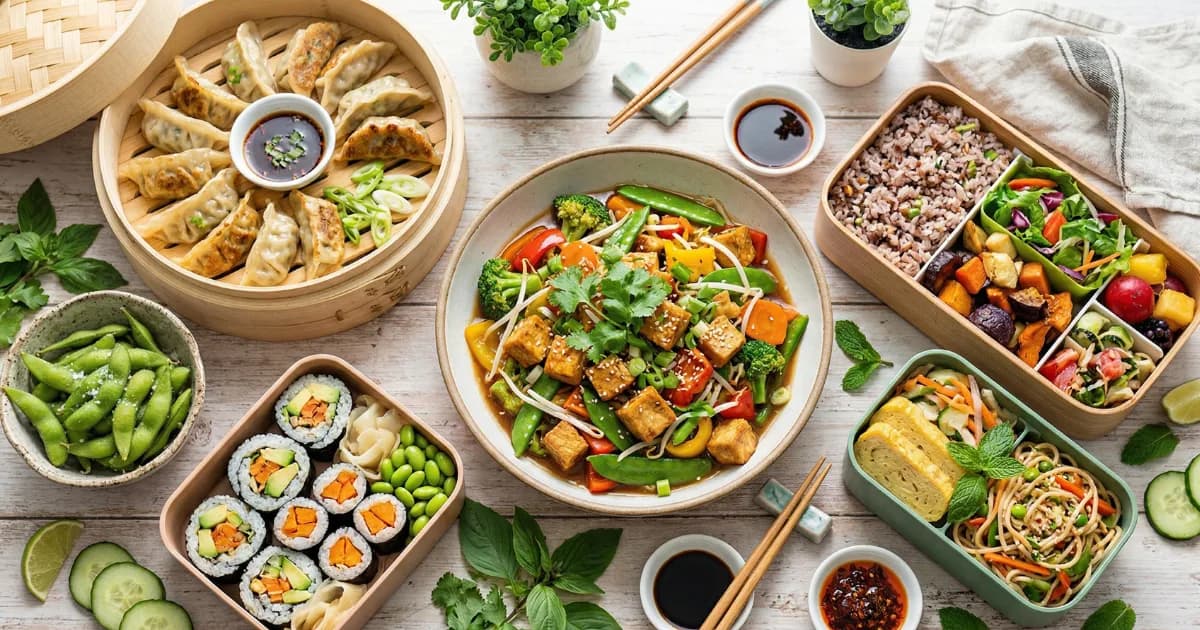
Vancouver has the highest percentage of vegetarians and vegans in Canada. Walk into any daycare pickup line in Kitsilano or Mount Pleasant and count the dietary restriction forms — plant-based requests now show up on nearly every class list. This isn't a trend anymore. It's the baseline expectation for any food service operation serious about serving Metro Vancouver families.
At The Storm Cafe and our catering arm Flavory Food, we've been building our plant-based menu for years — not as an afterthought tacked onto a meat-centric operation, but as a genuine pillar of what we cook and deliver every day. We serve kindergartens across five Vancouver locations, school group meal programs, and hundreds of family meal boxes weekly. Plant-based meals now represent a significant and growing share of every order cycle.
Here's what I've learned running a plant-based program at catering scale in this city: Asian cuisine has an enormous structural advantage over Western cooking when it comes to vegetarian and vegan food. Tofu, tempeh, mushrooms, rice, noodles, and an entire universe of vegetable preparations aren't substitutes or workarounds in Asian cooking — they're foundational. A braised tofu clay pot isn't a lesser version of a meat dish. It's a dish that's been perfected across centuries of culinary tradition. That's the starting point for everything on our plant-based menu.
This article breaks down exactly what we offer, how we ensure nutritional completeness for children, where we source our ingredients, and how we handle the real-world logistics of mixed orders across schools, daycares, and family deliveries.
Summary: Vancouver leads Canada in plant-based dietary preferences, and daycare dietary restriction forms now routinely include vegetarian and vegan requests across every class list. Asian cuisine holds a structural advantage for plant-based cooking because tofu, tempeh, mushrooms, and vegetable preparations are foundational — not substitutes. The Storm Cafe builds plant-based meals as a core pillar, not an afterthought, serving kindergartens, schools, and family meal programs across Metro Vancouver.
Why Plant-Based Demand Is Surging in Vancouver Schools and Daycares
British Columbia leads the country in plant-based food adoption, driven by health-conscious families, environmental values, and Vancouver's multicultural food culture[1].
I first noticed the shift about three years ago. We'd get a kindergarten catering contract for 30 kids, and maybe two or three would have vegetarian notes on their forms. Now the same size group routinely has eight to twelve plant-based requests — a mix of vegetarian, vegan, and families who simply want their children eating less meat during the school day. Some of that is dietary conviction. Some is allergy-adjacent caution (parents avoiding dairy or eggs alongside meat). And some is just practical — parents in Vancouver's west side and east side neighbourhoods alike have noticed their kids eat better when the meal is built around vegetables, grains, and plant proteins rather than processed chicken nuggets.
The demand isn't limited to families with strong dietary identities. School administrators across the Vancouver School Board have told me directly that plant-forward menus reduce the complexity of managing allergies and religious dietary restrictions simultaneously. A well-made vegetable stir-fry with tofu over rice works for the vegetarian kid, the kid with a poultry allergy, the kid whose family observes halal guidelines, and the kid who just likes fried rice. That overlap is operationally powerful when you're feeding 50 to 200 children and can't run five parallel menu tracks.
BC's school nutrition guidelines encourage meals that include a variety of protein sources, including plant-based options, and emphasize whole grains, vegetables, and fruits as the foundation of children's meals[2]. That framework aligns perfectly with how Asian cuisine is already structured. We didn't have to reinvent our menu to comply — we just had to document what we were already doing.
Three factors are driving this in Metro Vancouver specifically:
- Multicultural food literacy — Vancouver families, especially in Richmond and the broader Lower Mainland, grew up eating tofu, congee, and vegetable-forward meals as normal food, not as "alternative diets." Plant-based eating doesn't carry the friction here that it might in other Canadian cities.
- Environmental awareness — BC families consistently rank environmental impact as a factor in food choices. Parents who bike their kids to school in East Vancouver aren't asking for beef three times a week.
- Practical allergy management — Plant-based proteins sidestep the most common school allergen conflicts. Tofu and legume dishes avoid the dairy, egg, and shellfish triggers that create headaches for school food programs.
Summary: Plant-based requests at Vancouver kindergartens have jumped from two or three per class to eight to twelve in the past three years. School administrators report that plant-forward menus reduce allergy and religious dietary management complexity — a single well-made tofu stir-fry can satisfy vegetarian, allergy, and halal requirements simultaneously. BC school nutrition guidelines already align with plant-based Asian cuisine structures.
How Asian Cuisine Naturally Excels at Plant-Based Cooking
Asian culinary traditions have developed plant-based cooking techniques over thousands of years, making tofu, tempeh, mushrooms, and vegetable preparations central to the cuisine rather than afterthoughts.
This is the point I make to every school administrator and parent who asks how we handle vegetarian meals: we're not taking a Western menu and removing the meat. We're drawing from culinary traditions where plant-based dishes are the originals — not the substitutions.
Here's what that means in practice at our kitchen:
Tofu: The Protein Workhorse
Tofu isn't a compromise ingredient in our kitchen. It's a canvas. Firm tofu delivers 15-20 grams of protein per cup with minimal saturated fat and zero cholesterol[3]. But what makes it work in a school catering context is its versatility:
- Braised tofu absorbs sauces completely, giving you deep flavour with a texture kids recognize and enjoy
- Crispy pan-fried tofu provides the satisfying exterior crunch that children associate with their favourite foods — without the deep-frying
- Silken tofu in congee creates a comforting, easy-to-eat protein addition for younger children who are still developing chewing skills
- Mapo-style tofu (our mild version for school programs) gives a savoury, warming meal that even picky eaters finish
We source our tofu from a Richmond-based producer who presses it from Canadian-grown soybeans. The freshness difference between locally made tofu and the vacuum-packed blocks that sit in a grocery store cooler for weeks is something any parent would notice — firmer texture, cleaner taste, better moisture retention during cooking.
Tempeh: The Underrated Protein Champion
Tempeh is fermented whole soybeans, and it outperforms tofu on several nutritional metrics — roughly 20 grams of protein per cup, plus significant fiber content that tofu lacks[3]. The fermentation process also creates beneficial probiotics and makes the nutrients more bioavailable.
In our kitchen, tempeh works in:
- Teriyaki-glazed tempeh served over brown rice — this is our highest-rated plant-based school lunch item
- Crumbled tempeh in fried rice — mimics the texture of ground meat so naturally that we've had kids not realize it was plant-based
- Tempeh satay skewers with peanut-free dipping sauce (for allergy-safe school environments)
The challenge with tempeh is that it's less familiar to many Vancouver families than tofu. We've found that when we introduce it through familiar preparations — fried rice, noodle bowls, glazed and served over rice — acceptance is nearly universal. The texture is meatier than tofu, which helps with children who prefer more substantial bites.
Mushrooms: Umami Without the Meat
Shiitake, king oyster, enoki, and wood ear mushrooms are central to Asian cooking and provide the deep savoury flavour (umami) that makes plant-based dishes satisfying rather than bland. This is where our kitchen has a real advantage over Western-style vegetarian catering, which often struggles to replace the richness that meat provides.
- Braised shiitake in soy-ginger sauce delivers umami density that rivals any meat-based preparation
- King oyster mushroom sliced and pan-seared develops a texture remarkably similar to scallops — dense, slightly chewy, and deeply savoury
- Mixed mushroom stir-fry with seasonal vegetables provides complex flavours without heavy sauces
We source specialty mushrooms from BC growers in the Fraser Valley who cultivate shiitake and oyster mushrooms year-round in controlled indoor environments. Unlike field crops, mushroom supply doesn't fluctuate with Vancouver's seasons, giving us consistent availability for school menu planning.
Vegetables: The Foundation, Not the Side
In most Western catering operations, vegetables are the afterthought — a scoop of steamed broccoli next to the real food. In our kitchen, vegetables are structural:
- Chinese broccoli (gai lan) wok-tossed with garlic — a simple preparation that showcases ingredient quality
- Bok choy in clear broth or stir-fried with ginger
- Seasonal stir-fries built around whatever Fraser Valley farms are producing that week
- Root vegetable curries using kabocha squash, sweet potato, and daikon — especially during fall and winter months
Summary: Asian culinary traditions developed plant-based cooking over thousands of years, making tofu, tempeh, mushrooms, and vegetable preparations foundational rather than substitutions. Tofu delivers 15-20g protein per cup; tempeh provides roughly 20g protein plus fiber and probiotics. Specialty mushrooms from BC Fraser Valley growers provide year-round umami depth that eliminates the blandness problem plaguing Western-style vegetarian catering.
Our Plant-Based Menu: What We Actually Serve
The Storm Cafe's plant-based menu includes over 15 rotating vegetarian and vegan dishes, designed for nutritional completeness and built around seasonal BC ingredients.
I want to be specific here because "we have vegetarian options" is one of the most meaningless phrases in catering. Every caterer says it. Few actually build a menu where the plant-based dishes receive the same development attention, ingredient investment, and flavour engineering as the meat dishes. Here's what's currently in our rotation:
Signature Plant-Based Dishes
| Dish | Protein Source | Protein (per serving) | Vegan | School-Approved |
|---|---|---|---|---|
| Braised Tofu Clay Pot | Firm tofu, mushrooms | 22g | Yes | Yes |
| Teriyaki Tempeh Rice Bowl | Tempeh, edamame | 26g | Yes | Yes |
| Vegetable Congee with Silken Tofu | Silken tofu, rice | 14g | Yes | Yes |
| Mushroom & Bok Choy Stir-Fry | Shiitake, king oyster | 12g | Yes | Yes |
| Mapo Tofu (Mild) | Firm tofu, fermented bean | 20g | Yes | Yes |
| Tempeh Fried Rice | Tempeh, vegetables, egg* | 24g | No* | Yes |
| Veggie Noodle Soup | Tofu, mixed vegetables | 16g | Yes | Yes |
| Kabocha Squash Curry | Chickpeas, squash | 18g | Yes | Yes |
| Edamame & Vegetable Bento | Edamame, tofu, seasonal veg | 20g | Yes | Yes |
| Chinese Broccoli with Crispy Tofu | Firm tofu, gai lan | 19g | Yes | Yes |
*Tempeh Fried Rice can be made vegan by omitting egg — we prepare both versions depending on the order.
Every dish on this list has been through our full development cycle: nutritional analysis, taste testing with actual children (not just adults who assume kids will eat whatever), shelf-stability testing for transport conditions, and seasonal ingredient sourcing verification. That process typically takes three to four weeks per dish before it enters the school rotation.
How We Build Nutritional Completeness
This is the question every parent asks, and they're right to ask it. A plant-based meal that's just vegetables over rice might look healthy, but if it's delivering 8 grams of protein and 400 calories of mostly carbohydrates, it's not feeding a growing child properly.
Our approach to nutritional completeness in plant-based meals follows three rules:
- Every meal includes at least two protein sources. A tofu dish gets paired with edamame on the side. A mushroom stir-fry comes with tempeh or chickpeas. This protein layering ensures we hit 15-25 grams per serving for school-age children, which aligns with Health Canada's recommendations for growing kids.
- Iron and calcium are tracked deliberately. These are the two nutrients most at risk in plant-based diets for children. We use calcium-set tofu (which provides roughly 350mg calcium per half cup), dark leafy greens like bok choy and gai lan (naturally high in bioavailable calcium), and pair iron-rich foods like tempeh and lentils with vitamin C sources to enhance absorption.
- Healthy fats aren't an afterthought. Sesame oil, peanut-free seed butters, and avocado provide essential fatty acids that growing brains need. We cook with canola and sesame oils rather than butter, making most dishes naturally dairy-free without sacrificing richness.
Summary: The Storm Cafe rotates over 15 plant-based dishes through school and family programs, each undergoing nutritional analysis, child taste testing, transport stability testing, and seasonal sourcing verification before entering rotation. Every meal includes at least two protein sources to hit 15-25g per serving for school-age children. Iron, calcium, and healthy fats are deliberately tracked — calcium-set tofu alone provides roughly 350mg calcium per half cup.
Protein Content: Plant-Based vs. Meat Dishes Compared
Plant-based Asian dishes deliver competitive protein levels when properly designed, often matching or approaching meat-based alternatives while providing additional fiber, lower saturated fat, and broader micronutrient profiles.
This is the chart I show every school administrator and parent group that asks whether plant-based meals can actually nourish their children adequately. The numbers speak for themselves:
The numbers tell the story clearly. Our teriyaki tempeh rice bowl delivers 26 grams of protein per serving — more than our pork stir-fry and matching our grilled chicken rice within a single gram. The braised tofu clay pot at 22 grams ties with our beef noodle soup. These aren't theoretical numbers from a nutrition database. They're measured from the actual portions we pack into school lunch containers and family meal boxes every morning.
The difference between our plant-based dishes and a typical "vegetarian option" at a conventional caterer comes down to protein layering. We don't serve tofu alone and call it a meal. Our clay pot pairs tofu with mushrooms and edamame. Our fried rice combines tempeh with vegetables and — for non-vegan orders — egg. Our curry builds on chickpeas plus a base of protein-rich coconut milk. Every dish stacks multiple plant protein sources to hit the 18-26 gram range that growing children and active adults need.
Where plant-based dishes actually outperform meat on nutrition: fiber content. Every plant-based meal on our menu delivers 6-12 grams of dietary fiber per serving. Our meat dishes average 2-4 grams. For children's digestive health and sustained energy through the school day, that fiber advantage is significant and something most parents don't think to compare.
Summary: The Storm Cafe's teriyaki tempeh bowl delivers 26g protein per serving, exceeding pork stir-fry (23g) and matching grilled chicken rice (25g). Braised tofu clay pot at 22g ties with beef noodle soup. The key technique is protein layering — combining tofu with mushrooms and edamame, or tempeh with vegetables and egg — rather than serving single protein sources. Plant-based dishes also deliver 6-12g fiber per serving versus 2-4g for meat dishes.
Sourcing Plant-Based Ingredients: Local BC First
The Storm Cafe sources tofu from Richmond producers, mushrooms from Fraser Valley indoor farms, and seasonal vegetables from Lower Mainland growers to build plant-based meals with the freshest possible ingredients.
One of the real advantages of running a plant-based program in Metro Vancouver is that this region produces exceptional plant-based ingredients. We're not importing tofu from Ontario or shipping tempeh from California. The supply chain is genuinely local for most of what we need.
Here's our actual sourcing map for plant-based ingredients:
Tofu and Soy Products: Our tofu comes from a Richmond-based producer who has been making fresh tofu for decades. They press it from Canadian-grown soybeans using traditional methods. The delivery run from their facility to our kitchen is under 30 minutes. That freshness matters — tofu that was pressed that morning holds its structure better during cooking than product that's been sitting in a warehouse. Our edamame is Canadian-sourced, flash-frozen at harvest to lock in nutrition.
Mushrooms: We work with Fraser Valley growers who cultivate shiitake, king oyster, and oyster mushrooms in controlled indoor environments year-round. This is one category where seasonal variation doesn't affect us — indoor mushroom cultivation delivers consistent quality whether it's July or January. That reliability is essential for school menus where we can't suddenly swap out a key ingredient mid-week because the harvest came in light.
Seasonal Vegetables: Bok choy, gai lan, sui choy, and other Asian greens come from Lower Mainland farms during the growing season (roughly May through October). In winter months, we shift to greenhouse operations in Delta and Ladner, and lean heavier on root vegetables — sweet potato, daikon, kabocha squash — that store well and maintain nutritional density. I'll be honest: our winter plant-based menu looks different from our summer one, and that's by design. Trying to serve the same menu year-round with BC ingredients would mean either lying about sourcing or serving subpar produce.
Grains and Legumes: Brown rice, quinoa, and dried legumes (chickpeas, lentils) are the one category where we source primarily from western Canadian suppliers rather than BC specifically. BC doesn't produce these at the commercial scale we need for catering volume. The chickpeas come from Saskatchewan; the rice from Canadian distributors. I'd rather be transparent about that than claim everything is hyper-local when it isn't.
Specialty Ingredients: Fermented bean paste, soy sauce, sesame oil, and other pantry staples are imported through established channels. You cannot make authentic Asian plant-based cuisine without these foundational flavours, and BC doesn't produce them commercially. We invest in premium imported pantry staples and build the rest of each dish around what local farms do best.
Summary: Metro Vancouver produces exceptional plant-based ingredients locally: tofu from Richmond producers pressed from Canadian soybeans with under-30-minute delivery to our kitchen, mushrooms from Fraser Valley indoor farms with year-round consistency, and seasonal Asian vegetables from Lower Mainland growers. Grains and legumes come from western Canadian suppliers; imported pantry staples like fermented bean paste and soy sauce are non-negotiable for authentic Asian plant-based cuisine.
Ensuring Plant-Based Meals Are Nutritionally Complete for Children
Every plant-based meal in our school and daycare program is designed to meet Health Canada's nutritional guidelines for children, with specific attention to protein, iron, calcium, zinc, and vitamin B12 — the nutrients most at risk in plant-based diets.
I'm going to be direct about this because it's the most important section in this article. Plant-based meals for children require more nutritional planning than meat-based meals. That's not an argument against plant-based eating — it's a statement of operational reality that any honest food service provider needs to acknowledge.
Here's what we track for every plant-based meal entering a school or daycare:
Protein Targets
Children aged 4-8 need approximately 19 grams of protein daily. Children aged 9-13 need 34 grams[2]. A single lunch should deliver roughly one-third of daily protein intake, which means our school lunches target 7-12 grams minimum for younger children and 12-18 grams for older kids.
Our plant-based school meals consistently exceed these minimums. The protein layering approach — combining two or more plant protein sources per dish — is how we get there without enormous portions:
- Tofu (15-20g per cup) + edamame (17g per cup) = protein-dense base
- Tempeh (20g per cup) + brown rice (5g per cup) = complete amino acid profile
- Chickpeas (15g per cup) + quinoa (8g per cup) = complementary proteins with high fiber
Iron and Absorption
Plant-based iron (non-heme iron) is less readily absorbed than iron from meat sources. This is a real nutritional concern for children, and we address it through food pairing rather than supplementation:
- Every iron-rich dish (lentils, tempeh, tofu, dark leafy greens) is paired with a vitamin C source (bell peppers, broccoli, citrus-dressed vegetables) to enhance iron absorption
- We avoid serving calcium-heavy components at the exact same moment as iron-rich ones, since calcium can inhibit iron uptake — this means our calcium-rich bok choy goes on the side rather than cooked directly into a lentil dish
Calcium Strategy
Calcium-set tofu is our primary plant-based calcium vehicle, delivering approximately 350mg per half cup — comparable to a glass of milk[3]. We supplement this with:
- Bok choy and gai lan, which provide highly bioavailable calcium (better absorbed than calcium from spinach, which contains oxalates that block absorption)
- Fortified plant milks used in congee and curry preparations
- Sesame seeds as a garnish across multiple dishes
Zinc and B12
Zinc comes naturally from whole grains, legumes, and tofu. Vitamin B12 is the one nutrient that genuinely cannot be obtained from whole plant foods. For fully vegan school meals, we use B12-fortified nutritional yeast as a flavour enhancer in sauces and gravies — it adds a savoury, almost cheesy depth that kids enjoy while addressing the nutritional gap.
I'll be transparent: for families who are raising strictly vegan children, we always recommend discussing B12 supplementation with their pediatrician. Our meals contribute to B12 intake through fortified ingredients, but they shouldn't be the sole source for a growing child.
Summary: Plant-based meals for children require deliberate nutritional planning around protein, iron, calcium, zinc, and B12. We use protein layering (combining tofu + edamame, or tempeh + brown rice) to exceed Health Canada minimums. Iron absorption is enhanced by pairing iron-rich foods with vitamin C sources. Calcium-set tofu delivers approximately 350mg calcium per half cup — comparable to a glass of milk. B12 comes from fortified nutritional yeast in sauces.
Handling Mixed Orders: Veg and Non-Veg in the Same Delivery
The Storm Cafe's kitchen runs parallel prep lines for plant-based and meat-based meals, with colour-coded packaging and clear labelling to ensure accuracy across mixed school, daycare, and family orders.
This is where the operational reality of serving plant-based meals gets complicated. It's one thing to make great vegan food. It's another thing entirely to pack 120 school lunches — 40 vegetarian, 15 vegan, 65 regular — and get every single box to the right child without cross-contamination or mix-ups.
Here's how our system works:
Kitchen Separation
Our prep kitchen runs two parallel lines every morning. The plant-based line handles all vegetarian and vegan preparations. The meat line handles everything else. Shared equipment (woks, cutting boards, serving utensils) is washed and sanitized between uses, but dedicated plant-based tools are marked and used exclusively for those preparations during high-volume school runs.
This isn't about ideology — it's about accuracy and allergen safety. When a parent marks "vegan" on a dietary form, they're trusting that their child's meal contains zero animal products. A shared ladle that touched chicken broth five minutes ago breaks that trust, even if the contamination is microscopic. We treat vegan prep with the same rigour we apply to nut-free preparations.
Packaging and Labelling
Every meal container is colour-coded:
- Green label: Vegan (no animal products whatsoever)
- Yellow label: Vegetarian (may contain egg or dairy)
- Standard label: Regular menu
Labels include the dish name, primary allergens, and a production date. For school deliveries, we also include a master sheet that maps each child's name to their dietary requirement and container colour. The school coordinator checks this against their class list before distribution.
Managing Preference Changes
Children change their minds. A kid who was vegetarian last month might ask for chicken this month, or vice versa. We handle this through weekly order confirmations with school coordinators — not monthly or termly commitments. This flexibility costs us some efficiency in prep planning, but it prevents the waste and dissatisfaction that comes from rigid dietary assignments that no longer match what a child actually wants to eat.
For family meal box customers, we offer fully plant-based boxes, fully regular boxes, and mixed boxes where parents can select any combination of our rotating dishes. The mixed box option is our most popular family format — it reflects the reality that most Vancouver households aren't uniformly vegetarian or carnivorous. Mom might want the tempeh bowl while the kids want chicken fried rice and dad wants the tofu clay pot. We pack it all in one delivery.
Summary: The Storm Cafe runs parallel plant-based and meat-based prep lines with colour-coded packaging: green for vegan, yellow for vegetarian, standard for regular. Each school delivery includes a master sheet mapping every child's name to their dietary requirement and container colour. Weekly order confirmations with school coordinators accommodate children changing preferences without locking families into rigid monthly commitments.
What Sets Our Plant-Based Program Apart
After years of developing and refining our vegetarian and vegan offerings, here's what I believe genuinely differentiates what we do from the typical "vegetarian option available" approach:
Plant-based dishes get equal development investment. Our tofu clay pot received the same number of recipe iterations, taste tests, and nutritional reviews as our grilled chicken plate. Most caterers develop meat dishes first and then figure out a vegetarian version as an afterthought. We develop them in parallel.
We understand Asian plant-based cooking at a foundational level. This isn't a Western kitchen trying to make vegetables interesting. Our chefs grew up cooking tofu, tempeh, and mushroom dishes. These preparations are native to the cuisine — not adaptations.
Nutritional completeness is engineered, not hoped for. Every school meal goes through documented nutritional review. We track protein, iron, calcium, and fiber per serving. If a dish falls short, we reformulate before it enters the rotation.
Local sourcing is real, not a marketing line. Richmond tofu. Fraser Valley mushrooms. Lower Mainland seasonal vegetables. We name our suppliers because we actually use them, and the freshness difference shows up in every bite.
Mixed-order logistics are built into our operation. We don't treat plant-based meals as special exceptions that complicate the process. They're integrated into the same production workflow, with systems designed for accuracy at scale.
The honest truth is that running a strong plant-based program in Vancouver isn't heroic — it's table stakes. This city's families expect it. School administrators need it. And the quality of BC's local plant-based ingredients makes it genuinely achievable at catering scale.
Ready to Try Our Plant-Based Menu?
Browse our current plant-based offerings and see what's in this week's rotation:
Whether you're ordering for a school program, a daycare, or your family's weekly meals, every plant-based dish on our menu is designed to be nutritionally complete, genuinely delicious, and made from the freshest ingredients we can source in Metro Vancouver.
Summary: Five differentiators define The Storm Cafe's plant-based program: equal development investment for plant-based and meat dishes, foundational Asian plant-based cooking expertise, engineered nutritional completeness with documented review, verifiable local sourcing from named BC suppliers, and integrated mixed-order logistics. Running a strong plant-based program in Vancouver is table stakes — the city's families expect it and BC's local ingredients make it achievable at catering scale.
References
[1] Dalhousie University, "Canada's Food Price Report," 2026. Annual report tracking Canadian food consumption trends, noting British Columbia consistently leads provinces in plant-based food adoption driven by health awareness and environmental values. https://www.dal.ca/sites/agri-food/research/canada-s-food-price-report.html
[2] Government of British Columbia, "School Meal Program: Nutrition Guidelines," 2025. BC school nutrition guidelines encourage meals including a variety of protein sources with plant-based options, whole grains, vegetables, and fruits as foundational components of children's meals. https://www2.gov.bc.ca/gov/content/education-training/k-12/administration/program-management/feeding-futures
[3] Harvard T.H. Chan School of Public Health, "The Nutrition Source: Protein," 2026. Firm tofu provides 15-20 grams of protein per cup with minimal saturated fat; tempeh delivers approximately 20 grams of protein per cup with significant fiber content; calcium-set tofu provides roughly 350mg calcium per half cup. https://nutritionsource.hsph.harvard.edu/what-should-you-eat/protein/
Frequently Asked Questions
Are your plant-based meals nutritionally complete for growing children?
Yes — every plant-based school and daycare meal undergoes documented nutritional review targeting protein, iron, calcium, zinc, and fiber. We use protein layering (combining two or more plant sources like tofu + edamame or tempeh + brown rice) to hit 15-25 grams of protein per serving. Calcium-set tofu provides roughly 350mg calcium per half cup, and we pair iron-rich foods with vitamin C sources to enhance absorption. For strictly vegan children, we use B12-fortified nutritional yeast in sauces and recommend families discuss supplementation with their pediatrician.
How do you prevent cross-contamination between plant-based and meat orders?
Our kitchen runs parallel prep lines every morning — a dedicated plant-based line and a separate meat line. Dedicated tools are marked and used exclusively for plant-based preparations during school production runs. All shared equipment is washed and sanitized between uses. Containers are colour-coded (green for vegan, yellow for vegetarian) with clear labelling, and every school delivery includes a master sheet matching each child's name to their dietary requirement. We treat vegan prep with the same rigour as nut-free preparations.
What are your most popular plant-based dishes for kids?
Our teriyaki tempeh rice bowl consistently ranks as the top plant-based item in school programs — the sweet-savoury glaze and familiar rice bowl format win over even hesitant eaters. Braised tofu clay pot and our mild mapo tofu are close seconds. For younger children in daycare programs, vegetable congee with silken tofu is the most reliably finished meal because of its soft, comforting texture. Tempeh fried rice is popular with older kids who prefer more substantial, textured meals. We test every new dish with actual children before it enters the school rotation.
Where do you source your tofu and plant-based proteins?
Our tofu comes from a Richmond-based producer who presses fresh tofu from Canadian-grown soybeans — delivery to our kitchen takes under 30 minutes. Specialty mushrooms (shiitake, king oyster, oyster) come from Fraser Valley indoor farms that cultivate year-round regardless of season. Edamame is Canadian-sourced and flash-frozen at harvest. Grains and legumes like chickpeas and brown rice come from western Canadian suppliers. We're transparent that BC doesn't produce everything we need at commercial scale, but the core fresh ingredients — tofu, mushrooms, seasonal vegetables — are genuinely local.
Can I order a mix of plant-based and regular meals in one family box?
Absolutely — our mixed family box is actually our most popular format. You can select any combination of plant-based and regular dishes from our rotating weekly menu. This reflects how most Vancouver households actually eat: one family member might want the tempeh bowl, another prefers chicken fried rice, and someone else is craving the tofu clay pot. We pack everything in one delivery with clear labelling so there's no confusion at the dinner table. For school and daycare orders, we accommodate weekly preference changes through coordinators rather than locking families into rigid term-long commitments.
Related Articles
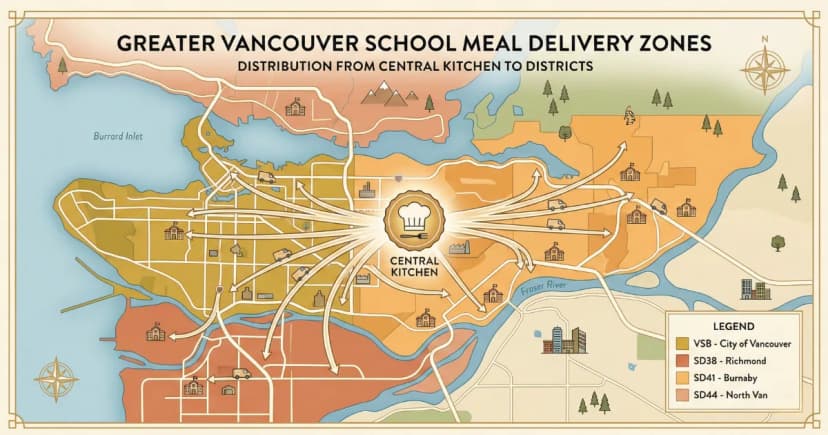
Vancouver School Lunch Delivery: Coverage Map and Zones
Flavory Food's school lunch delivery coverage across Greater Vancouver. Zone-by-zone guide with driv
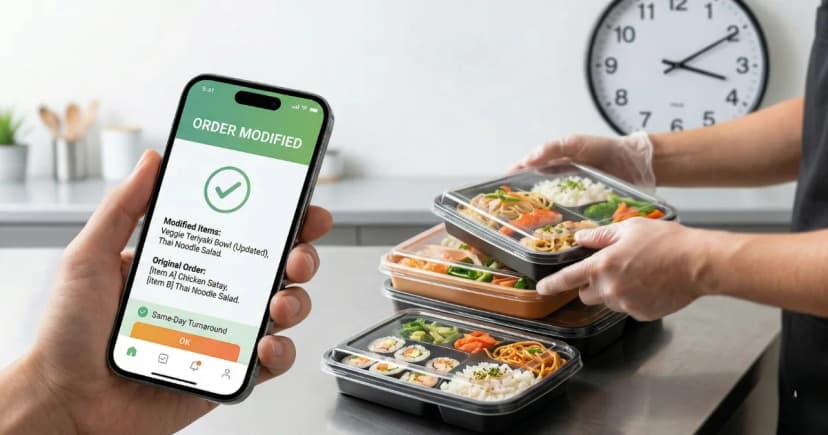
Same-Day Order Changes: Our Flexibility Policy Explained
Flavory Food explains our same-day order change policy for Vancouver families, kindergartens, and sc
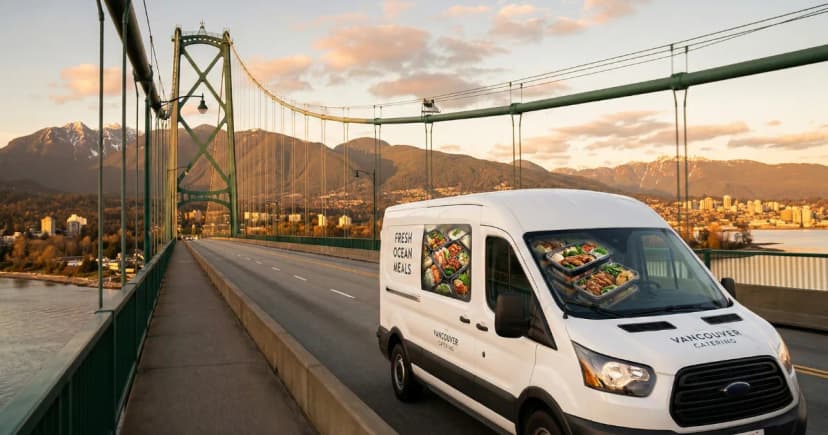
North Vancouver Meal Delivery: Crossing the Bridge for Fresh Asian Food
North Vancouver meal delivery from The Storm Cafe. Fresh Asian cuisine across Lions Gate and Ironwor
Want to taste our meals?
Book a free tasting and let our fresh ingredients speak for themselves.
Free Tasting