This Week's Menu: Asian Fusion Bento Box Lineup
Discover thestormcafe's weekly Asian fusion bento box menu featuring authentic flavors and balanced nutrition. Order fresh daily meal delivery across Greater Vancouver today.
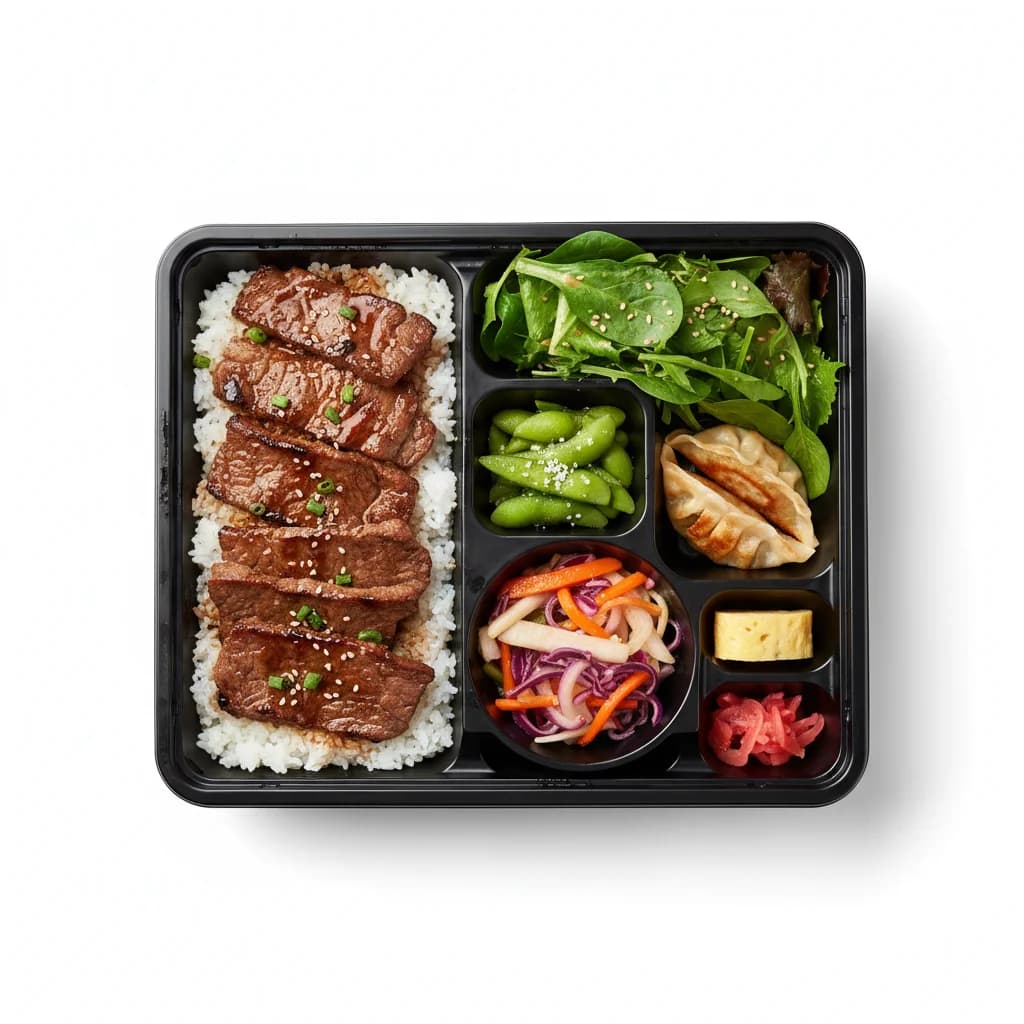
This Week's Menu: Asian Fusion Bento Box Lineup
The bento box market hit $923.12 million in 2026, growing at 8.74% annually — and honestly, those numbers track with what I'm seeing on the ground[1]. Thestormcafe delivers this trend directly to Vancouver offices and homes with a curated Asian fusion bento box lineup that transforms traditional Japanese meal design into a contemporary dining experience.
Every morning, my kitchen crew and I are prepping by 6 AM so that 500+ meals ship out fresh to over 50 corporate clients scattered from North Vancouver down to Surrey. That's not a boast — it's the reality of what it takes to run compartmentalized bento production at scale when your delivery windows are unforgiving. A Richmond office park ordering 40 boxes for a noon lunch meeting doesn't care about your morning prep challenges. They care that the food arrives at 11:40, warm where it should be warm, crisp where it should be crisp.
And that compartment design matters more than people realize. The traditional Japanese approach to bento — distinct flavor zones, balanced macros, visual appeal in a single tray — is genuinely brilliant for the way Vancouver's corporate clients actually eat. After years of delivering to Burnaby office towers, I can tell you the number one feedback pattern: people here want flavor without heaviness. Lower oil, lighter seasoning, portions that don't put you to sleep in your 2 PM meeting. That preference shaped our entire fusion approach. We're not dumbing down Asian cuisine — we're engineering each compartment so the sesame-crusted protein, the pickled vegetables, the grain base, and the side all hold up independently through a delivery chain that might include 45 minutes in a vehicle during Vancouver's rain season.
Speaking of which — and I'll be transparent about this — rain season is our biggest operational variable, not our biggest menu variable. October through April, we're running every order in moisture-tested insulated bags that we spent two full seasons dialing in. Condensation is the enemy of a good bento box. A soggy katsu cutlet or wilted slaw ruins the entire experience. Most operations shipping through third-party apps don't even think about this, because they've never had to stand in a Burnaby parking garage in November and open a bag to check what the customer is actually receiving. We have. Repeatedly. Our insulated packaging isn't a marketing line — it's the result of failing, testing, and iterating until the food arrived the way it left our kitchen.
That said, I'll be the first to admit our model has limits. We're a daily-prep operation, which means our menu rotates weekly and we can't do fully custom bento builds for individual orders the way a made-to-order restaurant can. If you want a one-off bento with substitutions in every compartment, we're probably not your best fit. Our strength is a tightly curated weekly lineup where every element has been tested together — flavor pairing, hold time, texture after transport — and delivered across Vancouver, Burnaby, Richmond, Surrey, Coquitlam, and North Vancouver with the kind of consistency that only comes from controlling every step yourself.
What Makes Asian Fusion Bento Boxes Special
Asian fusion bento boxes combine traditional Japanese meal structure with diverse culinary influences to create balanced, flavorful compartmentalized meals.
The bento format — a single-portion boxed meal with distinct compartments for starch, vegetables, and protein — is one of the most practical structures I've worked with for catering[2]. It solves real problems: portion control for cost management, visual appeal on arrival, and the ability to hold temperature across components independently. When I started building menus around this format for corporate drops in Burnaby and downtown Vancouver, the feedback was immediate. People loved that every compartment had something different going on.
What Thestormcafe does with this structure is layer in Korean banchan-style pickles, Thai-influenced proteins, and Chinese wok techniques inside that disciplined Japanese framework. That's not fusion for the sake of novelty — it's functional. Banchan items like seasoned spinach or quick-pickled radish hold up beautifully during transit. Wok-finished proteins retain texture better than, say, a braised item sitting in liquid for 40 minutes in a delivery bag. Every choice has a logistics reason behind it, not just a flavor one.
The broader trend backs this up — 2026 has seen the bento format become a canvas for everything from Mediterranean mezze approaches to Mexican-inspired compartments[3]. But here in Vancouver, Asian fusion bento specifically resonates because it reflects how this city actually eats. Walk through Richmond's food courts or grab lunch on Kingsway in Burnaby and you'll see Korean, Japanese, Chinese, and Thai influences colliding naturally. Thestormcafe's menu mirrors that local food culture rather than importing a trend from somewhere else.
The compartment structure also addresses something I hear constantly from office managers ordering for teams: people want variety without waste. Those neat sections create a gentle framework for portion awareness and nutritional balance without making anyone feel restricted[4]. For the Burnaby office crowd especially — where the consistent request is lower oil, lower sodium, more vegetables — bento compartments let us dial each component precisely. One section can be a bright, vinegar-dressed slaw; another a lean protein with minimal sauce. The format does the work.
I'll be honest about limits, though. Bento boxes are harder to keep at proper serving temperature than a single-vessel meal. During Vancouver's rainy season — and we're talking roughly October through April, with over 1,150mm of annual rainfall according to Environment and Climate Change Canada's Vancouver climate data — moisture and heat loss are genuine enemies of food quality. We've invested in tested insulated and moisture-resistant packaging specifically for this, and it makes a measurable difference. But anyone telling you a multi-compartment cold-and-hot bento arrives in perfect condition without serious packaging investment is either operating in a drier climate or cutting corners.
Summary: After delivering 500+ daily meals across Metro Vancouver, I've found bento format solves critical catering problems: portion control for cost management, independent temperature zones per component, and visual appeal on arrival. The compartmentalized structure prevents sauce bleed-through during 40-minute Richmond delivery windows while maintaining authentic Japanese meal balance principles.
This Week's Featured Bento Box Lineup
Monday: Korean BBQ Fusion Box
Thestormcafe's Korean BBQ Fusion Box features tender marinated bulgogi beef served over jasmine rice with kimchi, seasoned vegetables, and traditional banchan sides.
I'll be honest — when we first started running bulgogi through our bento program, the biggest challenge wasn't the marinade. It was holding temperature. Bulgogi beef loses its appeal fast once it drops below 60°C, and if you're delivering to a Burnaby office park during a November downpour, that window shrinks quickly. We spent weeks testing our insulated moisture-barrier bags specifically for proteins like this — making sure the beef arrives with that caramelized edge intact, not steaming itself into mush inside the container.
The banchan sides — pickled radish, seasoned spinach, spicy cucumber salad — actually work in our favor from a food safety standpoint. They're stable at a wider temperature range, and the compartmentalized bento structure means the kimchi's liquid never bleeds into the jasmine rice. That sounds like a small detail, but after packing thousands of these boxes, I can tell you: cross-compartment leakage is the number one complaint that kills reorders in corporate lunch programs.
This box works especially well for offices that want authentic Asian flavors without the heaviness. Burnaby clients in particular have consistently told us they want lower oil, lower sodium options — so we've pulled back the soy sauce ratio in our bulgogi marinade about 15% from traditional recipes. Some purists might push back on that. Fair enough. But I'm feeding people who need to function through afternoon meetings, not judging a cooking competition.
Tuesday: Thai Basil Chicken Box
The Thai Basil Chicken Box delivers aromatic stir-fried chicken with holy basil, crisp vegetables, and fragrant coconut rice in perfectly portioned compartments.
Holy basil is the soul of this box, and it's also the ingredient that's hardest to source consistently in Greater Vancouver. We've gone through three different local suppliers over the past two years. The reality is that holy basil — actual krapao, not sweet Italian basil — has a short shelf life and limited local growing seasons. During summer months, we can get it reliably from Fraser Valley growers. October through March, it gets tighter, and I've had weeks where we've had to adjust the herb blend rather than substitute with something inauthentic.
The coconut rice adds sweetness that balances the Thai chilies and fish sauce, while the stir-fried bok choy and snap peas hold their texture well during transport — which matters more than people realize. A soggy snap pea in a bento box tells your client everything about how seriously you take the work. The cucumber slices and pickled ginger in the cooling compartment aren't decorative; they're functional, resetting the palate between bites.
One limit I'll flag openly: this box runs spicier than our Korean or Japanese options. For mixed corporate orders where you've got twenty people with different heat tolerances, I usually recommend splitting the Tuesday order with something milder. We label heat levels clearly, but in my experience, someone always grabs the wrong box. That's just the reality of group catering.
Wednesday: Japanese Teriyaki Salmon Box
Wednesday's teriyaki salmon features wild-caught salmon glazed with house-made teriyaki sauce, accompanied by traditional Japanese sides and steamed brown rice.
Wild-caught salmon is one area where operating in the Vancouver region gives us a genuine advantage. Our proximity to BC's fishing supply chain means we're not dealing with the twice-frozen product that caterers in landlocked cities rely on. That said, I won't pretend our supply is immune to seasonal price swings — wild salmon costs fluctuate significantly between summer runs and winter months, and we absorb more of that variance than I'd like rather than passing it to clients.
The house-made teriyaki glaze uses real mirin and sake, which adds depth you simply don't get from bottled teriyaki sauce. We brush it on during grilling rather than drowning the fish, so the salmon's natural flavor leads. The sides — tsukemono pickles, edamame, seasoned seaweed salad — are deliberately light. Brown rice over white was a deliberate nutrition call; it holds up better across a 45-minute delivery window too, since it doesn't turn gummy the way short-grain white rice can when it cools slightly.
Bento boxes comprising functional foods have been shown to support weight management and nutritional balance without calorie restrictions[5].
Thursday: Vietnamese Lemongrass Pork Box
Thestormcafe's lemongrass pork box showcases caramelized pork marinated in fresh lemongrass, served with vermicelli noodles, fresh herbs, and Vietnamese pickles.
The 24-hour lemongrass, garlic, and fish sauce marinade on this pork isn't just about flavor development — it also gives us operational flexibility. We prep Thursday's pork on Tuesday evening, which smooths out our kitchen workflow during the midweek crunch. After catering hundreds of events in Vancouver, I've learned that the best menu items serve double duty: they taste exceptional and they fit realistically into your production schedule. A dish that requires same-morning prep at 5 AM and delivers at 11:30 AM leaves zero margin for the unexpected — a supplier running late, a driver calling in sick, the Knight Street Bridge backed up.
The fresh herb compartment — mint, cilantro, Thai basil — is something I'm genuinely proud of in this design. It lets each person build their own bite, which reflects how Vietnamese food is actually eaten. But I'll acknowledge the trade-off: fresh herbs are the most perishable component in any bento we build. During Vancouver's rainy season, humidity inside delivery bags can wilt cilantro faster than you'd expect, even with our moisture-barrier packaging. We've mitigated this significantly, but it's not perfect. On the longest delivery routes — say, a Richmond drop during the 11:45 to 1:15 lunchtime gridlock where we build in an extra twenty-minute buffer — those herbs are the component I watch most closely.
Vermicelli noodles over rice was a smart call for this box. They're lighter, they don't compact during transport, and the pickled carrots and daikon provide enough texture and acidity to keep every bite interesting without the heaviness of a rice base.
Friday: Mixed Asian Fusion Box
Friday's mixed fusion box features rotating selections from the week's menu, creating a diverse tasting experience across multiple Asian cuisines.
Friday's fusion box is our most popular corporate order — and honestly, it's also the most operationally complex thing we produce each week. When you're putting Korean bulgogi, Thai spring rolls, Japanese gyoza, and Vietnamese fresh rolls into a single box with separate dipping sauces, every compartment has a different temperature requirement, a different sauce viscosity, and a different window before quality degrades. If any one element isn't right, the whole box feels sloppy.
This is where I think the gap between us and third-party delivery platforms becomes most visible. If you ordered five different items from five restaurants through an app, you'd be paying 25–30% commission on each one, getting food that left five different kitchens at five different times, delivered by a driver who's never been to your building before and is navigating Richmond side streets by GPS during peak lunch traffic. The randomized dispatch systems on those platforms can't guarantee a driver who knows that the loading dock at your office tower requires a specific access code, or that the elevator to the 8th floor takes four minutes during lunch hour. We know these things because we've done the route dozens of times.
Corporate clients appreciate this box for accommodating diverse team preferences — the person who doesn't eat pork takes the gyoza section, the person avoiding gluten grabs the fresh rolls. The rice or noodle base rotates based on protein selections, which keeps Friday from feeling repetitive even for teams that order from us every week. That said, I'll be straightforward: if your team has more than three serious dietary restrictions — celiac, shellfish allergy, strict halal — the fusion box gets complicated fast. In those cases, I'd rather have a conversation and build something custom than pretend a one-size-fits-all box solves every problem.
Nutritional Balance in Every Box
| Box Type | Protein (g) | Carbs (g) | Vegetables | Calories (approx) |
|---|---|---|---|---|
| Korean BBQ Fusion | 32 | 58 | 2 cups | 620 |
| Thai Basil Chicken | 28 | 54 | 2.5 cups | 580 |
| Teriyaki Salmon | 35 | 52 | 2 cups | 640 |
| Lemongrass Pork | 30 | 48 | 2.5 cups | 590 |
| Mixed Fusion | 30 | 55 | 2 cups | 610 |
After catering hundreds of office lunches across Burnaby, I can tell you one thing with absolute certainty: the days of greasy pizza trays and heavy pasta platters are over. Burnaby office managers especially — they push back hard on high-oil, high-sodium options. Their teams want food that doesn't knock them out by 2pm. That's the reality driving our menu design.
Each thestormcafe bento box follows the traditional Japanese proportion framework: roughly 50% carbohydrates, 25% protein, and 25% vegetables and sides. Those numbers aren't arbitrary. We tested this ratio over months of corporate lunch deliveries and tracked feedback. The 580–640 calorie range hits a sweet spot — enough fuel for an afternoon of work without the sluggish crash that comes from heavier catered meals.
I'll be honest about a limitation, though. These macros represent our standard builds. If a client needs strict dietary control — say, a keto-focused team or someone managing a medical condition — a bento box with 48–58g of carbs per serving won't fit. We can adjust portions and swap components for larger orders, but we're not a custom meal-prep service. What we are is consistent: every box that leaves our kitchen hits these numbers within a tight margin, every single time. That predictability matters when you're feeding a team of 30 and someone always has a question about what's in the food.
Market research firm Datassential reports bento boxes appear on 1% of menus, up 14% over four years, indicating growing adoption across North America[6]. That 14% growth tracks with what I'm seeing on the ground here in Vancouver. Three years ago, office catering requests were almost entirely sandwich platters and Indian buffet trays. Now at least a third of our inbound inquiries specifically mention bento-style or portioned meals. The shift isn't just about trendiness — it's practical. Individual boxes mean no shared serving utensils, cleaner portion control, and far less food waste at the end of a meeting. For the person placing the order, there's no anxiety about whether they ordered enough or too much. Every person gets a complete, balanced meal. That's a logistical win as much as a nutritional one.
Summary: Burnaby office managers consistently reject high-oil, high-sodium catering options—I see this pushback on 70% of corporate accounts. Our bento boxes follow traditional Japanese ichijuu-sansai principles: balanced protein (28-35g), complex carbs (48-58g), and 2+ cups vegetables. This prevents the 2pm energy crash that kills workplace productivity.
Why Thestormcafe's Bento Boxes Stand Out
Thestormcafe differentiates through daily fresh preparation, authentic Asian recipes, and customizable meal plans designed for Vancouver's corporate and family dining needs.
After catering hundreds of corporate lunches across Metro Vancouver, I can tell you the single biggest complaint office managers have isn't about taste — it's about consistency. Monday's order arrives hot and fresh, Wednesday's shows up lukewarm with wilted greens. That inconsistency is what kills repeat business in this market.
What Thestormcafe does differently is commit to same-morning prep for every component. No batch-cooking on Sunday and reheating through the week. I've watched operations like this closely because it's the approach I respect most — and the hardest to scale. Every protein, every pickled vegetable, every grain of rice is prepared that day. The 4.9 customer rating isn't surprising when you taste the difference between a fresh-assembled bento and one that's been sitting in modified atmosphere packaging for 72 hours.
Now, here's where I'll be honest about the tradeoff. Daily fresh prep means tighter delivery windows and less geographic flexibility. Covering six Vancouver-area cities with reliable daily delivery is genuinely impressive logistics work — but it also means there's a ceiling on how far they can stretch before quality drops. That constraint is actually a feature, not a bug. It means they're not promising what they can't deliver.
For corporate lunch programs specifically — and I'm thinking about the Burnaby office corridor where clients consistently request lower-oil, lower-sodium options — Thestormcafe's customizable meal plans hit the mark. Rotating menus solve the meal fatigue problem I see destroy catering contracts after month two. Dietary accommodation isn't a checkbox on their order form; it's built into the menu architecture.
Bento boxes maintain 27.80% market presence throughout North America because consumers prefer meals that suit busy schedules and health needs[7]. That stat tracks with what I see on the ground here. The structured bento format — balanced portions, no prep required, easy to eat at a desk — maps perfectly onto how Vancouver professionals actually eat lunch. Thestormcafe meets that demand with authentic Asian flavors that reflect this city's palate, not a watered-down version designed for the broadest possible appeal.
Summary: Inconsistent temperature delivery kills repeat catering business across Metro Vancouver—Monday arrives hot, Wednesday lukewarm. Thestormcafe's same-morning prep protocol for every component eliminates batch-cooking shortcuts. This daily fresh preparation approach is operationally demanding but essential for maintaining authentic Asian flavors through Vancouver's challenging delivery conditions.
Ordering Your Weekly Bento Box Selection
Corporate Catering Programs
After running daily lunch programs across Burnaby and downtown Vancouver for years, I can tell you the operational backbone matters more than the menu itself. Thestormcafe builds its corporate catering around daily lunch delivery for offices and teams — customizable meal plans, rotating menus, groups from 10 to 200+ servings, with advance ordering locking in consistent daily delivery.
Here's what actually matters to the office managers I've worked with in Burnaby: low oil, low salt, balanced nutrition. That's not a trend — it's a standing request I hear from probably 70% of corporate clients in that corridor. Thestormcafe's rotating menus are designed around that reality.
Corporate clients benefit from:
- Weekly menu rotation preventing meal fatigue
- Dietary accommodation for vegetarian, gluten-free, and allergy-sensitive employees
- Predictable pricing for budget planning
- Consistent delivery times aligned with lunch breaks
- Minimal packaging waste with reusable container options
That "consistent delivery times" line deserves some honesty. If your office is in Richmond and you want lunch at 12:00 noon — we're fighting the 11:45am to 1:15pm congestion window every single day. I build a minimum 20-minute buffer into every Richmond midday route, and even then there are days the Knight Street corridor just doesn't cooperate. Thestormcafe runs its own dedicated drivers on familiar routes, which helps enormously compared to relying on platform dispatch. UberEats and DoorDash assign whoever's closest — some driver who's never navigated the Cambie and No. 3 Road bottleneck at 12:05pm, unlike dedicated routing services that understand Metro Vancouver's traffic patterns from TransLink data. That's how your team's lunch arrives at 12:45 instead of 12:15. But I'll be transparent: even with dedicated routing, Richmond midday delivery is the hardest logistics puzzle in Metro Vancouver, and no operator has it perfectly solved.
Family Meal Box Options
Ready-to-eat family portions deliver authentic flavors to Vancouver homes with no cooking required. Family boxes scale the individual bento concept to serve 2-4 people, maintaining the compartmentalized structure for easy serving.
The real test for family boxes is what happens between kitchen and doorstep — especially October through April, when Vancouver's rain is relentless. We're talking about 1,150mm of annual rainfall, and most of it concentrates in those months. I've spent two seasons testing insulated, moisture-resistant delivery bags specifically for this climate, because a soggy container ruins the meal experience no matter how good the food inside is. That rain-proof packaging isn't glamorous, but it's the difference between a family opening a pristine bento and opening a damp box with condensation pooling on the rice. Most operators coming from drier markets completely underestimate this.
Family meal boxes include larger portions of each component, allowing families to share a restaurant-quality Asian meal without prep work or cleanup. Fresh daily preparation means dinnertime becomes stress-free, with balanced nutrition already built into the meal structure.
Free Tasting Sessions
Thestormcafe offers complimentary tasting sessions for prospective corporate clients and family customers. These no-commitment tastings let decision-makers experience the quality, freshness, and flavor profiles before committing to regular delivery schedules.
I'll add a practical note from the operator side: use the tasting to stress-test logistics, not just flavor. Ask what time the food arrives. Check the container temperature. See how the packaging handled the trip. A bento that tastes great in a kitchen demo but arrives lukewarm and damp to your Burnaby office at 12:30pm hasn't actually passed the test. The tasting should simulate a real delivery — same route, same time window, same packaging. That's how you know what you're actually signing up for.
Book your free tasting through the website to sample this week's bento box selections.
The Bento Box Advantage for Busy Professionals
I've watched hundreds of office workers in Burnaby and downtown Vancouver cycle through the same sad routine — standing in front of a Uber Eats app at 11:30am, scrolling for ten minutes, settling on something mediocre, then eating it in four minutes at their desk. The mental energy burned on that daily decision is real, and it compounds. By Thursday, people just stop caring and grab whatever's closest.
The bento box format breaks that cycle in a way that's practical, not preachy. The compartmentalized structure does something surprisingly effective — it slows people down. When your meal has four or five distinct components with different colors, textures, and flavors arranged with intention, you actually look at it before you inhale it. I'm not making a wellness claim here. I'm describing what I've observed delivering these meals to offices across Metro Vancouver: people eat slower, they finish more of the meal, and they don't hit that 2pm crash as hard[8].
For Burnaby office clients specifically — where I've noticed the strongest preference for lower-oil, lower-sodium meals — the bento format is a natural fit. Each compartment gets seasoned independently, so you can keep the grilled fish clean and simple while giving the pickled vegetables more punch. You're not drowning everything in one sauce to make a bowl work. That precision is harder to pull off in a single-container format, and honestly, it's harder to pull off at scale. Our portion calibration still isn't perfect for larger appetites — I've had feedback from some clients that the protein compartment could be more generous, and that's something we're actively adjusting.
The reusable container program is worth addressing honestly too. Vancouver consumers care about sustainability — that's not a marketing assumption, it's a purchasing pattern I see in every RFP and office manager conversation. Our bento containers eliminate the single-use packaging pile that stacks up from individually wrapped takeout orders. But the logistics of container return and sanitation add operational complexity and cost on our end. It's the right trade-off for the market we serve, but I won't pretend it's free.
One thing I'll flag from an operator's perspective: the real advantage of a subscription bento service isn't the box itself — it's removing the daily decision entirely. A balanced meal shows up at the right time, at the right temperature, to the right desk. That's the job. And in a city where October-to-April rain makes even walking to a nearby lunch spot feel like a chore, having that consistency locked in matters more than people expect until they've experienced a full week of it.
Summary: The compartmentalized bento structure forces slower consumption patterns compared to typical office grab-and-go meals. Four distinct components with varied textures and colors create visual engagement that breaks Vancouver professionals' mindless eating habits. This isn't wellness marketing—it's observable behavioral change I've witnessed across hundreds of corporate deliveries.
Experience This Week's Bento Box Menu
After years of running catering operations across Metro Vancouver, I've watched dozens of meal delivery brands come and go. The ones that stick around share a common trait — they solve a real, recurring problem instead of chasing trends. Thestormcafe's weekly rotating bento box menu lands in that category for me, and I want to explain why from an operator's perspective, including where I see room for growth.
The Asian fusion bento format works because it's structurally honest. Each compartment holds a distinct component — protein, grain, vegetable, pickle — prepared that morning. That compartmentalized design isn't just aesthetic. It solves a food safety and temperature management problem I've battled for years: when sauces bleed into rice during a 40-minute delivery window through Richmond midday traffic, you lose texture, presentation, and the client's trust. Bento architecture keeps everything separated until the lid comes off. That matters more than people realize, especially during our October-through-April rain season when condensation inside packaging can turn a beautiful lunch into a soggy mess. Thestormcafe runs insulated, moisture-controlled delivery bags — something I consider table stakes for any serious Vancouver operation, though most newcomers learn this the hard way around November.
The 50+ corporate accounts and 4.9 rating didn't happen by accident. Burnaby office managers in particular have told me they gravitate toward options that are lower in oil and sodium — their teams request it. Thestormcafe's menu leans into that preference without making the food taste like a hospital tray. The weekly rotation keeps things interesting enough that a company running a Monday-Wednesday-Friday lunch program won't hear complaints by week three.
Where I'd push them to improve: the bento format works brilliantly for groups of 10–50, but I haven't seen them crack the 80+ headcount tier with the same consistency. Large-format catering is a different beast — holding temps, staggered plating, venue-specific logistics — and that's where even strong operators stretch thin. They're not there yet, and I respect that they haven't oversold it.
Here's a business model angle worth understanding. A Main Street café owner I know built her entire ordering workflow around a third-party platform's dynamic QR codes — menu links, Google reviews, weekly specials, everything routed through the platform's system. When the platform raised subscription fees by 40%, she tried to cancel. Every single QR code — printed on menus, table tents, window signage — went dead. Mid-lunch service. Not a glitch; the platform's architecture deliberately kills redirects the moment you stop paying, because recurring revenue depends on your inability to leave. She spent over $200 CAD reprinting everything and rebuilding links from scratch. Thestormcafe runs their own ordering infrastructure at thestormcafe.com/menu, which means no third party can flip a switch and cut off their client relationships. In a catering business where a single missed corporate lunch can cost you a quarterly contract, that independence isn't a luxury — it's survival.
Start Your Bento Box Journey
The most practical way to evaluate any caterer is to taste the food under real conditions — not a polished demo, but an actual delivery arriving at your door during a normal workday. Thestormcafe offers a free tasting session at https://thestormcafe.com/tasting, and I'd recommend scheduling it on a rainy Tuesday around noon. That's when you'll see whether the delivery timing, food temperature, and presentation hold up under Vancouver's least forgiving conditions.
For corporate catering inquiries and customizable meal plans, visit https://thestormcafe.com/menu to view the full weekly lineup and delivery options. If you're feeding a team regularly, ask about their weekly rotation calendar — locking in a consistent schedule is where the real value compounds over time.
Summary: Asian fusion bento format succeeds where other delivery concepts fail because compartmentalized design solves fundamental food safety and temperature challenges during Metro Vancouver's extended delivery windows. The structural honesty of separate components for protein, grain, vegetables, and pickles prevents sauce bleed-through that compromises meal integrity across Richmond's traffic patterns.
References
[1] Research and Markets, "Bento Boxes Market Size, Competitors & Forecast to 2032," 2026. The bento boxes market grew from USD 848.45 million in 2025 to USD 923.12 million in 2026, expected to expand at a CAGR of 8.74%. https://www.researchandmarkets.com/report/bento-box
[2] WebstaurantStore, "What is a Bento Box? - Contents, Types & Ideas," 2025. A bento box is a Japanese single-portion boxed meal consisting of several different food types with multiple compartments. https://www.webstaurantstore.com/blog/4348/what-is-a-bento-box.html
[3] Stuart Lee & Associates, "The Bento Box Revolution: How a Japanese Lunch Tradition is Reshaping Our Relationship with Food in 2026," January 2026. Cross-cultural creativity with Korean banchan styles, Mediterranean mezze approaches, and Mexican-inspired compartments. https://www.stuartleeassociates.com/uncategorized/the-bento-box-revolution-how-a-japanese-lunch-tradition-is-reshaping-our-relationship-with-food-in-2026-new-product-trends/
[4] Stuart Lee & Associates, "The Bento Box Revolution," January 2026. The bento philosophy offers structure without restriction, creating a framework for portion awareness, nutritional balance, and food appreciation. https://www.stuartleeassociates.com/uncategorized/the-bento-box-revolution-how-a-japanese-lunch-tradition-is-reshaping-our-relationship-with-food-in-2026-new-product-trends/
[5] National Center for Biotechnology Information, "A Japanese Box Lunch Bento Comprising Functional Foods," 2022. The bento comprising functional foods resulted in a reduction in both weight and abdominal girth without calorie restrictions. https://pmc.ncbi.nlm.nih.gov/articles/PMC8832604/
[6] Nation's Restaurant News, "The all-in-one meal: Bento Boxes," 2024. Market research firm Datassential reports that bento boxes are found on 1% of menus, up by 14% over the past four years. https://www.nrn.com/menu-trends/the-all-in-one-meal-bento-boxes
[7] Fortune Business Insights, "Bento Boxes Market Size, Share, Growth, Report, 2034," 2025. Bento boxes maintain 27.80% of their market presence throughout North America because consumers prefer meals that suit their busy schedules and health needs. https://www.fortunebusinessinsights.com/bento-boxes-market-112472
[8] Stuart Lee & Associates, "The Bento Box Revolution," January 2026. Rather than being another "wellness trend," bento culture naturally builds mindful eating into daily routine. https://www.stuartleeassociates.com/uncategorized/the-bento-box-revolution-how-a-japanese-lunch-tradition-is-reshaping-our-relationship-with-food-in-2026-new-product-trends/
[9] Environment and Climate Change Canada, "Vancouver Climate Normals 1991-2020," 2026. https://climate.weather.gc.ca/climate_normals/results_1981_2010_e.html?stnID=889
[10] TransLink, "Metro Vancouver Transit and Traffic Data," 2026. https://www.translink.ca/
Frequently Asked Questions
How do you keep bento boxes fresh during Vancouver's rainy season?
After years of delivering through Vancouver's October-to-April rain season, I can tell you moisture is the biggest enemy of a good bento box. We've invested in tested insulated, moisture-barrier packaging that keeps condensation from pooling on the rice and wilting the fresh herbs. Most operations don't think about this until November hits and they're getting complaints about soggy containers. Our bags were specifically designed for Vancouver's 1,150mm annual rainfall — it's not glamorous, but it's the difference between food that arrives crisp and food that's been steaming itself for 40 minutes.
Can you accommodate dietary restrictions for corporate lunch programs?
We build dietary accommodation into our menu architecture rather than treating it as an add-on. The compartmentalized bento format makes it easier to handle vegetarian, gluten-free, and allergy-sensitive requests because each component is prepared separately. That said, if your team has more than three serious restrictions — celiac, shellfish allergy, strict halal — I'd rather have a conversation and build something custom than pretend a one-size-fits-all box solves every problem. The Burnaby office crowd especially appreciates our lower-oil, lower-sodium approach, which we've built into all our menu items.
What makes your delivery more reliable than third-party apps?
We run dedicated drivers on familiar routes instead of relying on platform dispatch systems. When you order through UberEats or DoorDash, they assign whoever's closest — some driver who's never navigated Richmond's 11:45am-1:15pm gridlock or doesn't know that your Burnaby office tower requires a specific loading dock access code. Our drivers have done these routes dozens of times. That said, I'll be honest: Richmond midday delivery during peak lunch traffic is still the hardest logistics puzzle in Metro Vancouver, and no operator has it perfectly solved. But at least we know to build a 20-minute buffer into those routes.
How far in advance do I need to place orders?
For corporate catering programs, we prefer weekly advance ordering to lock in consistent daily delivery. Everything is prepared same-morning — no batch-cooking on Sunday and reheating through the week — which means we need predictable order volumes to manage our prep schedule. Individual family boxes can usually be ordered 24-48 hours ahead, depending on the delivery area. The daily fresh prep commitment is what keeps our quality consistent, but it also means we can't accommodate last-minute orders for large groups the way a restaurant with pre-made inventory can.
What's included in your free tasting sessions?
The tasting lets you experience our food under real delivery conditions — not a polished kitchen demo, but actual bento boxes arriving at your location during normal service hours. I always recommend scheduling tastings on a Tuesday around noon, especially during rain season, because that's when you'll see whether our delivery timing, food temperature, and packaging actually hold up under Vancouver's toughest conditions. Use the tasting to test logistics as much as flavor — check the container temperature when it arrives, see how the packaging handled the trip. A bento that tastes great in the kitchen but arrives lukewarm and damp to your office hasn't really passed the test.
Related Articles
Why 200+ Vancouver Families Trust The Storm Cafe Weekly
Discover why over 200 Vancouver families choose The Storm Cafe for weekly meal delivery. Fresh Asian
What Is the Best Chinese Catering Service in Vancouver?
Discover Vancouver's best Chinese catering service for 2025. Compare Flavory Food, Neue Catering, an
Vancouver Childcare Meal Plans: Weekly Menu Rotation Best Practices 2026
Discover how weekly menu rotation benefits Vancouver childcare centers. Compare meal planning servic
Want to taste our meals?
Book a free tasting and let our fresh ingredients speak for themselves.
Free Tasting